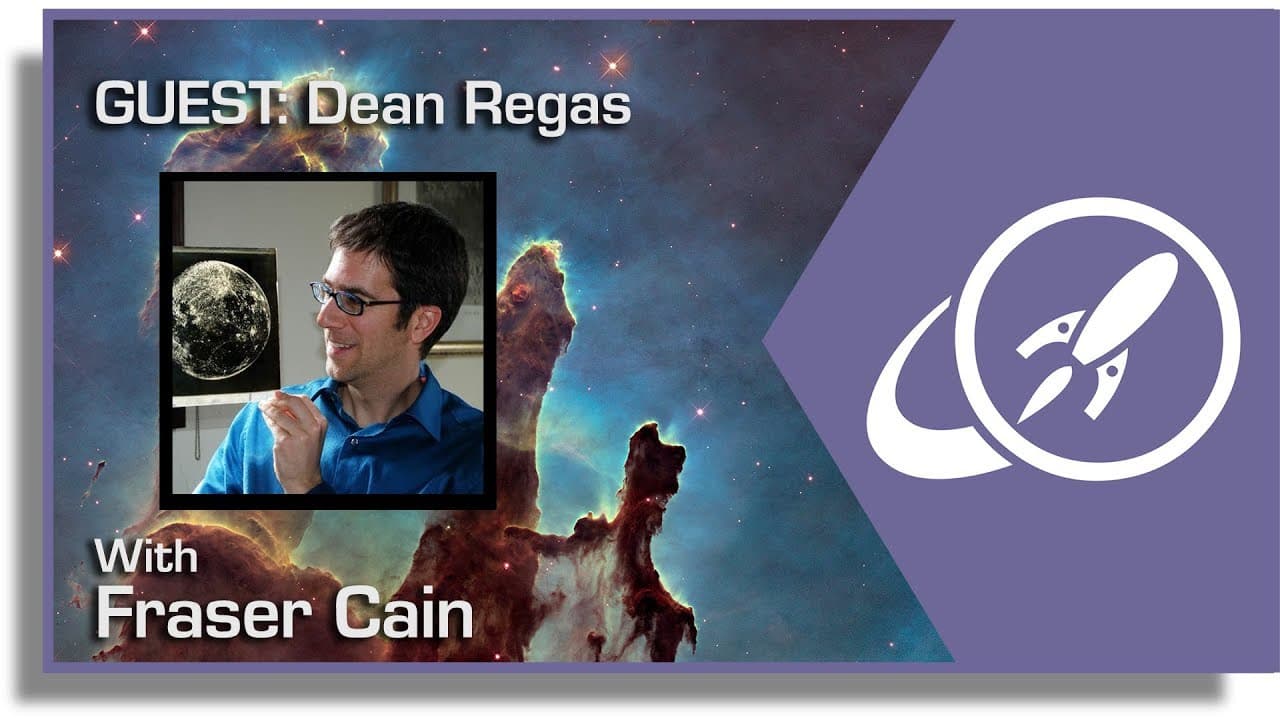
Open Space 25 - Amateur Astronomy with Dean Regas
TL;DR
Dean Regas, astronomer and co-host of PBS Stargazers, discusses visual astronomy, telescopes, and the joy of observing the night sky.
Transcript
knowledge my existence all right I should be live maybe oh this isn't gonna work there we go there's Dean all right that appears to a fixed it Dean why did it fix it I don't know we're live by the way so just you know just in case Oh I can't hear your muted the mute button is down in the bottom left-hand corner of the screen still muted I could see... Read More
Key Insights
- 😃 Observational astronomy allows people to explore the wonders of the night sky with their own eyes.
- 🔭 Dobsonian telescopes offer simplicity and affordability for beginners.
- 📱 Refractors are great for astrophotography, while smartphones can be used with special adapters to capture images through a telescope.
- 🍗 Joining an astronomy club provides opportunities to try out different equipment and learn from experienced astronomers.
- 👀 The upcoming Apollo 11 anniversary and transit of Mercury are exciting astronomical events to look forward to.
- ❓ The James Webb Space Telescope, although delayed, is highly anticipated and is expected to revolutionize our understanding of the cosmos.
- 📱 UFO sightings have declined due to the prevalence of smartphones and amateur astronomers capturing phenomena accurately.
- 🙂 There are many fascinating stories and experiments from the Soviet space program that shed light on their achievements and challenges.
- 🥮 The mini-moon (puny moon) vs. mini-moon debate is ongoing, with different preferences for naming astronomical phenomena.
- 👣 Amateur astronomers can track satellites and even observe the International Space Station with advanced equipment and technology.
Install to Summarize YouTube Videos and Get Transcripts
Explore YouTube Video Summarizer or Get YouTube Transcript Extractor
Questions & Answers
Q: What beginner telescope do you recommend for someone interested in visual astronomy?
I recommend the Orion xt8 Dobsonian telescope, as it offers a good balance between portability and a great view of the night sky.
Q: Can you suggest some objects to observe in the night sky right now?
The Orion Nebula is a great object to observe, as well as the stars in the constellation Orion's belt. Additionally, the Beehive Cluster and M15 in Hercules are worth checking out.
Q: Is there a telescope or lens with an 800mm focal length that is affordable?
Celestron refractors, such as the 80mm or larger models, are a good option. They provide a wider field of view and are suitable for observing star clusters and other objects.
Q: What happens if you fire a projectile into space at high speed? Will it eventually hit something?
The probability of a projectile hitting something in space is close to zero. The vastness of space, combined with the expansion of the universe, makes it highly unlikely for any object to collide with another.
Summary & Key Takeaways
-
Dean Regas, an observational astronomer, shares his expertise on visual astronomy and the wonders of the night sky.
-
He recommends starting with an 8-inch Dobsonian telescope for beginners, as it offers simplicity and a good view of celestial objects.
-
For those interested in astrophotography, Dean suggests refractors or using a smartphone with a special adapter.
-
He highlights the importance of joining an astronomy club and testing out different equipment before making a purchase.
Read in Other Languages (beta)
Share This Summary 📚
Summarize YouTube Videos and Get Video Transcripts with 1-Click
Try YouTube Summary with ChatGPT & Claude or YouTube Transcript Generator
Explore More Summaries from Fraser Cain 📚

Summarize YouTube Videos and Get Video Transcripts with 1-Click
Try YouTube Summary with ChatGPT & Claude or YouTube Transcript Generator