Ancient Indian Strategic Business Management | Dr Alka Jain | TEDxTaxilaBusinessSchool
TL;DR
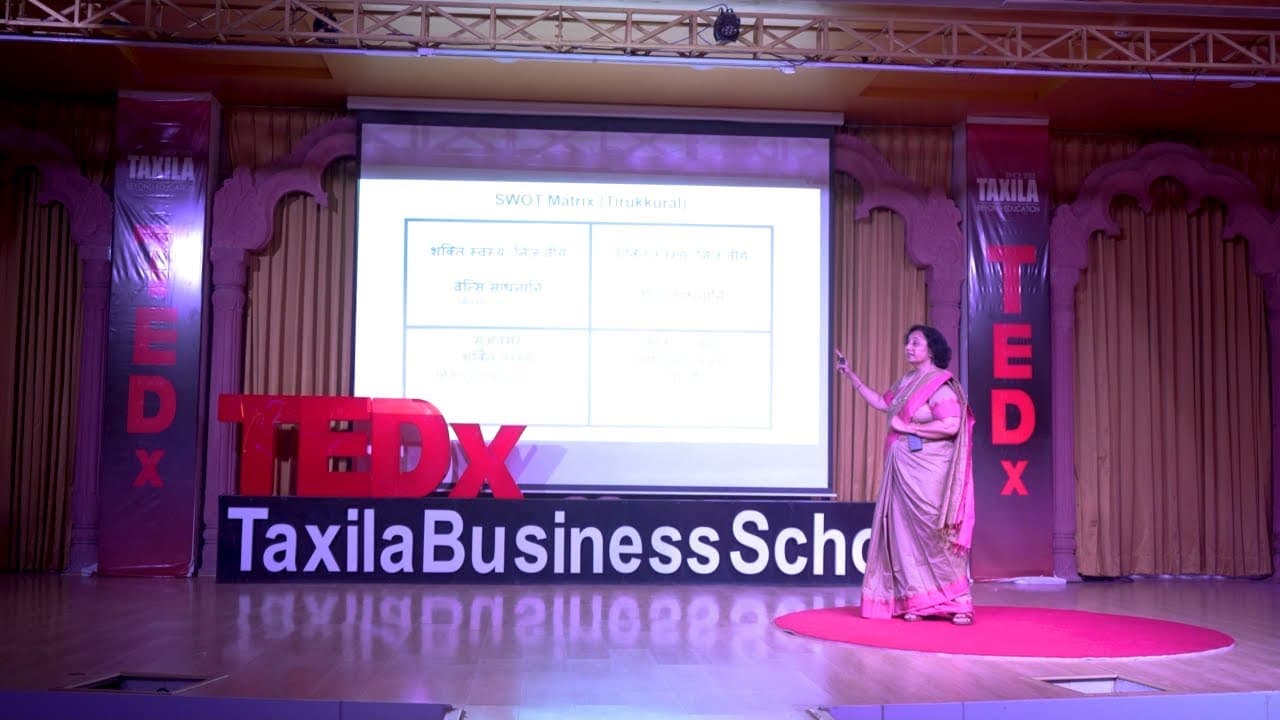
This presentation explores the use of ancient Indian literature and wisdom in strategic business management.
Transcript
good afternoon everyone and we are meeting during the lunch time after the lunch time or before the lunch time before the lunch time then I'm sure that you people are least interested in listening to me who's especially a professor and that of management above all so hi this is Dr Alan I'm a professor and a researcher and basically my researches ar... Read More
Key Insights
- 👨💼 Ancient Indian literature has deep-rooted wisdom and insights that can be applied to modern strategic business management.
- ⌛ The origin of strategic management can be traced back to ancient times, showcasing the timeless nature of these concepts.
- 🫚 The SWOT matrix, a widely used tool in modern strategic analysis, finds its roots in ancient Indian verses.
- 🇮🇴 Ancient Indian texts provide a categorization of employees and highlight the importance of ethical decision-making and balanced leadership.
Install to Summarize YouTube Videos and Get Transcripts
Explore YouTube Video Summarizer or Get YouTube Transcript Extractor
Questions & Answers
Q: How does ancient Indian strategic business management differ from modern concepts?
Ancient Indian strategic business management emphasizes the balance between internal and external factors, as seen in the SWOT matrix derived from ancient verses. Modern concepts focus more on data analysis and market trends.
Q: Are there any well-known ancient Indian texts that discuss strategic business management?
While the presentation mentions popular texts like the Mahabharata and Ramayana, it focuses on lesser-known texts that provide insights into strategic management principles.
Q: How does the ancient Indian concept of employee categorization compare to modern management practices?
The ancient Indian categorization of employees into three levels (Utam, Madam, Jagur) aligns with the modern concept of top-level, middle-level, and supervisory-level employees. However, the emphasis on dharma-dikari, who prioritize ethical decision-making over profit, is unique to the ancient texts.
Q: What is the main takeaway from the presentation?
The main takeaway is to appreciate and learn from ancient Indian literature and wisdom, recognizing the value it holds in strategic business management. It encourages the preservation and dissemination of these ancient languages to future generations.
Summary & Key Takeaways
-
The presentation introduces the concept of ancient Indian strategic business management and highlights the importance of lesser-known texts.
-
It discusses the origin of strategic management and its evolution through different phases.
-
The presentation explores the SWOT matrix and its origin from ancient Indian verses, comparing it to the modern concept.
Read in Other Languages (beta)
Share This Summary 📚
Summarize YouTube Videos and Get Video Transcripts with 1-Click
Try YouTube Summary with ChatGPT & Claude or YouTube Transcript Generator
Explore More Summaries from TEDx Talks 📚





Summarize YouTube Videos and Get Video Transcripts with 1-Click
Try YouTube Summary with ChatGPT & Claude or YouTube Transcript Generator