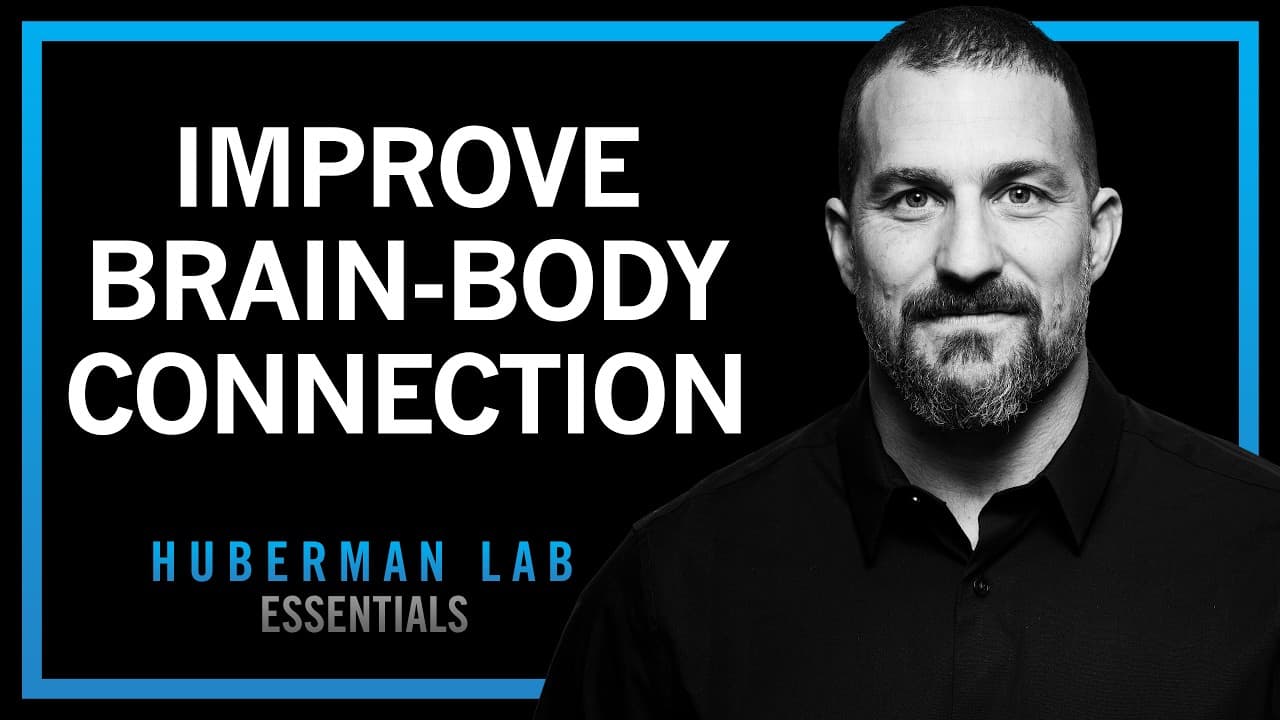
Improving Health With Stronger Brain-Body Connection | Huberman Lab Essentials
TL;DR
Interoception improves health by connecting brain and body functions.
Transcript
Read and summarize the transcript of this video on Glasp Reader (beta).
Key Insights
- Interoception involves sensing internal body states like heart rate and digestion, crucial for mental and physical health.
- The vagus nerve connects brain and body, influencing heart rate, digestion, and emotional states.
- Breathwork can regulate alertness and calmness by altering heart rate through controlled breathing patterns.
- Gut health, influenced by diet, impacts brain function and mood; fermented foods can enhance gut microbiome.
- Mechanical and chemical signals from organs communicate with the brain, affecting mood and bodily functions.
- Awareness of internal states, like heartbeat, can enhance emotional regulation and stress management.
- Gut chemistry affects brain state; maintaining proper acidity and microbiome balance is key for immune and cognitive health.
- Interoceptive awareness can be improved by focusing on internal sensations, thus strengthening the brain-body connection.
Install to Summarize YouTube Videos and Get Transcripts
Explore YouTube Video Summarizer or Get YouTube Transcript Extractor
Questions & Answers
Q: How does interoception influence our health?
Interoception, the brain's ability to sense internal body states, influences health by regulating vital functions like heart rate, digestion, and emotional states. By understanding and tuning into these signals, individuals can improve focus, mood, sleep, and healing, ultimately enhancing overall well-being and performance.
Q: What role does the vagus nerve play in brain-body communication?
The vagus nerve is crucial in brain-body communication, connecting the brain to various organs. It influences heart rate, digestion, and emotional responses, acting as a two-way communication channel. While often associated with calming effects, it primarily functions as a communication and motor system, affecting both mental and physical health.
Q: How can breathwork regulate alertness and calmness?
Breathwork can regulate alertness and calmness by altering the heart rate through controlled breathing. Inhales increase heart rate and alertness, while exhales slow it down, promoting calmness. Techniques like physiological sighs, involving two inhales followed by a long exhale, can effectively manage stress and improve focus.
Q: Why is gut health important for brain function?
Gut health is vital for brain function due to the gut-brain axis, where gut chemistry and microbiome directly influence cognitive and emotional states. A balanced gut microbiome reduces inflammation and enhances immune function, leading to improved mood, focus, and overall brain health. Fermented foods can support this balance.
Q: What is the relationship between gut chemistry and mood?
Gut chemistry affects mood through the production of neurotransmitters and regulation of inflammation. A balanced gut microbiome supports the production of mood-enhancing chemicals while reducing inflammatory markers, leading to better emotional regulation and cognitive function. Proper diet and awareness of gut signals can optimize this relationship.
Q: How can one enhance interoceptive awareness?
Interoceptive awareness can be enhanced by focusing on internal sensations like heartbeat and breathing patterns. Practices such as meditation and mindfulness, which involve directing attention inward, strengthen the brain-body connection, improving emotional regulation and stress management by increasing awareness of internal bodily states.
Q: What are the benefits of consuming fermented foods?
Consuming fermented foods benefits health by enhancing the gut microbiome, reducing inflammation, and improving immune function. These foods promote the growth of beneficial bacteria, which support gut health and, consequently, brain health. Incorporating fermented foods into the diet can lead to improved cognitive function and overall well-being.
Q: How does stress affect the brain-body connection?
Stress disrupts the brain-body connection by altering gut chemistry and suppressing vagal nerve activity, leading to poor digestion and mood disturbances. This disruption affects the communication between the gut and brain, impacting emotional and physical health. Managing stress is crucial for maintaining a healthy brain-body connection and overall well-being.
Summary & Key Takeaways
-
Interoception, the brain's ability to sense body signals, is crucial for health and performance. Understanding these signals can enhance focus, mood, and healing.
-
The vagus nerve plays a key role in brain-body communication, affecting heart rate, digestion, and emotions, which can be regulated through breathwork.
-
Gut health directly impacts brain function; consuming fermented foods can support the microbiome, reducing inflammation and improving cognitive and immune functions.
Read in Other Languages (beta)
Share This Summary 📚
Summarize YouTube Videos and Get Video Transcripts with 1-Click
Try YouTube Summary with ChatGPT & Claude or YouTube Transcript Generator
Explore More Summaries from Andrew Huberman 📚




Summarize YouTube Videos and Get Video Transcripts with 1-Click
Try YouTube Summary with ChatGPT & Claude or YouTube Transcript Generator