Master Socialization Techniques for Fearful Dogs with Bethany Preud'homme
TL;DR
Bethany teaches techniques for socializing fearful dogs effectively.
Transcript
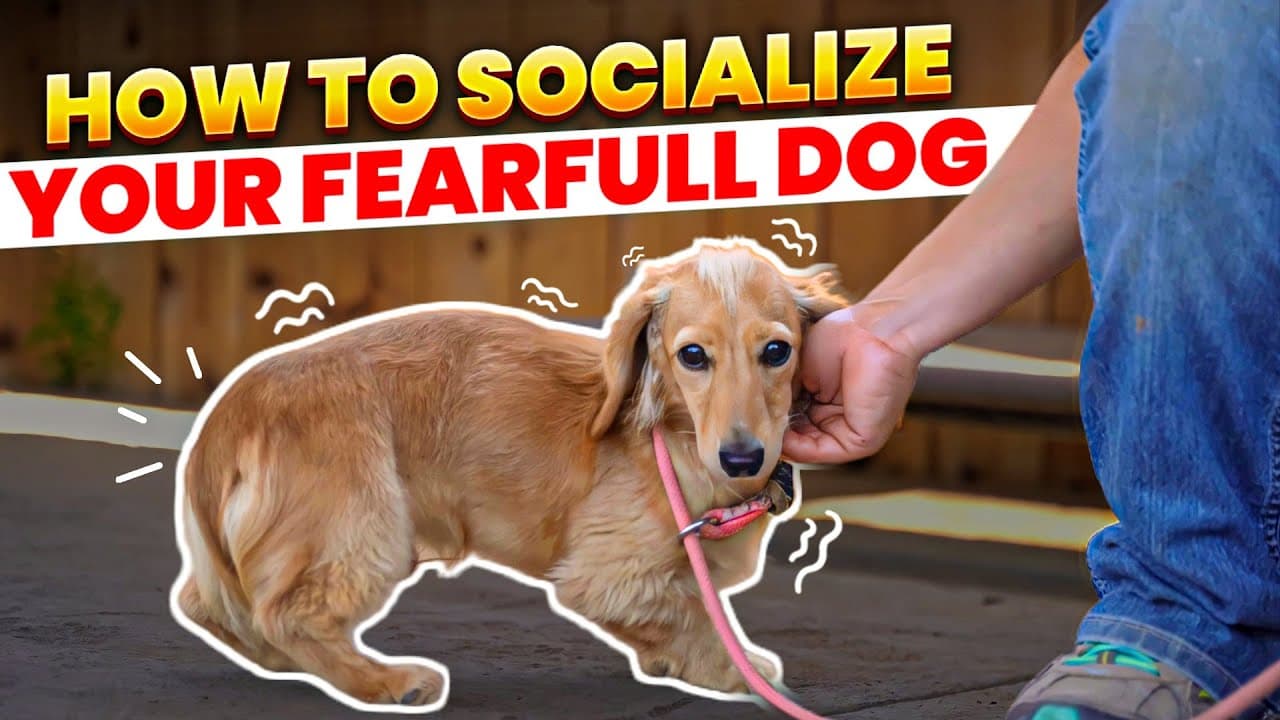
today we are back in riverside california with professional dog trainer bethany perdome at her business ph dogs and we're gonna be doing some training i have dallas here she's a little miniature dachshund and she is scared of life so she's here for our board and train program and i'm going to explain how to introduce a scared dog to a new person so... Read More
Key Insights
- Bethany emphasizes the importance of gradual introductions for fearful dogs, using techniques like leash pressure and body language to build trust.
- Petting a scared dog under the chin rather than over the head can reduce fear and help them feel more comfortable.
- Using the treat and retreat method helps dogs gain confidence by associating positive experiences with new people.
- Avoid overwhelming fearful dogs by keeping interactions short and positive, gradually increasing exposure to new stimuli.
- The barking of scared dogs is often a symptom of fear, which can be reduced by building their confidence through positive experiences.
- It's crucial to end training sessions on a good note to prevent reinforcing fear and to ensure the dog leaves with a positive association.
- Desensitization and counter-conditioning can help dogs overcome fears, such as being approached by people or loud noises.
- Training should be tailored to individual dogs, considering their unique personalities and thresholds, to ensure effective socialization.
Install to Summarize YouTube Videos and Get Transcripts
Explore YouTube Video Summarizer or Get YouTube Transcript Extractor
Questions & Answers
Q: How does Bethany suggest introducing a scared dog to a new person?
Bethany suggests using a leash to prevent the dog from running away and kneeling down to avoid intimidating the dog. She uses leash pressure to encourage the dog to approach and rewards them with treats and gentle chin scratches. This method helps build trust and reduces fear.
Q: What is the treat and retreat method?
The treat and retreat method involves giving the dog a treat and then walking away, encouraging the dog to approach. This technique helps the dog associate approaching people with positive experiences and gradually builds their confidence, making them more comfortable in social situations.
Q: Why does Bethany advise against using food initially with very nervous dogs?
Bethany advises against using food initially with very nervous dogs because they might become braver due to the food but then get scared once the food is gone. This can lead to a situation where the dog might bite out of fear, as the motivation for food is no longer present.
Q: How can petting under the chin benefit a scared dog?
Petting under the chin is less intimidating for a scared dog compared to reaching over their head. It helps the dog feel more comfortable and reduces fear, as the action is less intrusive and allows the dog to feel more in control of the interaction.
Q: What role does ending on a good note play in training?
Ending on a good note ensures the dog leaves the session with a positive association, reinforcing the desired behavior and reducing fear. It prevents overwhelming the dog and helps build their confidence over time, making future interactions more successful.
Q: How does Bethany recommend desensitizing a dog to common fears?
Bethany recommends using counter-conditioning, where a feared action is paired with a positive outcome, like treats. By gradually increasing exposure and rewarding calm behavior, dogs learn to associate previously scary stimuli with positive experiences, reducing their fear over time.
Q: Why is it important to tailor training to individual dogs?
Training should be tailored to individual dogs because each dog has unique thresholds and personalities. Understanding these differences allows for more effective socialization and training, ensuring that the dog is comfortable and able to progress at their own pace without being overwhelmed.
Q: How can barking be addressed in fearful dogs?
Barking in fearful dogs is often a symptom of fear. By building the dog's confidence through positive experiences and gradual exposure to new stimuli, the underlying fear can be reduced, which in turn decreases the barking. Addressing the root cause of the barking is more effective than trying to stop the barking itself.
Summary & Key Takeaways
-
Bethany Preud'homme demonstrates techniques to socialize fearful dogs, focusing on building trust through gradual exposure and positive reinforcement. She emphasizes the importance of body language and appropriate petting to make dogs feel comfortable.
-
The video highlights the treat and retreat method to encourage dogs to approach new people, suggesting short, positive interactions to build confidence and reduce barking, which is often a symptom of fear.
-
Bethany advises ending sessions on a positive note, using desensitization and counter-conditioning to help dogs overcome fears. Training should be individualized, considering each dog's unique thresholds and personality.
Read in Other Languages (beta)
Share This Summary 📚
Summarize YouTube Videos and Get Video Transcripts with 1-Click
Try YouTube Summary with ChatGPT & Claude or YouTube Transcript Generator
Explore More Summaries from Nate Schoemer 📚






Summarize YouTube Videos and Get Video Transcripts with 1-Click
Try YouTube Summary with ChatGPT & Claude or YouTube Transcript Generator