How OpenAI Advances Self-Driving Tech with Ghost
TL;DR
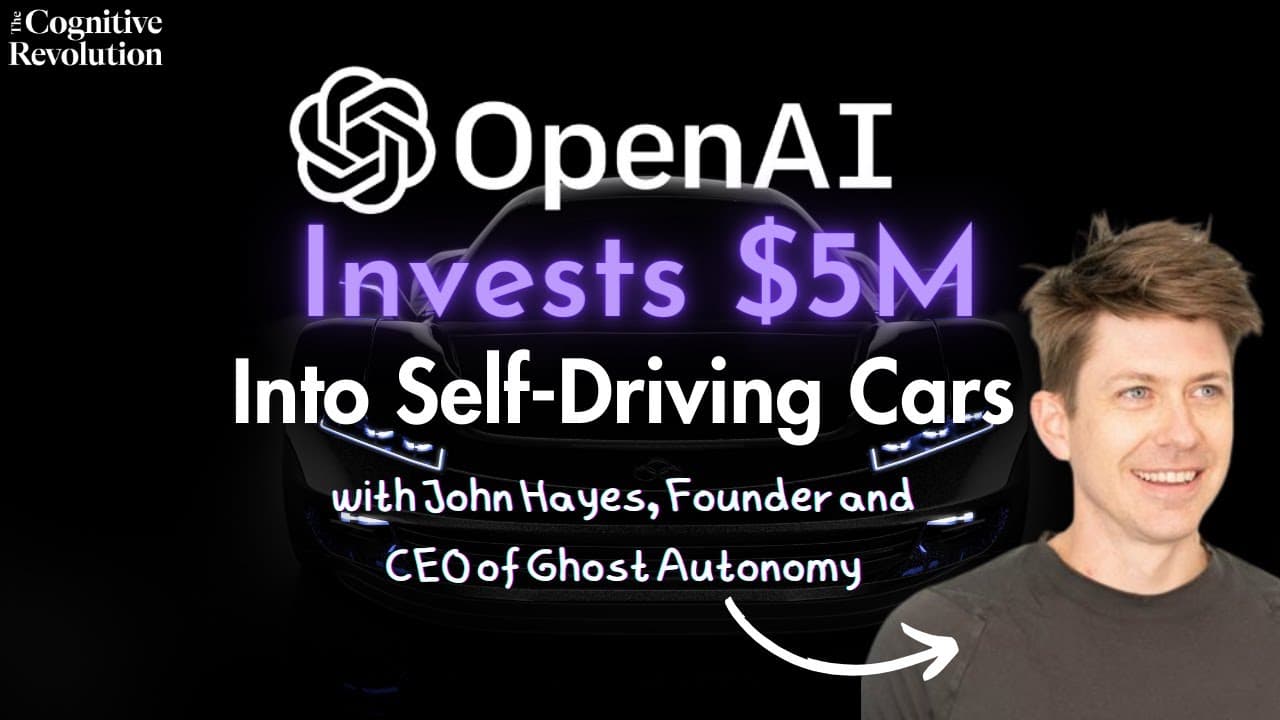
OpenAI's investment in Ghost Autonomy aims to revolutionize self-driving technology by integrating multimodal large language models. These models enhance cars' ability to interpret complex driving environments and communicate with drivers in plain language. This partnership could significantly advance the reliability and adoption of autonomous vehicles.
Transcript
what we're putting together is the car should tell you like why it's doing what it's doing in plain language if you've rented a car that has like a bunch of features on it it will like beep at you and show you some symbol you've never seen and you don't know why it's beeping at you and it has this very very narrow communication path and so I think ... Read More
Key Insights
- OpenAI has partnered with Ghost Autonomy to advance self-driving technology using multimodal large language models.
- Ghost Autonomy focuses on using consumer-grade cameras and chips to reduce costs and improve scalability.
- The integration of AI allows cars to explain their actions in plain language, improving user trust and interaction.
- Current self-driving systems face challenges with edge cases, which Ghost aims to address with AI's common sense reasoning.
- The partnership represents a shift from traditional rule-based systems to AI-driven decision-making in autonomous vehicles.
- The use of AI can potentially make autonomous systems more reliable and adaptable to complex driving scenarios.
- Regulatory challenges remain a significant hurdle for the widespread adoption of self-driving technology.
- The collaboration could lead to a new era of human-computer interaction in vehicles, enhancing user experience and safety.
Install to Summarize YouTube Videos and Get Transcripts
Explore YouTube Video Summarizer or Get YouTube Transcript Extractor
Questions & Answers
Q: How does OpenAI's investment impact Ghost Autonomy?
OpenAI's investment supports Ghost Autonomy in integrating multimodal large language models into their self-driving technology. This collaboration aims to enhance the vehicles' ability to interpret complex driving environments and communicate with drivers in plain language, potentially increasing the reliability and adoption of autonomous vehicles. The partnership signifies a shift from traditional rule-based systems to AI-driven decision-making, addressing challenges like edge cases with AI's common sense reasoning.
Q: What is Ghost Autonomy's approach to self-driving technology?
Ghost Autonomy focuses on using consumer-grade cameras and chips to develop cost-effective and scalable self-driving technology. By integrating AI, particularly large language models, Ghost aims to improve vehicles' ability to interpret complex environments and communicate with drivers. This approach addresses the challenges of edge cases and enhances user interaction by allowing cars to explain their actions in plain language, fostering trust and reliability.
Q: Why is AI integration important for self-driving cars?
AI integration is crucial for self-driving cars as it enables vehicles to better understand and navigate complex driving environments. By using AI, particularly large language models, cars can interpret a wide range of scenarios with common sense reasoning, addressing edge cases that traditional systems struggle with. AI also allows vehicles to communicate their actions in plain language, improving user trust and facilitating a more intuitive human-computer interaction.
Q: What challenges do self-driving cars face in adoption?
Self-driving cars face several challenges in adoption, including technological, regulatory, and societal hurdles. Technologically, addressing edge cases and ensuring reliability in diverse driving conditions are significant challenges. Regulatory frameworks are still evolving, with safety standards and liability issues needing resolution. Societally, gaining public trust and acceptance requires demonstrating the safety and benefits of autonomous vehicles, which is crucial for widespread adoption.
Q: How do multimodal models enhance self-driving technology?
Multimodal models enhance self-driving technology by integrating various data types, such as visual and textual information, to improve decision-making and environmental understanding. These models allow vehicles to interpret complex driving scenarios with greater accuracy and common sense reasoning. By enabling cars to communicate their actions in plain language, multimodal models also improve user interaction and trust, facilitating a smoother integration of autonomous vehicles into everyday life.
Q: What is the significance of consumer-grade hardware in Ghost's strategy?
Consumer-grade hardware is significant in Ghost's strategy as it reduces the cost and complexity of developing self-driving technology. By using readily available cameras and chips, Ghost can scale their systems more efficiently, making autonomous vehicles more accessible. This approach, combined with AI integration, allows Ghost to focus on software improvements and leverage AI's capabilities to enhance vehicle performance and user interaction, addressing key challenges in the industry.
Q: How does Ghost Autonomy address regulatory challenges?
Ghost Autonomy addresses regulatory challenges by focusing on developing reliable and safe self-driving technology that meets evolving standards. By integrating AI, Ghost aims to enhance the vehicles' ability to interpret complex environments and communicate effectively with users, demonstrating safety and reliability. Engaging with regulators and stakeholders, Ghost seeks to align their technology with regulatory expectations, facilitating smoother adoption and integration into the transportation ecosystem.
Q: What potential does AI hold for the future of autonomous vehicles?
AI holds significant potential for the future of autonomous vehicles by enabling more reliable and adaptable systems. With AI, vehicles can interpret complex driving scenarios with common sense reasoning, addressing edge cases and improving safety. AI also facilitates better human-computer interaction, allowing cars to communicate actions in plain language and enhancing user trust. As AI technology advances, it is expected to drive the widespread adoption and integration of autonomous vehicles, transforming transportation.
Summary & Key Takeaways
-
OpenAI's investment in Ghost Autonomy aims to transform self-driving technology by leveraging multimodal large language models. These models enhance vehicles' ability to interpret complex environments and communicate with drivers in plain language, potentially increasing the reliability and adoption of autonomous cars. The partnership marks a shift from traditional rule-based systems to AI-driven decision-making, addressing challenges like edge cases with AI's common sense reasoning.
-
Ghost Autonomy's approach involves using consumer-grade cameras and chips, reducing costs and improving scalability. This strategy, combined with AI, allows cars to explain their actions in plain language, fostering user trust and interaction. The collaboration with OpenAI could significantly advance the reliability and adoption of self-driving technology, despite existing regulatory challenges.
-
The integration of AI in Ghost Autonomy's systems represents a new era of human-computer interaction in vehicles. By enabling cars to interpret complex driving scenarios and communicate effectively with users, the partnership could enhance user experience and safety. This development highlights the potential of AI to revolutionize the autonomous vehicle industry, making systems more reliable and adaptable.
Read in Other Languages (beta)
Share This Summary 📚
Summarize YouTube Videos and Get Video Transcripts with 1-Click
Try YouTube Summary with ChatGPT & Claude or YouTube Transcript Generator
Explore More Summaries from Cognitive Revolution "How AI Changes Everything" 📚






Summarize YouTube Videos and Get Video Transcripts with 1-Click
Try YouTube Summary with ChatGPT & Claude or YouTube Transcript Generator