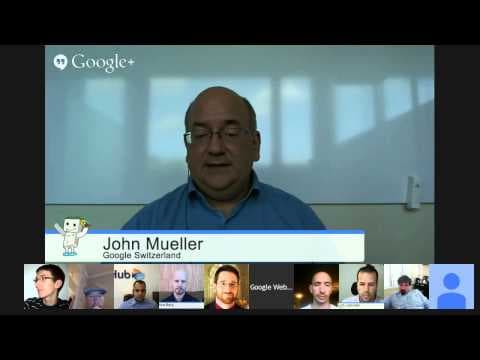
English Google Webmaster Central office-hours hangout
TL;DR
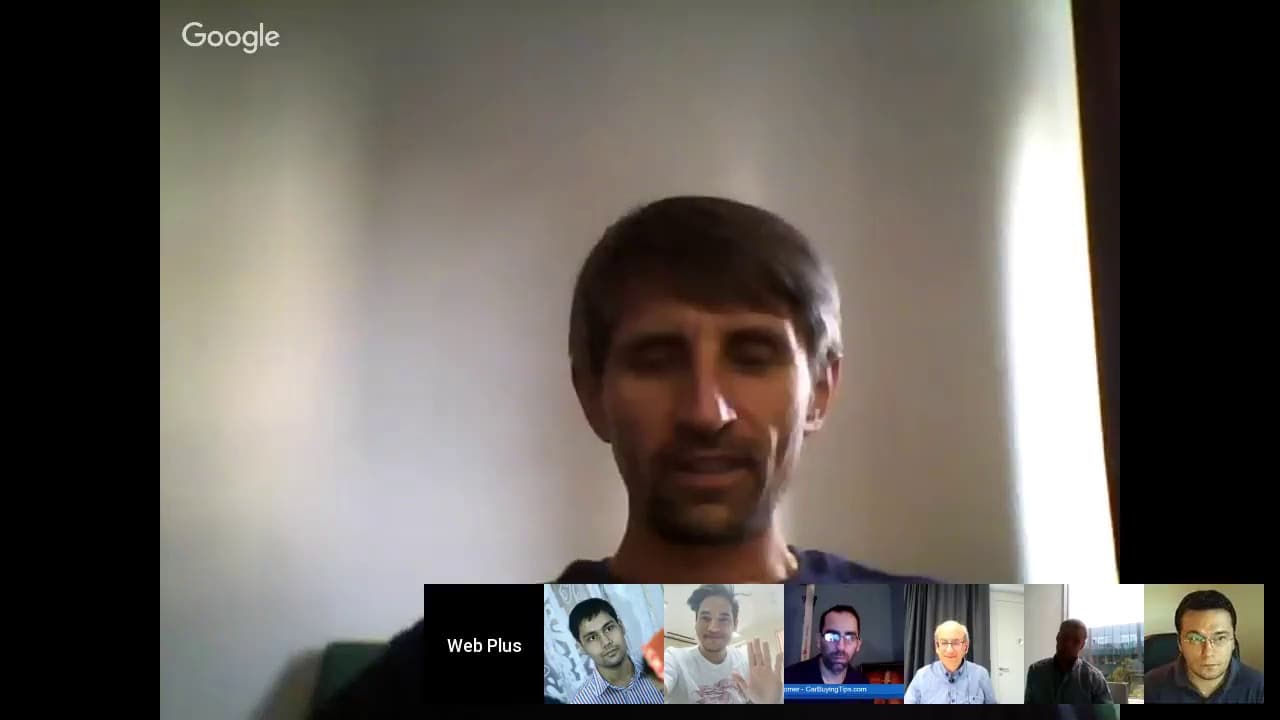
John Mueller discusses Google search updates and webmaster queries.
Transcript
JOHN MUELLER: All right. Welcome everyone to today's Google Webmaster Central office hours Hangouts. My name is John Mueller. I'm a Webmaster Trends Analyst here at Google in Switzerland. And part of what we do is these webmaster office hours Hangouts where webmasters can come and ask any questions around search, or Google related, webmaster relate... Read More
Key Insights
- Google's 'Fred' update is not a single update but a series of normal search quality updates aimed at improving search results.
- Webmasters experiencing visibility drops should first check for technical issues and then consider quality reevaluation by Google's algorithms.
- Canonical and noindex tags can confuse Google's algorithms but are generally treated as mistakes rather than directives.
- Search Console numbers for impressions and clicks may not always match due to filtered queries that see few impressions.
- Pagerank is used internally by Google and is not exposed to webmasters; its impact is often misunderstood.
- Social media traffic does not directly influence Google rankings, as Google does not use social signals for ranking.
- The disavow tool is recommended for dealing with unwanted links, and domain-level disavowals are more efficient.
- Structured data markup helps Google understand page content better and can enhance search result appearance.
Install to Summarize YouTube Videos and Get Transcripts
Explore YouTube Video Summarizer or Get YouTube Transcript Extractor
Questions & Answers
Q: What is the 'Fred' update and how does it affect websites?
The 'Fred' update is not a single update but a series of regular search quality updates that Google performs to improve search results. These updates are aimed at evaluating and refining the quality of search results, and they are not tied to specific criteria changes. Websites experiencing visibility changes during these updates should first ensure there are no technical issues and then consider possible quality reevaluation by Google's algorithms.
Q: How does Google handle canonical and noindex tags?
Canonical and noindex tags can create confusion for Google's algorithms. When both are present, Google may interpret the canonical as a mistake or an attempt to force a canonical choice, and it will try to follow the noindex directive. However, webmasters should be cautious as the interaction between these tags can lead to unintended indexing behavior.
Q: Why do Search Console metrics for impressions and clicks not always match?
Search Console metrics may not match due to Google's filtering of queries that see very few impressions. This filtering is implemented to maintain privacy thresholds and can result in discrepancies between the total impressions/clicks and the sum of individual query data. Viewing metrics on a per-page basis can provide more accurate insights without the query filter.
Q: Does social media traffic influence Google rankings?
No, social media traffic does not directly influence Google rankings. Google does not use social media signals for ranking purposes, and links from social media sites typically have nofollow attributes, preventing the passage of ranking signals. While social traffic can be beneficial for a website's visibility, it does not impact search rankings.
Q: What is the recommended approach for handling unwanted backlinks?
For handling unwanted backlinks, webmasters should use the disavow tool, especially at the domain level, to efficiently manage large volumes of undesirable links. By disavowing these links, webmasters can ensure that Google does not consider them in ranking evaluations, thus mitigating potential negative impacts on site visibility.
Q: How important is structured data markup for SEO?
Structured data markup is important for helping Google better understand page content and can enhance the appearance of search results through rich snippets. While not directly influencing rankings, structured data can improve click-through rates by providing additional context and visual elements in search results. Webmasters should ensure proper implementation to maximize its benefits.
Q: What should webmasters do if their staging site gets indexed?
If a staging site is accidentally indexed, webmasters should remove it from Google's index by blocking access or using noindex directives. Crawl errors in Search Console following removal are normal and indicate that the site is properly blocked. Google may continue attempting to crawl the site for some time, but no further action is needed once blocked.
Q: How does Google treat content in JavaScript tabs?
Google can index content in JavaScript tabs if the content is available when the page is initially rendered. However, content loaded dynamically after user interaction may not be indexed, as Googlebot does not interact with page elements. Webmasters should ensure important content is accessible without requiring user actions to improve indexing chances.
Summary & Key Takeaways
-
John Mueller addresses various webmaster concerns during a Google Webmaster Central office hours hangout, focusing on search algorithm updates and best practices for webmasters. He clarifies misconceptions about Google's 'Fred' update and emphasizes the importance of quality content and technical soundness.
-
Mueller explains the role of canonical and noindex tags, and how Google handles them. He also discusses issues related to Search Console metrics, highlighting the filtering of low-impression queries as a reason for discrepancies in reported numbers.
-
The hangout covers topics like the non-influence of social media on rankings, the use of disavow files for managing unwanted backlinks, and the benefits of structured data markup. Mueller reassures webmasters about handling errors and emphasizes focusing on content quality and relevance.
Read in Other Languages (beta)
Share This Summary 📚
Summarize YouTube Videos and Get Video Transcripts with 1-Click
Try YouTube Summary with ChatGPT & Claude or YouTube Transcript Generator
Explore More Summaries from Google Search Central 📚
Summarize YouTube Videos and Get Video Transcripts with 1-Click
Try YouTube Summary with ChatGPT & Claude or YouTube Transcript Generator