What Is the Architecture of the 8087 Math Coprocessor?
TL;DR
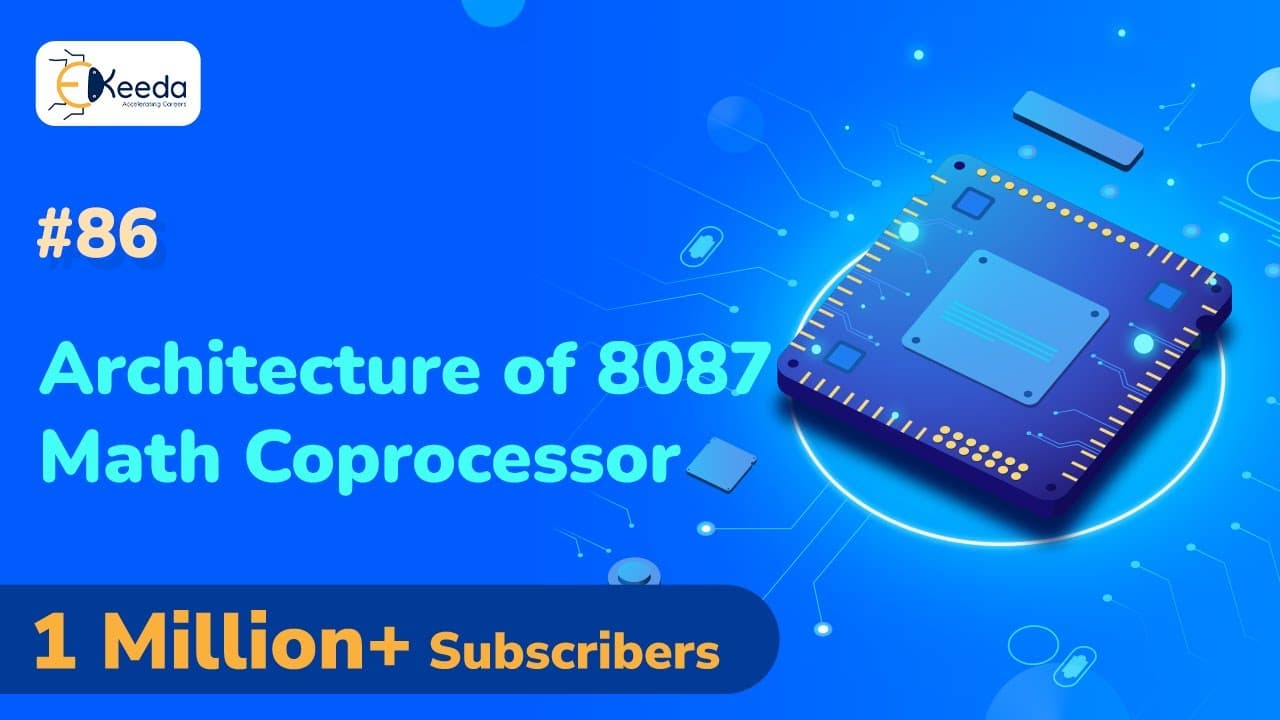
The architecture of the 8087 Math Coprocessor consists of two main components: the control unit, which manages communication with the microprocessor, and the numeric extension unit, responsible for performing complex arithmetic calculations. This design allows the 8087 to assist microprocessors in executing advanced numeric operations seamlessly.
Transcript
hello friends in this video we are going to study about the architecture of the first map co-processor 8087 we will study its architecture or we can save its block diagram and we will see the function of each of the blocks present in the diagram okay so let us start with our topic the 8087 math co processor is the first co-processor developed by in... Read More
Key Insights
- 🇨🇨 The 8087 Math Co-processor was developed to assist microprocessors with complex arithmetic and trigonometric calculations.
- 🇦🇪 The architecture of the 8087 is divided into the control unit and the numeric extension unit.
- 🎮 The control unit handles communication and control between the microprocessor and the co-processor.
- 🎭 The numeric extension unit performs numeric calculations and operations involving numeric data.
- ⚡ The control unit includes components such as the status word, data buffer, and tag register.
- ®️ The numeric execution unit includes a register stack for storing data and a tag word for tracking the status of the registers.
- 💁 The stack operates in a last-in, first-out (LIFO) format.
Install to Summarize YouTube Videos and Get Transcripts
Explore YouTube Video Summarizer or Get YouTube Transcript Extractor
Questions & Answers
Q: What is the purpose of the 8087 Math Co-processor?
The 8087 Math Co-processor was developed to assist microprocessors in performing complex arithmetic and trigonometric calculations that they are unable to handle efficiently.
Q: How is the architecture of the 8087 Co-processor divided?
The architecture is divided into two parts: the control unit and the numeric extension unit. The control unit handles communication between the microprocessor and the co-processor, while the numeric extension unit performs numeric calculations.
Q: What functions are performed by the control unit?
The control unit handles communication between the microprocessor and the co-processor. It receives and decodes instructions, reads and writes memory operands, and maintains parallelism, among other functions.
Q: What does the numeric extension unit handle?
The numeric extension unit is responsible for performing numeric operations, including arithmetic, logical data transfer, and other calculations involving numeric data.
Q: How is the control unit synchronized with the microprocessor?
The control unit acts as an interface between the co-processor and the microprocessor, synchronizing their operations and facilitating communication.
Q: What are the components of the control unit?
The control unit consists of the controller, status word, and data buffer. These components are involved in the communication and control of operations between the microprocessor and the co-processor.
Q: How is the numeric execution unit organized?
The numeric execution unit includes a register stack, tag word, and various components for performing numeric calculations. The register stack stores data, while the tag word provides information about the contents of the stack.
Q: What is the purpose of the tag register in the numeric execution unit?
The tag register contains the tag word, which provides information about the status of the registers in the stack. Each register has two bits in the tag word representing its validity, emptiness, or invalidity.
Summary & Key Takeaways
-
The 8087 Math Co-processor was designed to provide fast and efficient calculations to microprocessors.
-
The architecture is divided into two parts: the control unit and the numeric extension unit.
-
The control unit handles communication between the microprocessor and the co-processor, while the numeric extension unit performs numeric calculations.
Read in Other Languages (beta)
Share This Summary 📚
Summarize YouTube Videos and Get Video Transcripts with 1-Click
Try YouTube Summary with ChatGPT & Claude or YouTube Transcript Generator
Explore More Summaries from Ekeeda 📚
Summarize YouTube Videos and Get Video Transcripts with 1-Click
Try YouTube Summary with ChatGPT & Claude or YouTube Transcript Generator