What Is The Smallest Star?
TL;DR
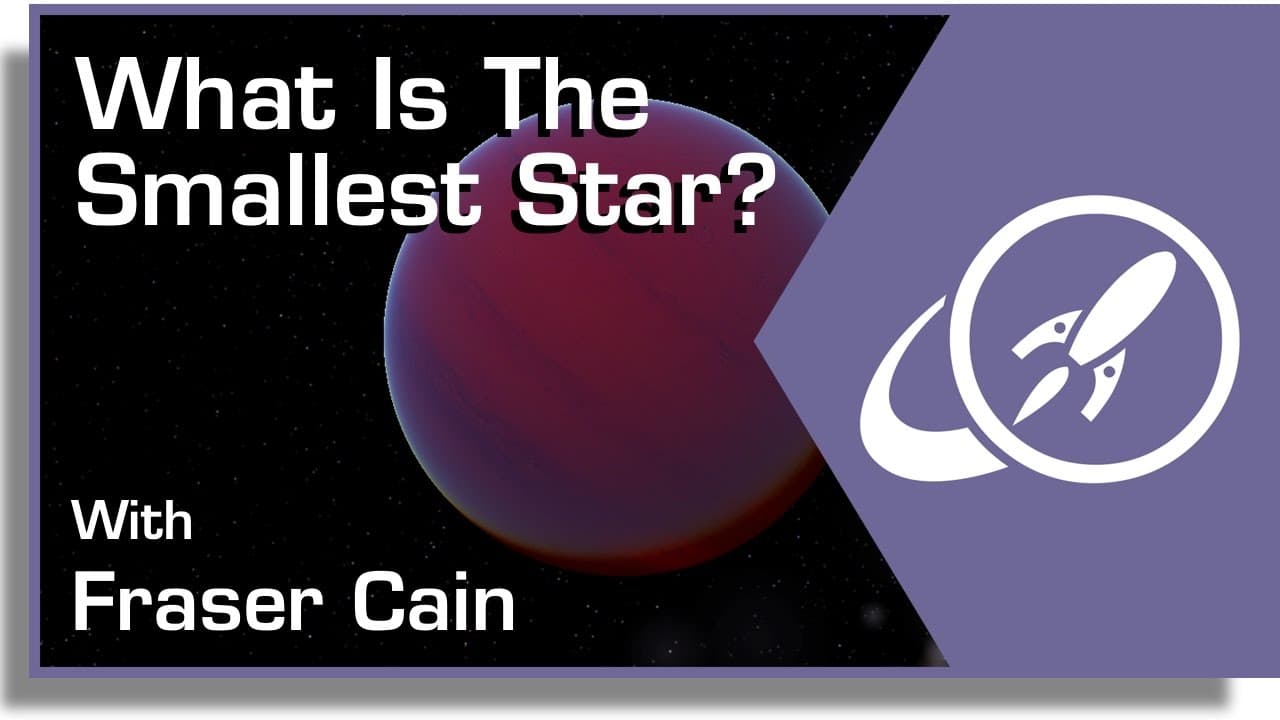
The smallest star known at the time was 2MASS J05233822-1403022, with 9% of the Sun’s mass. Stars can theoretically sustain hydrogen fusion with as little as 7.5% of a solar mass, producing a red dwarf. These unusually dense stars can remain close to Jupiter in size despite having far more mass, so read on to see how they compare with Proxima Centauri and the Sun.
Transcript
Space and astronomy is always flaunting its size issues. Biggest star, hugest nebula, prettiest most talented massive galaxy, most infinite universe, and which comet came out on top in the bikini category. Blah blah blah. In an effort to balance the scales a little we’re going look at the other end of the spectrum. Today we’re talking small stars. ... Read More
Key Insights
- 🤩 Space and astronomy often focus on the largest stars, but it's also important to consider the smallest stars.
- 🤩 Red dwarf stars, with as little as 7.5% of the Sun's mass, are the smallest type of stars.
- 🤩 The smallest known star is currently measured at 9% of the Sun's mass.
- 🤩 Proxima Centauri, the nearest star to Earth, is a red dwarf with about 12.3% of the Sun's mass.
- 🤩 Red dwarf stars can be much denser than larger stars, as more hydrogen makes them denser without significantly increasing their size.
- 🤩 Visible stars, such as 61 Cygni, Epsilon Eridani, and Alpha Centauri B, are all larger than the Sun.
- 🤩 The Sun, despite being smaller than some visible stars, is perfectly adequate for sustaining life on Earth.
Install to Summarize YouTube Videos and Get Transcripts
Explore YouTube Video Summarizer or Get YouTube Transcript Extractor
Questions & Answers
Q: What is the smallest star?
The smallest known star at the time of recording was 2MASS J05233822-1403022. It has 9% of the Sun’s mass, only slightly above the smallest theoretical mass for a star.
Q: What is the smallest possible mass for a star?
A star can sustain fusion reactions with as little as 7.5% of the Sun’s mass. Below that threshold, it cannot generate enough temperature and pressure in its core to ignite fusion.
Q: What is the smallest type of star?
The smallest type of star described is a red dwarf. A red dwarf can have as little as 7.5% of a solar mass while still sustaining fusion.
Q: Is the Sun the smallest star?
No, the Sun is huge compared with the smallest stars. It is the fourth-smallest star visible to the unaided eye, while red dwarfs are too dim to see without a telescope.
Q: How large would the smallest possible red dwarf be?
The smallest possible red dwarf would be about 50% larger than Jupiter. Despite that size, it would have about 80 times Jupiter’s mass.
Q: How does Proxima Centauri compare with the smallest stars?
Proxima Centauri is a red dwarf with about 12.3% of the Sun’s mass and a diameter of only 200,000 kilometers. It is the closest star to Earth after the Sun, but it is too dim to see without a telescope.
Q: Why can a small red dwarf have so much mass?
Adding more hydrogen does not make a red dwarf much larger. Instead, its stronger gravity pulls the material together, making the star denser.
Q: What is the smallest star visible to the unaided eye?
The smallest star visible without a telescope is one member of the binary pair 61 Cygni, at 66% the size of the Sun. It is 11.4 light years away and is only barely visible under dark skies.
Summary & Key Takeaways
-
Stars are typically measured based on their mass and size, with larger stars having more mass and fusion reactions that release energy.
-
Red dwarf stars, the smallest type of stars, can have as little as 7.5% of the Sun's mass, with the smallest measured star being at 9% of the Sun's mass.
-
The nearest star, Proxima Centauri, is a red dwarf with about 12.3% of the Sun's mass and is only slightly larger than Jupiter.
Read in Other Languages (beta)
Share This Summary 📚
Summarize YouTube Videos and Get Video Transcripts with 1-Click
Try YouTube Summary with ChatGPT & Claude or YouTube Transcript Generator
Explore More Summaries from Fraser Cain 📚
Summarize YouTube Videos and Get Video Transcripts with 1-Click
Try YouTube Summary with ChatGPT & Claude or YouTube Transcript Generator