How Does Sound Become Digital Audio?
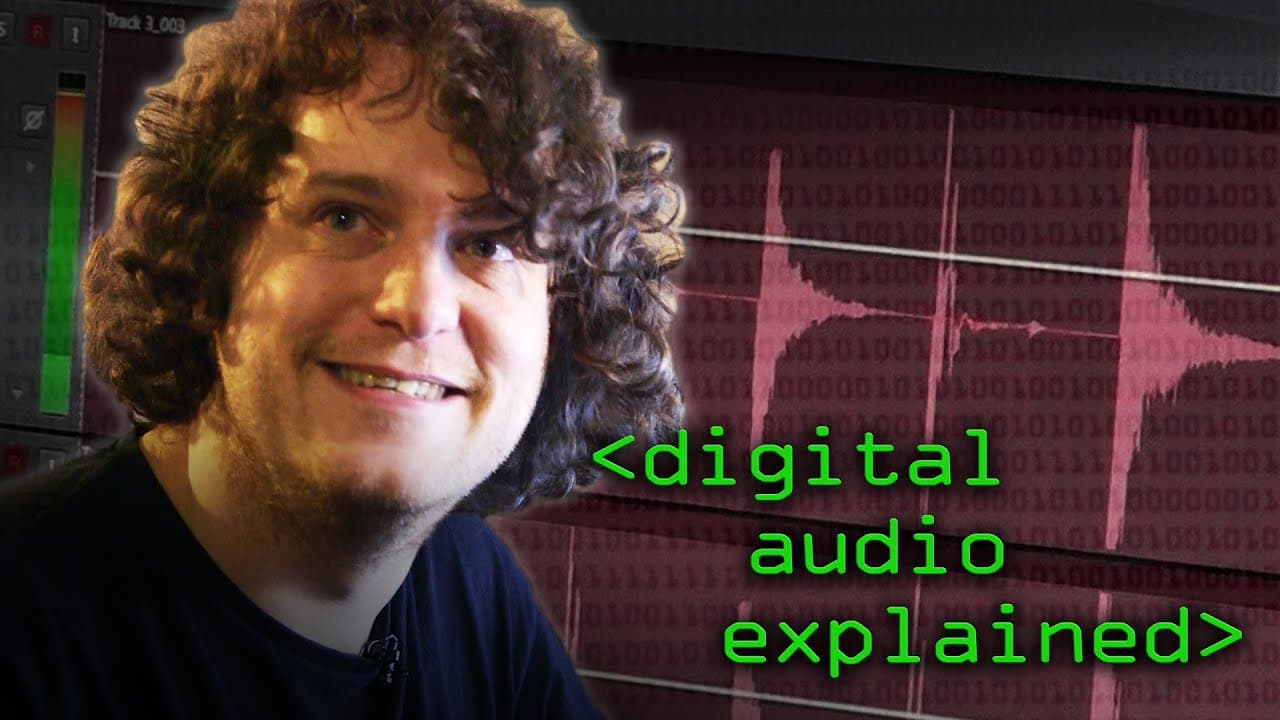
TL;DR
Sound is transformed into digital audio through a two-step process: first, microphones convert sound waves into electrical signals, and then sound cards digitise these signals. Key concepts include sample frequency, which affects audio quality by determining how often sound levels are measured, and bit depth, which defines the range of sound levels available, impacting recording precision.
Transcript
The Air moves backwards and forwards like that across a room. I would say and Moves in some kind of wave pattern across a room and it will hit your Eardrum and vibrate something which turns it into some kind of electrical signal which your brain decodes and you go oh that's that note or that's that note when we come to get that sound into a compute... Read More
Key Insights
- 😒 Sound is converted from analog to digital signals through the use of microphones and sound cards.
- 👂 Sample frequency determines the number of times per second that the computer measures the sound level, affecting audio quality.
- 🧡 Bit depth determines the range of levels available for each sound sample, impacting the precision and detail of recordings.
- ✋ The standard sample frequency for CDs and audio files is 44.1 kHz, with higher frequencies used in certain applications.
- 🔊 Higher bit depth recordings, such as 24-bit, provide more headroom for capturing loud and quiet sounds accurately.
- 👣 Digital clipping can occur when summing multiple audio tracks together, requiring careful level management.
- 🧡 Converting between sample frequencies and bit depths can result in loss of detail in higher frequency ranges.
Install to Summarize YouTube Videos and Get Transcripts
Explore YouTube Video Summarizer or Get YouTube Transcript Extractor
Questions & Answers
Q: How is sound converted from analog to digital signals?
Sound is converted into electrical signals by a microphone, which are then converted into a digital signal by a sound card.
Q: What is sample frequency and how does it affect audio quality?
Sample frequency refers to the number of times per second that the computer measures the sound level. Higher sample frequencies result in better quality audio.
Q: How does bit depth impact the quality of a recording?
Bit depth determines the range of levels available for each sound sample. Higher bit depths allow for more precise and detailed recordings.
Q: Why is 44.1 K the standard sample frequency for CDs and audio files?
44.1 kHz was initially chosen as the sample frequency because it can recreate frequencies up to 22,050 Hz, which was believed to be the highest frequency humans could hear at the time.
Summary & Key Takeaways
-
Sound is converted into electrical signals, which is then turned into a digital signal by a microphone and sound card.
-
Sample frequency determines the number of times per second the computer measures the sound level, with higher frequencies providing better quality audio.
-
Bit depth is the range of levels available for each sound sample, with higher bit depths allowing for more precise and detailed recordings.
Read in Other Languages (beta)
Share This Summary 📚
Summarize YouTube Videos and Get Video Transcripts with 1-Click
Try YouTube Summary with ChatGPT & Claude or YouTube Transcript Generator
Explore More Summaries from Computerphile 📚






Summarize YouTube Videos and Get Video Transcripts with 1-Click
Try YouTube Summary with ChatGPT & Claude or YouTube Transcript Generator