Open Space 100: Did We Really Detect a Signal from Proxima Centauri? And More...
TL;DR
In the 100th episode of Open Space, the host celebrates the Great Conjunction of Jupiter and Saturn, discusses upcoming space missions, and answers questions from viewers.
Transcript
well hey everybody welcome to open space number 100 100 episodes of me standing here with no plan about what it is that we're going to be talking about and of course tonight like every night i have no idea so this is open space for monday december 21st 2020 the night of the great conjunction where jupiter and saturn come together in the sky and las... Read More
Key Insights
- 🫢 The rotation rates of gas giants like Jupiter and Saturn are challenging to determine due to cloud movement, but astronomers use magnetospheric features to track rotation.
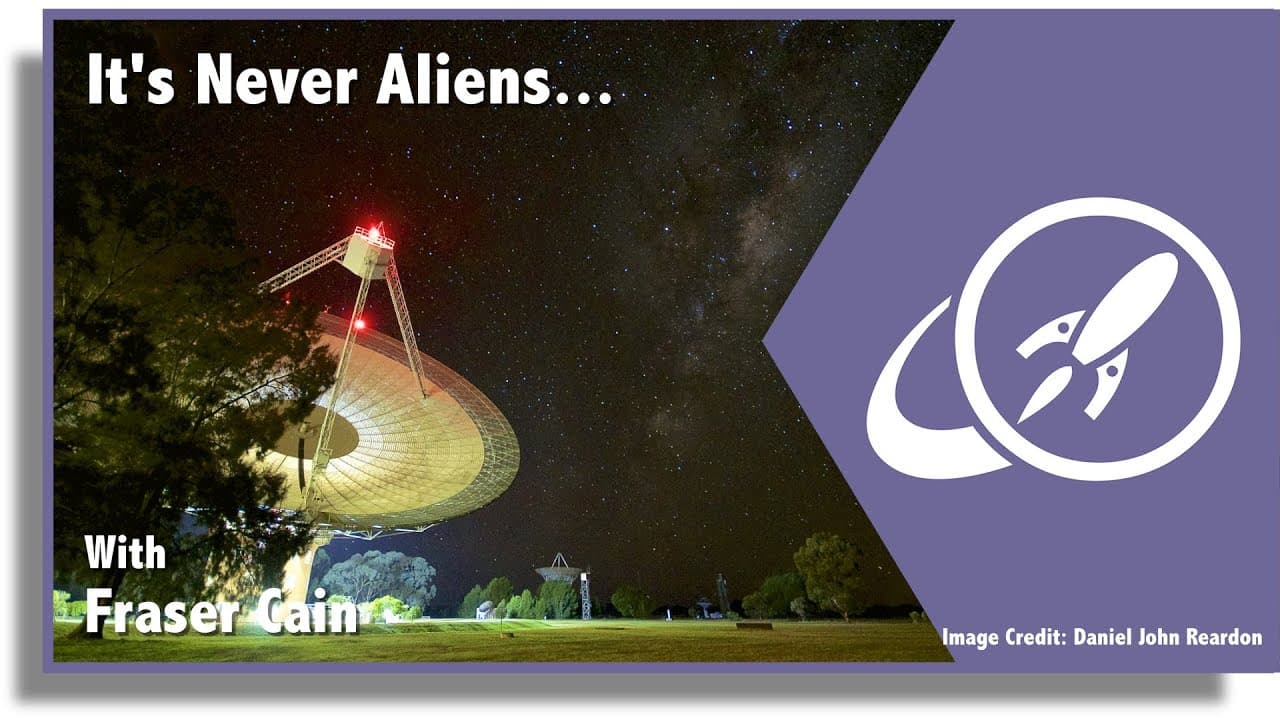
- 📡 The potential discovery of a radio signal from Proxima Centauri has generated excitement, although it is likely an earth-based signal that bounced off a satellite passing by.
- 👻 Learning a new language, such as Mandarin Chinese, provides intellectual stimulation and allows for a better understanding of different cultures and space-related developments.
- 👾 The ongoing Great Conjunction and upcoming space missions contribute to the excitement and exploration of our universe.
Install to Summarize YouTube Videos and Get Transcripts
Explore YouTube Video Summarizer or Get YouTube Transcript Extractor
Questions & Answers
Q: How do astronomers determine the rotation rate of gas giants like Jupiter?
Determining the rotation rate of gas giants is challenging since their storms and cloud belts move, making it difficult to track. Astronomers use the magnetosphere, tracking features in the magnetic fields of planets like Jupiter and Saturn to measure rotation rates.
Q: Is it possible that intelligent life exists on other planets but they lack the knowledge of space due to constant heavy cloud cover?
While it is possible that life exists on planets with constant cloud cover, preventing them from understanding space, it is challenging to detect such civilizations. However, it is fascinating to consider how different perspectives might shape their understanding of the universe.
Q: What caused the host to learn Mandarin Chinese?
The host learned Mandarin Chinese out of curiosity, to fill a gap in his ability as a space journalist, and to challenge himself intellectually. Additionally, given China's prominent role in space exploration, learning Mandarin allows for better understanding of space-related developments in China.
Summary & Key Takeaways
-
The host discusses the Great Conjunction of Jupiter and Saturn, expressing excitement about being able to view it with his telescope.
-
The episode features a tribute to Nancy Graziano, who has worked hard to organize live streams and virtual star parties.
-
Various space-related questions are answered, including topics such as gas giants' rotation rates and the potential discovery of a radio signal from Proxima Centauri.
Read in Other Languages (beta)
Share This Summary 📚
Summarize YouTube Videos and Get Video Transcripts with 1-Click
Try YouTube Summary with ChatGPT & Claude or YouTube Transcript Generator
Explore More Summaries from Fraser Cain 📚




Summarize YouTube Videos and Get Video Transcripts with 1-Click
Try YouTube Summary with ChatGPT & Claude or YouTube Transcript Generator