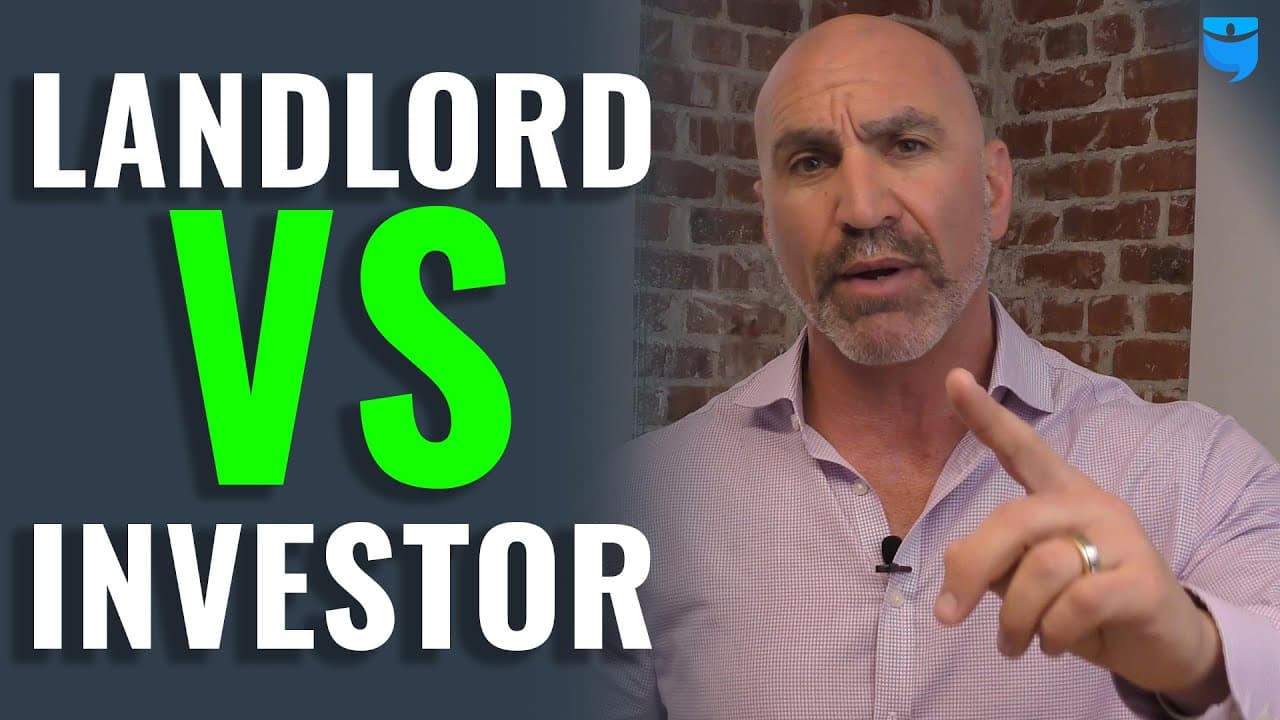
Landlords VS Real Estate Investors (Which One Are You?)
TL;DR
Landlords and investors differ in business approach and scalability.
Transcript
is there really a difference between a landlord and an investor and more importantly does it even matter hey everyone I'm Steve Rosenberg and today we're going to talk about what is the difference between the landlord and the investor understand both own real estate its four walls in a roof however that is where the similarities end and the differe... Read More
Key Insights
- Landlords and investors both own real estate, but their approaches to managing properties differ significantly, primarily in terms of business operations and mindset.
- Landlords typically manage properties themselves, trading time for money, which limits scalability due to the finite number of hours in a day.
- Investors leverage a team of professionals such as contractors and property managers, allowing them to focus on strategic growth rather than day-to-day operations.
- The mindset is crucial; landlords focus on doing, while investors prioritize thinking and leveraging resources for maximum efficiency and scalability.
- Without a structured plan, landlords risk becoming bottlenecks in their operations due to their hands-on approach.
- Investors can scale their operations by networking with other professionals and leveraging others' time and expertise.
- Both landlords and investors need to have clear policies and procedures to ensure business continuity and efficiency.
- Choosing between being a landlord or an investor depends on one's available time, resources, and long-term business goals.
Install to Summarize YouTube Videos and Get Transcripts
Explore YouTube Video Summarizer or Get YouTube Transcript Extractor
Questions & Answers
Q: What is the primary difference between landlords and investors?
The primary difference between landlords and investors lies in their approach to managing properties. Landlords typically manage properties themselves, trading time for money, which limits scalability. In contrast, investors leverage a team of professionals to handle operations, allowing them to focus on strategic growth and efficiency.
Q: Why is scalability a challenge for landlords?
Scalability is a challenge for landlords because they manage properties themselves, which means they are limited by the finite number of hours in a day. This hands-on approach restricts their ability to grow their business beyond a certain point, as they cannot delegate tasks to others effectively.
Q: How do investors leverage their time differently from landlords?
Investors leverage their time differently by employing a team of professionals such as contractors, realtors, and property managers. This allows them to focus on strategic planning and growth rather than day-to-day operations, enabling them to scale their business more effectively than landlords who manage everything themselves.
Q: What mindset shift is necessary for landlords to become investors?
The necessary mindset shift involves moving from a hands-on, task-oriented approach to a strategic, leverage-based mindset. Landlords need to focus on thinking and leveraging resources, such as hiring professionals to handle operations, to transition into investors who prioritize growth and scalability.
Q: What are the risks of not having a structured plan as a landlord?
Without a structured plan, landlords risk becoming bottlenecks in their operations. Their hands-on approach can lead to inefficiencies and limit their ability to scale the business. A lack of clear policies and procedures can also hinder business continuity and growth, making it difficult to adapt to changing market conditions.
Q: How can investors scale their operations effectively?
Investors can scale their operations effectively by networking with other professionals and leveraging their time and expertise. By building a team of trusted contractors, realtors, and property managers, investors can delegate tasks and focus on strategic decisions, allowing them to grow their business sustainably.
Q: What should individuals consider before choosing to be a landlord or an investor?
Individuals should consider their available time, financial resources, and long-term business goals before choosing to be a landlord or an investor. Landlords need more time to manage properties themselves, while investors require capital to hire professionals. Understanding personal preferences and constraints is crucial for making an informed decision.
Q: Why is understanding the difference between landlords and investors important?
Understanding the difference is important because it helps individuals make informed decisions about their real estate business approach. Each has distinct advantages and challenges, and knowing these differences allows individuals to align their strategy with their goals, resources, and lifestyle preferences, ultimately leading to greater success in the real estate market.
Summary & Key Takeaways
-
Landlords and investors both own real estate, but their management styles differ significantly. Landlords manage properties themselves, trading time for money, which can limit scalability. In contrast, investors leverage teams of professionals, allowing them to focus on strategic growth and efficiency.
-
While landlords are hands-on and manage everything themselves, investors use a team approach to leverage time and resources. This mindset shift is crucial for those looking to scale their real estate business effectively.
-
Understanding the differences between landlords and investors is essential for anyone entering the real estate market. Each approach has its advantages and challenges, and the choice depends on one's resources, time, and business goals.
Read in Other Languages (beta)
Share This Summary 📚
Summarize YouTube Videos and Get Video Transcripts with 1-Click
Try YouTube Summary with ChatGPT & Claude or YouTube Transcript Generator
Explore More Summaries from BiggerPockets 📚



Summarize YouTube Videos and Get Video Transcripts with 1-Click
Try YouTube Summary with ChatGPT & Claude or YouTube Transcript Generator