How to Use Augmented Information in Sports
TL;DR
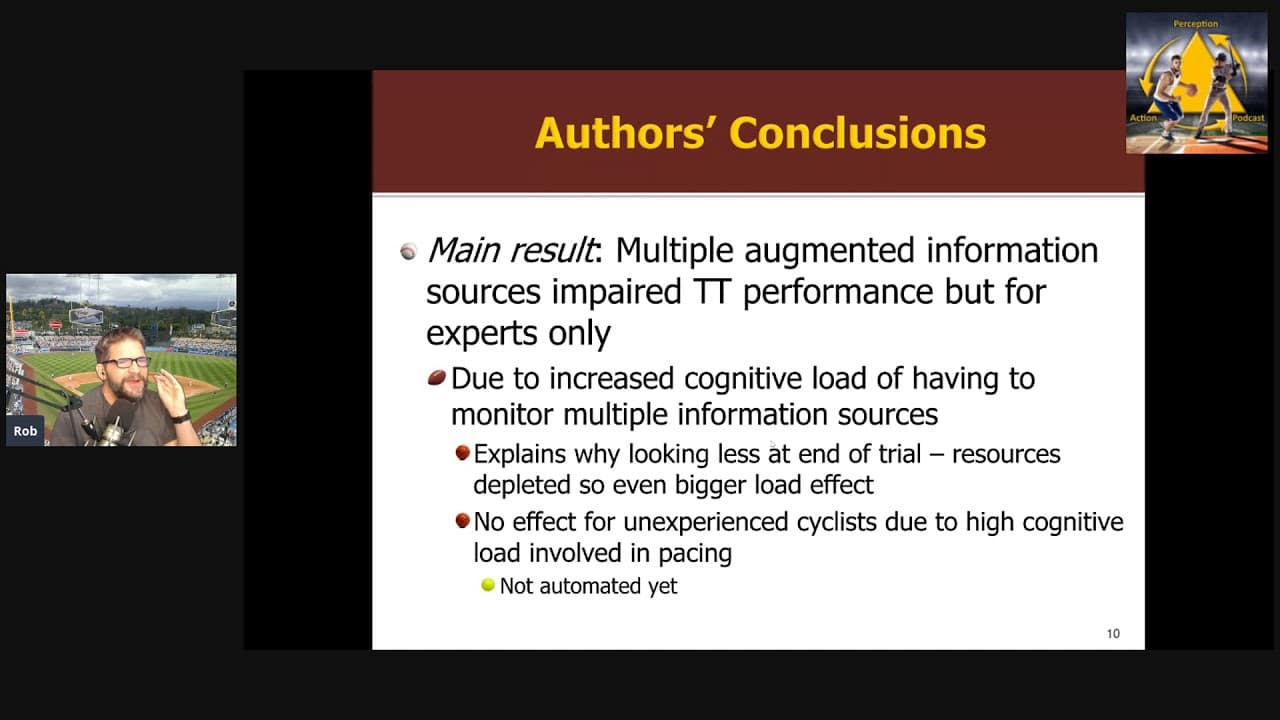
Augmented information can enhance athlete performance by providing feedback not normally available in their environment. However, excessive information may lead to cognitive overload, impairing performance. The study on cyclists found that single-source feedback led to better performance than multiple feedback sources, suggesting the need for careful consideration in information delivery.
Transcript
hi everyone it's rob gray from asu and the perception action podcast again with another article review today's article touches on something i've been interested in a lot for a long time in sports with all the analytics we can do all the sensors everything we can measure now we have so much information available to us that we didn't have before and ... Read More
Key Insights
- Augmented information is additional feedback not naturally available in the athlete's environment.
- Single-source feedback improves performance more than multiple feedback sources in cycling.
- Cognitive overload from excessive information can impair athlete performance.
- Experienced cyclists focus more on power output than other metrics.
- Eye tracking reveals actual focus differs from self-reported feedback usage.
- Novices experience high cognitive demand even with single feedback, showing no performance difference with multiple feedback.
- Multiple feedback can alter athletes' intentions from task goals to metric outputs.
- Careful design of augmented information delivery is crucial to avoid unintended performance impacts.
Install to Summarize YouTube Videos and Get Transcripts
Explore YouTube Video Summarizer or Get YouTube Transcript Extractor
Questions & Answers
Q: How does augmented information affect athlete performance?
Augmented information provides feedback that isn't naturally available in an athlete's environment, potentially enhancing performance by offering insights into metrics like power and cadence. However, excessive information can lead to cognitive overload, impairing performance as athletes struggle to process multiple data points simultaneously. Effective use requires balancing the amount and type of feedback provided.
Q: What is cognitive overload in sports performance?
Cognitive overload occurs when an athlete receives more information than they can effectively process, leading to impaired performance. In sports, this can happen when multiple feedback sources are provided simultaneously, overwhelming the athlete's cognitive capacity. This overload can detract from focus and decision-making, negatively impacting performance and learning.
Q: Why might single-source feedback be more effective than multiple feedback?
Single-source feedback may be more effective because it reduces cognitive load, allowing athletes to focus on one key metric without being overwhelmed by excessive data. This focused approach can improve performance by providing clear, actionable insights, whereas multiple feedback sources can distract and confuse, leading to decreased performance and efficiency.
Q: How do experienced cyclists use augmented information differently from novices?
Experienced cyclists tend to focus more on specific metrics like power output, using this information to regulate their performance. In contrast, novices might not have automated pacing skills and could find even single-source feedback cognitively demanding. This difference highlights the importance of tailoring augmented information to the athlete's experience level to optimize performance.
Q: What role does eye tracking play in understanding feedback usage?
Eye tracking provides objective data on what information athletes focus on during performance, revealing discrepancies between self-reported and actual feedback usage. This tool helps researchers understand which metrics athletes prioritize, offering insights into how augmented information is processed and used, which can inform better feedback design and delivery.
Q: How can augmented information change an athlete's intention during performance?
Augmented information can shift an athlete's focus from the primary task goal to achieving specific metric outputs. For example, cyclists might prioritize maintaining a certain power level instead of maximizing distance. This change in intention can alter the athlete's strategy and performance outcomes, highlighting the need for careful management of feedback to maintain task focus.
Q: Why is it important to manage augmented information carefully in sports?
Careful management of augmented information is crucial to avoid cognitive overload and unintended shifts in athlete focus. Providing too much or irrelevant feedback can impair performance by overwhelming the athlete's cognitive capacity or altering their task intentions. Effective management ensures feedback enhances performance without detracting from the primary task goals.
Q: What are the potential dangers of using augmented information in sports coaching?
The potential dangers include cognitive overload, which can impair performance, and the risk of changing athletes' intentions from task goals to metric outputs. This shift can lead to suboptimal performance as athletes focus on achieving specific feedback metrics rather than the overall task objective. Coaches must carefully design feedback systems to support rather than hinder performance.
Summary & Key Takeaways
-
The study examined how different types of augmented information affect cycling performance. Cyclists performed better with single-source feedback compared to multiple feedback, suggesting that less information can lead to better outcomes. The research highlights the potential for cognitive overload with too much data, which can detract from performance.
-
Eye tracking data showed that experienced cyclists primarily focused on power output, contradicting their self-reported focus on speed. This discrepancy suggests that athletes may not be fully aware of what information they utilize during performance, emphasizing the need for objective measurement tools.
-
The study suggests that multiple feedback sources can change athletes' intentions, shifting focus from task goals to specific metrics. This shift can lead to performance impairments, as athletes may prioritize the wrong aspects of their performance. The findings underscore the importance of carefully managing augmented information in sports coaching.
Read in Other Languages (beta)
Share This Summary 📚
Summarize YouTube Videos and Get Video Transcripts with 1-Click
Try YouTube Summary with ChatGPT & Claude or YouTube Transcript Generator
Explore More Summaries from Rob Gray 📚



Summarize YouTube Videos and Get Video Transcripts with 1-Click
Try YouTube Summary with ChatGPT & Claude or YouTube Transcript Generator