YouTube's New Monetization Update Has Creators Worried
TL;DR
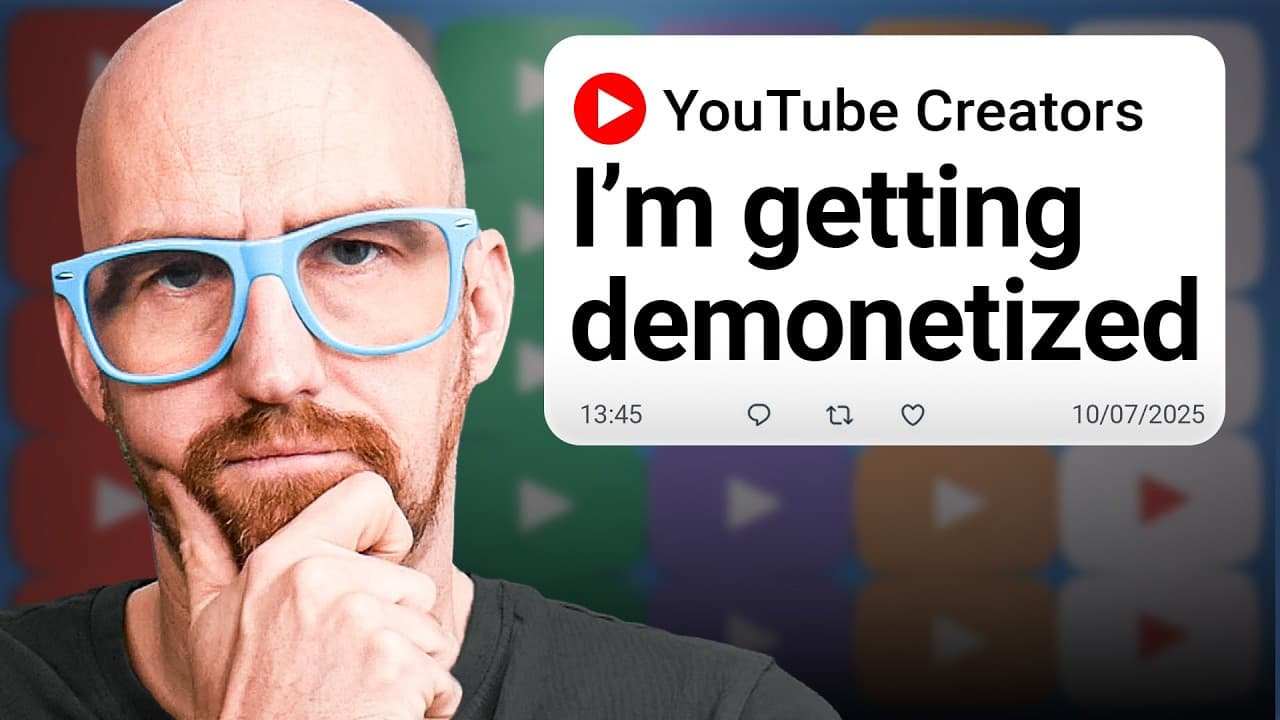
YouTube's update targets mass-produced content, worrying creators.
Transcript
Read and summarize the transcript of this video on Glasp Reader (beta).
Key Insights
- YouTube's upcoming monetization update aims to better identify and address mass-produced and repetitive content, reflecting modern content creation methods.
- The update is not introducing radical changes but rather modernizing language to fit the current creative environment shaped by AI and other tools.
- Creators who have been following YouTube's existing policies should not be overly concerned about the update, as it clarifies long-standing rules.
- YouTube's new AI tools, like V3, allow creators to produce AI-generated shorts, raising questions about monetization eligibility and content originality.
- The update highlights the challenge of defining 'inauthentic' and 'mass-produced' content in an era where AI can generate extensive content quickly.
- The policy update is expected to impact a small percentage of creators, but due to YouTube's scale, even a minor percentage represents thousands of creators.
- YouTube's flexible policy language allows discretion in enforcement, which can be frustrating for creators seeking clear guidelines.
- Creators are advised to review YouTube's monetization policies, especially the sections on reused and repetitive content, to prepare for the update.
Install to Summarize YouTube Videos and Get Transcripts
Explore YouTube Video Summarizer or Get YouTube Transcript Extractor
Questions & Answers
Q: What is the main focus of YouTube's upcoming monetization update?
The main focus of YouTube's upcoming monetization update is to better identify and address mass-produced and repetitive content. This update aims to modernize the language of YouTube's guidelines to reflect the current creative environment, which includes AI-generated content and other automated forms of video production.
Q: How should creators who follow existing policies view the update?
Creators who have been following YouTube's existing policies should view the update as a clarification rather than a radical change. The update reiterates long-standing rules about authentic and original content, and those adhering to these guidelines should not be overly concerned about potential negative impacts on their channels.
Q: What role do AI tools play in the context of the update?
AI tools, such as YouTube's V3, play a significant role in the context of the update as they enable creators to produce AI-generated shorts. This raises questions about the eligibility of such content for monetization and challenges the definition of originality and authenticity in content creation.
Q: Why is the update's language considered flexible?
The update's language is considered flexible because it allows YouTube to enforce rules at its discretion. This flexibility is necessary due to the vast amount of content uploaded daily, but it can be frustrating for creators who seek clear guidelines and examples of what constitutes inauthentic or mass-produced content.
Q: What percentage of creators is expected to be affected by the update?
The update is expected to affect a small percentage of creators, potentially less than half a percent. However, given YouTube's scale, this still represents thousands of creators. Despite the minor percentage, the impact could be significant for those whose content falls under the updated definitions.
Q: What advice is given to creators regarding the update?
Creators are advised to thoroughly review YouTube's monetization policies, particularly the sections on reused and repetitive content. Understanding these guidelines will help creators prepare for the update and ensure their content remains eligible for monetization under the revised policies.
Q: How does the update address the challenge of defining 'inauthentic' content?
The update addresses the challenge of defining 'inauthentic' content by modernizing the language to consider AI-generated and automated content. It aims to provide clearer guidelines on what constitutes mass-produced content, reflecting the evolving landscape of content creation in the digital age.
Q: What is the potential impact of the update on AI-generated shorts?
The potential impact of the update on AI-generated shorts includes questions about their monetization eligibility. While YouTube's AI tools facilitate the creation of such content, the update seeks to clarify whether these shorts are considered mass-produced or repetitive, affecting their ability to generate revenue for creators.
Summary & Key Takeaways
-
YouTube is updating its monetization policies to better identify mass-produced and repetitive content, aiming to modernize guidelines for today's creative environment. The update is not expected to introduce radical changes but rather clarify existing rules to accommodate AI and automated content creation.
-
The monetization update is causing concern among creators, but those adhering to YouTube's existing policies should be less worried. The update seeks to redefine 'inauthentic' and 'mass-produced' content, reflecting the evolving landscape of AI-generated videos and other modern content forms.
-
YouTube's flexible policy language allows it to enforce rules at its discretion, which can be frustrating for creators. However, the update is anticipated to affect a small percentage of creators. Reviewing YouTube's monetization policies, especially on reused and repetitive content, is recommended.
Read in Other Languages (beta)
Share This Summary 📚
Summarize YouTube Videos and Get Video Transcripts with 1-Click
Try YouTube Summary with ChatGPT & Claude or YouTube Transcript Generator
Explore More Summaries from vidIQ 📚

Summarize YouTube Videos and Get Video Transcripts with 1-Click
Try YouTube Summary with ChatGPT & Claude or YouTube Transcript Generator