How to Calculate Oxidation Numbers Introduction
TL;DR
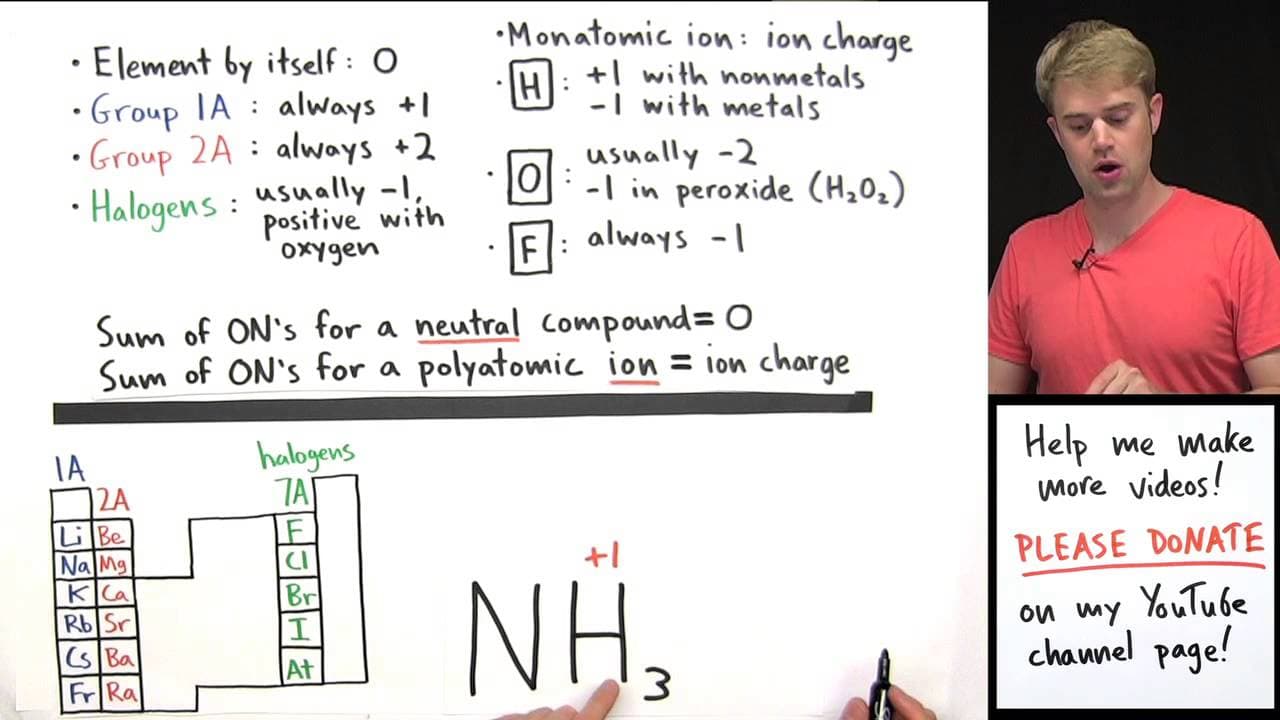
This video explains the rules and process for determining the oxidation numbers of elements in chemical compounds.
Transcript
in this video we're going to learn how to figure out the oxidation numbers for the different elements in a chemical compound the oxidation numbers are the numbers that I've written here above each one of the elements now if you want to learn more about what oxidation numbers are or why they're important check out my video called what are oxidation ... Read More
Key Insights
- #️⃣ Oxidation numbers are important in understanding the charge of elements in chemical compounds.
- 🧘 Different rules are used to assign oxidation numbers based on the element's position in the periodic table.
- #️⃣ The oxidation number of an element by itself is always 0.
- 😐 The sum of oxidation numbers in a neutral compound is always 0.
- 😑 Monatomic ions have oxidation numbers equal to their ion charges.
- #️⃣ Halogens can have positive oxidation numbers when paired with oxygen.
- #️⃣ Fluorine always has an oxidation number of -1.
Install to Summarize YouTube Videos and Get Transcripts
Explore YouTube Video Summarizer or Get YouTube Transcript Extractor
Questions & Answers
Q: What are oxidation numbers?
Oxidation numbers are numbers assigned to elements in chemical compounds to indicate their relative charge.
Q: How do you determine the oxidation number for an element?
The oxidation number of an element can be determined based on its position in the periodic table and its interactions with other elements.
Q: What is the oxidation number of an element by itself?
An element by itself always has an oxidation number of 0.
Q: How are monatomic ions assigned oxidation numbers?
The oxidation number of a monatomic ion is the same as its ion charge.
Q: What is the significance of the sum of oxidation numbers in a neutral compound?
In a neutral compound, the sum of oxidation numbers for all elements is always 0.
Q: How does the oxidation number of an element change when paired with another element?
The oxidation number of an element can change when paired with another element depending on the specific rules and interactions between the elements.
Q: Can oxidation numbers be positive or negative?
Yes, oxidation numbers can be positive or negative, depending on the rules and interactions between the elements.
Q: How can practicing more examples help in understanding oxidation numbers?
Practicing more examples can help in understanding oxidation numbers by applying the rules and reinforcing the concepts through hands-on problem-solving.
Summary & Key Takeaways
-
Oxidation numbers are numbers assigned to elements in chemical compounds to indicate their relative charge.
-
Elements by themselves have an oxidation number of 0, while monatomic ions have oxidation numbers equal to their ion charges.
-
The sum of oxidation numbers in a neutral compound is always 0.
-
Different rules are used to determine oxidation numbers based on the element's position in the periodic table and its interactions with other elements.
Read in Other Languages (beta)
Share This Summary 📚
Summarize YouTube Videos and Get Video Transcripts with 1-Click
Try YouTube Summary with ChatGPT & Claude or YouTube Transcript Generator
Explore More Summaries from Tyler DeWitt 📚



Summarize YouTube Videos and Get Video Transcripts with 1-Click
Try YouTube Summary with ChatGPT & Claude or YouTube Transcript Generator