Products
Features
YouTube Video Summarizer
Summarize YouTube videos
Web & PDF Highlighter
Highlight web pages & PDFs
Chat with PDF
Ask any PDF questions with AI
Ask AI Clone
Chat with your highlights & memories
Audio Transcriber
Transcribe audio files to text
Glasp Reader
Read and highlight articles
Kindle Highlight Export
Export your Kindle highlights
Idea Hatch
Hatch ideas from your highlights
Integrations
Obsidian Plugin
Notion Integration
Pocket Integration
Instapaper Integration
Medium Integration
Readwise Integration
Snipd Integration
Hypothesis Integration
Apps & Extensions
Chrome Extension
Safari Extension
Edge Add-ons
Firefox Add-ons
iOS App
Android App
Discover
Discover
Ideas
Discover new ideas and insights
Articles
Curated articles and insights
Books
Book recommendations by great minds
Posts
Essays and notes from readers
Quotes
Inspiring quotes collection
Videos
Curated videos and summaries
Explore Glasp
Glasp Newsletter
Weekly insights and updates
Glasp Talk
Interview series with great minds
Glasp Blog
Latest news and articles
Glasp Use Cases
Learn how others use Glasp
Build & Support
Glasp API
Access Glasp's API for developers
MCP Connector
Connect Glasp to Claude & ChatGPT
Community
Glasp Reddit Community
Students
Student discount and benefits
FAQs
Frequently Asked Questions
AboutPricing
DashboardLog inSign up

Chemistry

June 27, 2018
by
The Organic Chemistry Tutor
YouTube video player
Chemistry

TL;DR

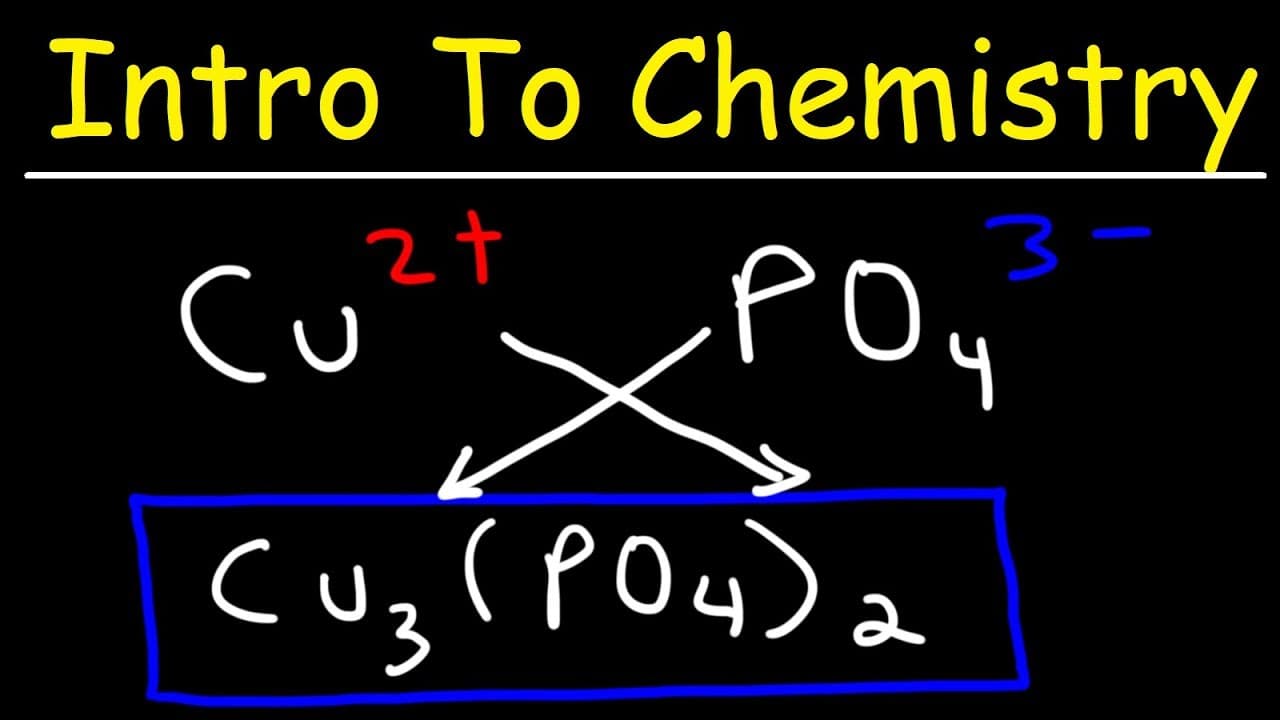
This video provides an overview of chemistry, focusing on the periodic table, elements, atoms, molecules, compounds, isotopes, and formulas.

Transcript

so in this lesson today we're going to focus on chemistry so for those of you who are about to learn chemistry or about to take a chemistry course this video will be very useful for you so the first thing we need to talk about is the periodic table now I recommend that you go to Google images and type in periodic table and print one uh that you cou... Read More

Key Insights

  • 🫀 The periodic table organizes elements based on their atomic number and chemical properties.
  • 🫀 Atoms and molecules differ in terms of the number of atoms they consist of.
  • 📏 Compounds can be molecular or ionic, with different rules for naming and writing their formulas.
  • #️⃣ Isotopes have the same number of protons but different numbers of neutrons, leading to different mass numbers.

Install to Summarize YouTube Videos and Get Transcripts

Explore YouTube Video Summarizer or Get YouTube Transcript Extractor

Questions & Answers

Q: What are the names of the elements in Group 1 of the periodic table, and what charge do they form when they become ions?

The elements in Group 1, also known as the alkaline metals, include hydrogen, lithium, sodium, potassium, rubidium, and cesium. When they form ions, they tend to form ions with a positive one charge.

Q: How do you distinguish between an atom and a molecule?

Atoms are individual particles of an element, while molecules consist of two or more atoms bonded together. Elements can exist as atoms or molecules, with molecules containing different types of atoms.

Q: What are the properties of metalloids, and can you provide examples?

Metalloids are elements that have properties in between metals and non-metals. Examples include boron, silicon, and germanium. Metalloids can conduct a small amount of electricity, unlike non-metals.

Q: How do you determine the chemical formula of an ionic compound?

To determine the formula of an ionic compound, you need to balance the charges of the ions present. The charges can be determined based on the periodic table and the oxidation states of the elements involved.

Summary & Key Takeaways

  • The video introduces the periodic table and explains the names and characteristics of elements in various groups, such as the alkaline metals, alkaline earth metals, halogens, and noble gases.

  • It distinguishes between atoms and molecules, highlighting the difference between pure elements and compounds.

  • The video discusses the formation and naming of ionic and molecular compounds, including the use of prefixes and Roman numerals.

  • It explains how to determine the number of protons, neutrons, and electrons in an atom or ion, and provides examples of calculations for different elements and isotopes.


Read in Other Languages (beta)

English

Share This Summary 📚

Summarize YouTube Videos and Get Video Transcripts with 1-Click

Download browser extensions on:

Try YouTube Summary with ChatGPT & Claude or YouTube Transcript Generator

Explore More Summaries from The Organic Chemistry Tutor 📚

Molarity Dilution Problems Solution Stoichiometry Grams, Moles, Liters Volume Calculations Chemistry thumbnail
Molarity Dilution Problems Solution Stoichiometry Grams, Moles, Liters Volume Calculations Chemistry
The Organic Chemistry Tutor
Perpendicular Lines, Slope, Rays, and Segments | Geometry thumbnail
Perpendicular Lines, Slope, Rays, and Segments | Geometry
The Organic Chemistry Tutor
How to Calculate Voltage Gain of a Transistor Amplifier thumbnail
How to Calculate Voltage Gain of a Transistor Amplifier
The Organic Chemistry Tutor
How to Calculate Work and Power in Rotational Motion thumbnail
How to Calculate Work and Power in Rotational Motion
The Organic Chemistry Tutor
Factoring Trinomials The Easy Fast Way thumbnail
Factoring Trinomials The Easy Fast Way
The Organic Chemistry Tutor
Integral of tan^5(x) thumbnail
Integral of tan^5(x)
The Organic Chemistry Tutor

Summarize YouTube Videos and Get Video Transcripts with 1-Click

Download browser extensions on:

Try YouTube Summary with ChatGPT & Claude or YouTube Transcript Generator

Apps & Extensions

  • Chrome Extension
  • Safari Extension
  • Edge Add-ons
  • Firefox Add-ons
  • iOS App
  • Android App

Key Features

  • YouTube Video Summarizer
  • Web & PDF Summarizer
  • Web & PDF Highlighter
  • Chat with PDF
  • Ask AI Clone
  • Audio Transcriber
  • Glasp Reader
  • Kindle Highlight Export
  • Idea Hatch

Integrations

  • Obsidian Plugin
  • Notion Integration
  • Pocket Integration
  • Instapaper Integration
  • Medium Integration
  • Readwise Integration
  • Snipd Integration
  • Hypothesis Integration

More Features

  • APIs
  • MCP Connector
  • Blog & Post
  • Embed Links
  • Image Highlight
  • Personality Test
  • Quote Shots

Company

  • About us
  • Blog
  • Community
  • FAQs
  • Job Board
  • Newsletter
  • Pricing
Terms

•

Privacy

•

Guidelines

© 2026 Glasp Inc. All rights reserved.