How to Save Kindle Highlights to Capacities with Glasp

Jan 29, 2026
5 min read
96 views
Want to save your Kindle highlights to Capacities and turn them into a structured knowledge base?While Kindle is great for reading, it doesn’t offer an easy way to organize highlights for long-term thinking. Capacities, on the other hand, is designed for object-based knowledge management, making it ideal for connecting ideas across books.
With Glasp, you can easily export your Kindle highlights and bring them into Capacities without worrying about Kindle’s export limits. Glasp lets you collect, organize, and export highlights in clean formats—so your reading notes don’t stay locked inside Kindle.
In this tutorial, you’ll learn how to save Kindle highlights to Capacities using Glasp, step by step. By the end, you’ll be able to move your highlights into Capacities smoothly and start building a connected, searchable personal knowledge system from your Kindle library.
Step 1: Sign up for Glasp
Select a browser: Google Chrome, Brave, Safari, Microsoft Edge, Firefox, etc.
On your search tab, type in “glasp.co” and you will be automatically directed to the page of Glasp. Or access it from the link below.
👉 Glasp — Kindle Highlights Exporter
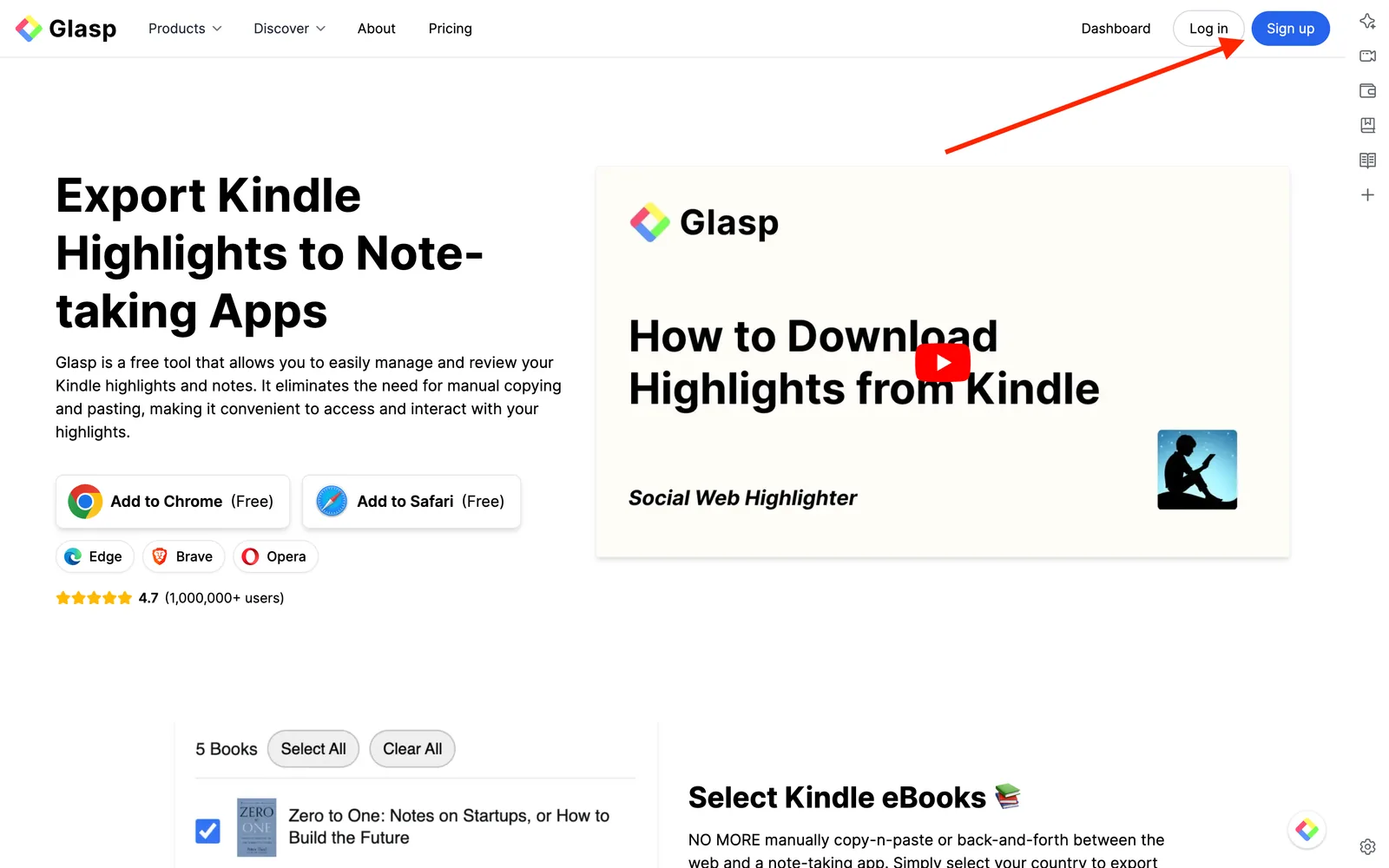
Upon reaching it click “Sign up” and continue using your Google Account.
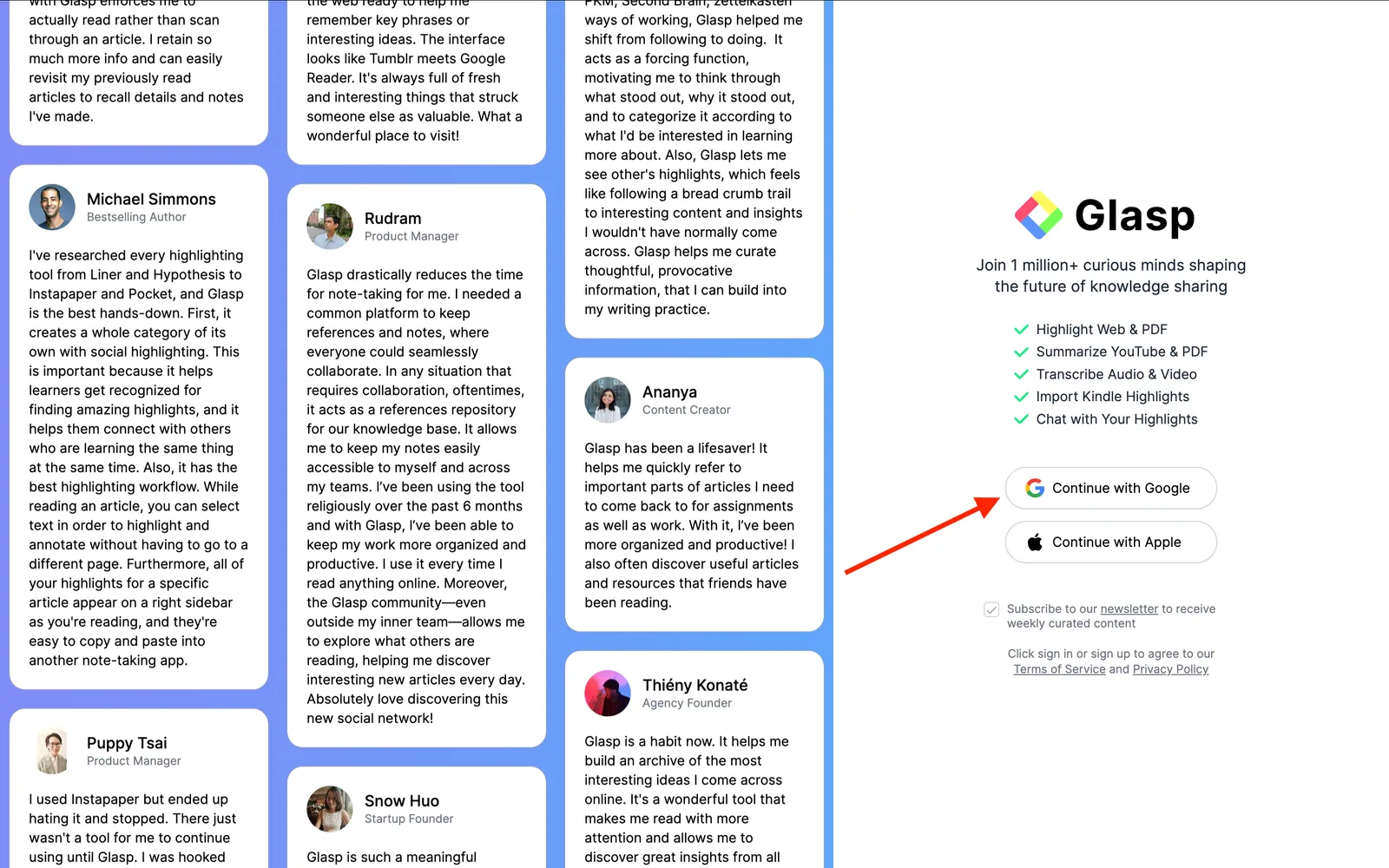
You can sign up for Glasp with either Google Sign-in or Apple Sign-in. If you're not an iPhone/iPad user, we strongly recommend you use Google Sign-in.
After finalizing your account, you will be redirected to the Chrome Web Store.
Step 2: Install the Glasp extension to your browser
Click Add to Chrome(Brave, Safari, Edge, or Firefox) and install Glasp to your chosen browser.
After you install the extension, make sure you pin it on the toolbar. It makes it easier to open the Glasp on the sidebar. If you're asked to sign in to Glasp on the sidebar, please do it.

Step 3: Go to your Glasp profile page
Once you’ve installed the Glasp extension and signed in, go to your profile page by clicking the Profile icon in the sidebar.
This will take you to your Profile page. Now, click Kindle at the top.
Step 4: Sign in to Kindle Cloud Reader
After you install Glasp, please visit Kindle Cloud Reader. You can search Kindle Cloud Reader on Google. And the page's URL is like https://read.amazon.com or https://read.amazon.co.jp

Step 5: Select a Kindle book to import to Capacities
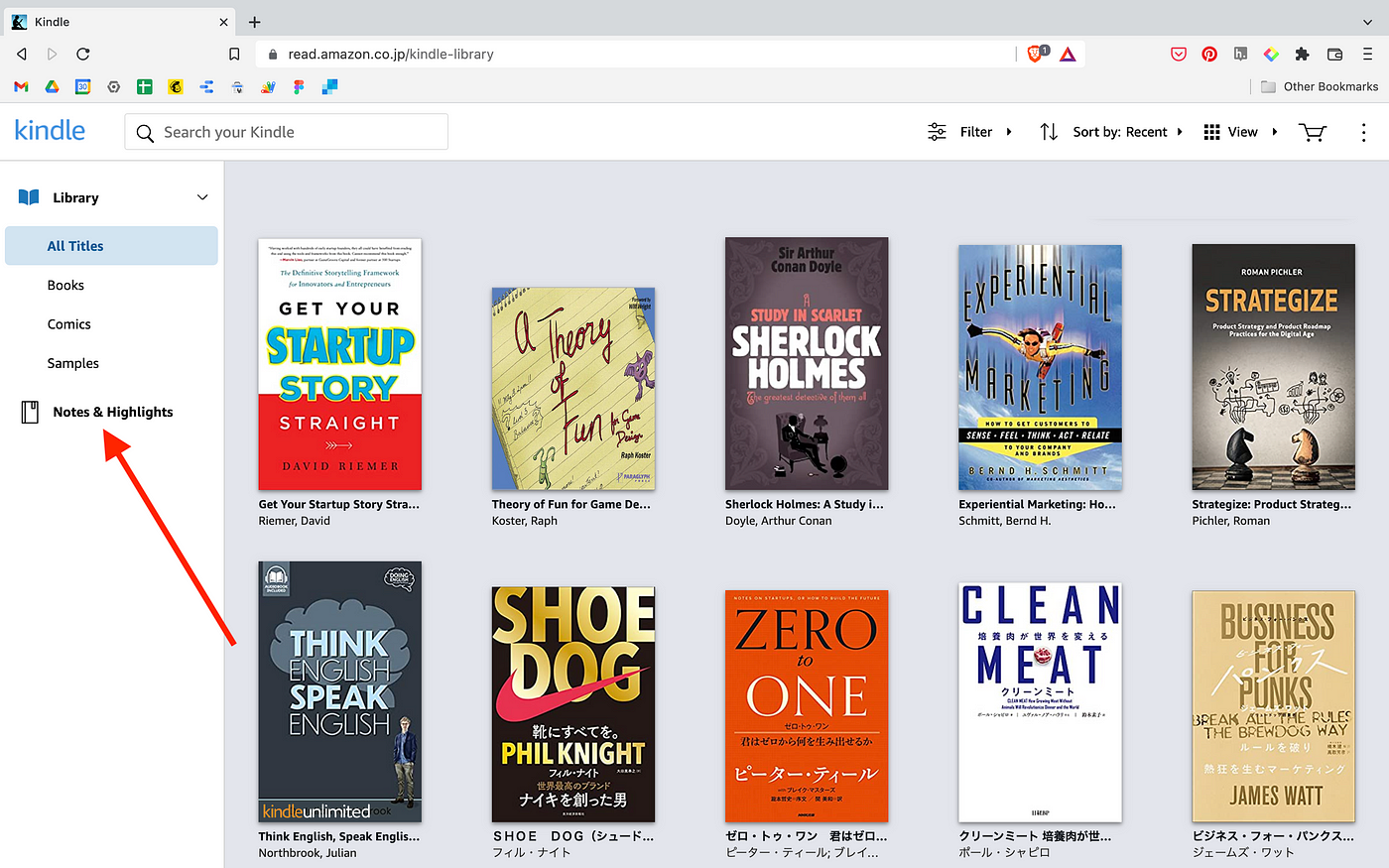
If you can successfully log in to Kindle Cloud Reader, you can see a page like below. So, please click Notes & Highlights on the left.
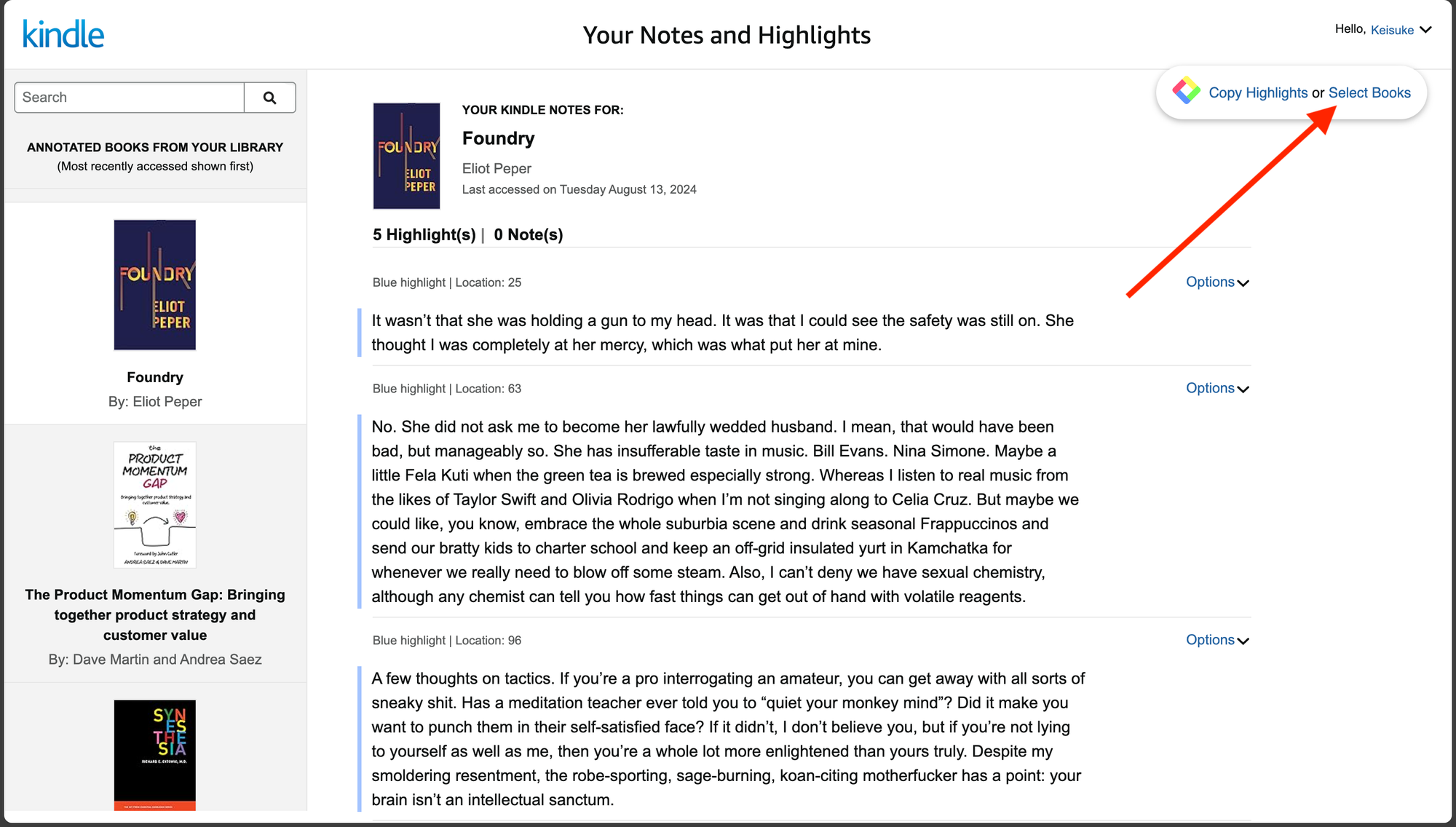
You can see a page below. Select a book to copy highlights on the left. Then, please click Select Books on the Glasp modal at the top right. If you cannot see the modal, so make sure that you've successfully installed it.
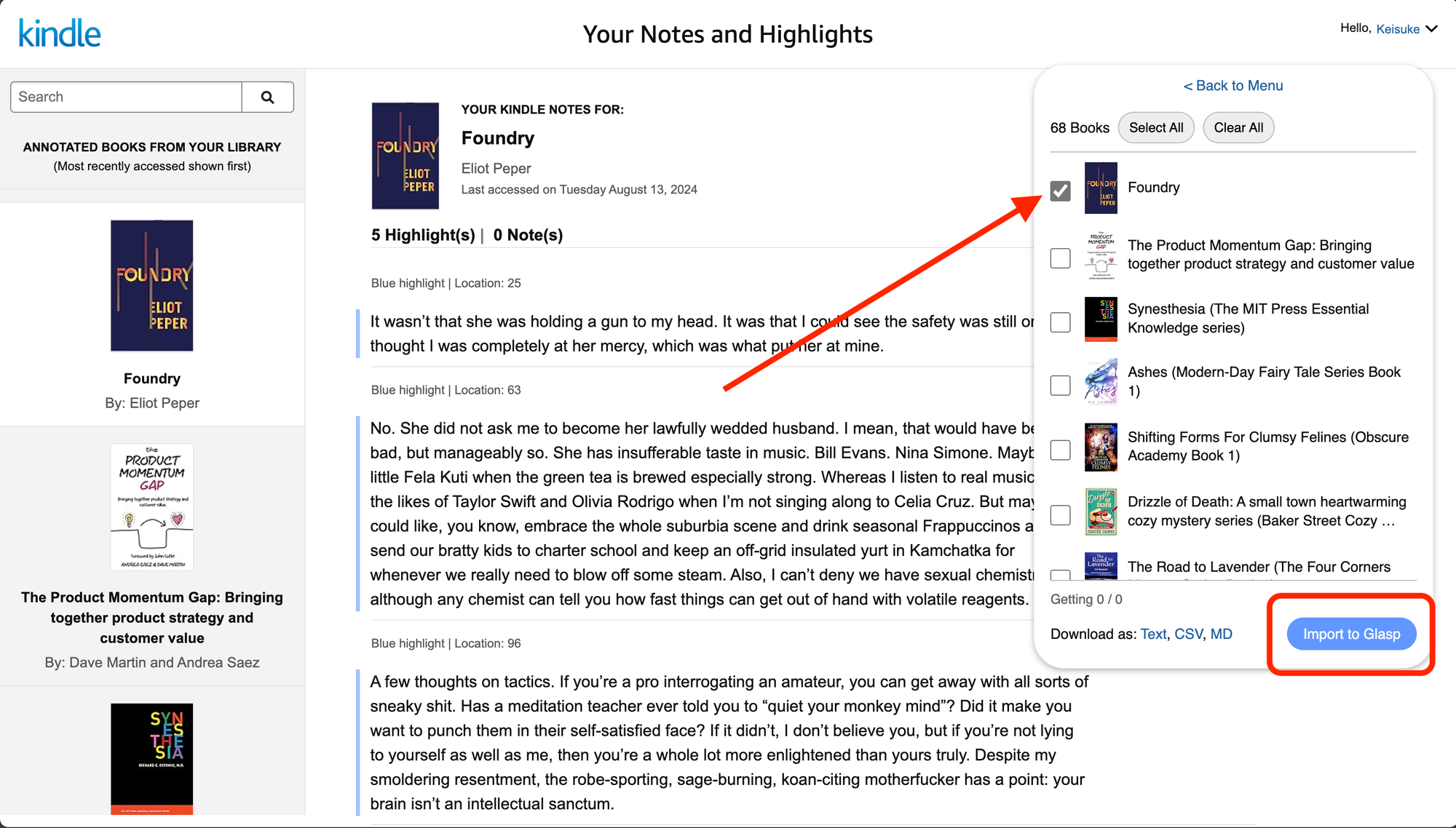
Then, please select books you'd like to import to Capacities. After selecting books, click Import to Glasp at the bottom right.
Step 6: Copy Kindle Highlights from Your Profile Page
Go back to your Glasp profile page and refresh it. You should see the Kindle highlights you imported.
Then, click Copy Highlights at the top right.

Step 7: Paste Kindle highlights to Capacities
Open Capacities and paste the Kindle highlights you copied.
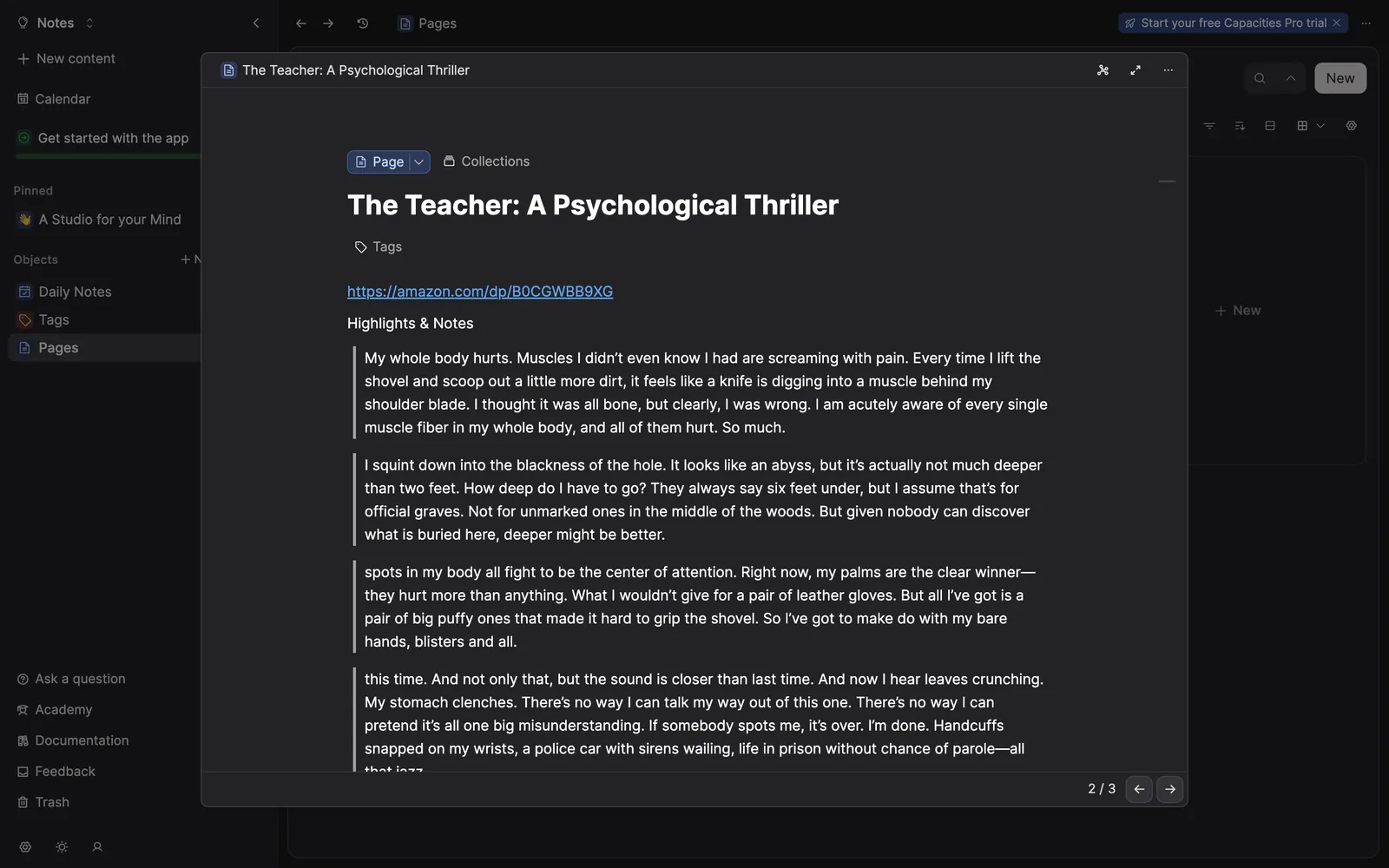
With Glasp, your Kindle highlights don’t just get exported—they become reusable building blocks you can link, revisit, and expand inside your knowledge graph. This makes it easier to move from reading to thinking, connecting, and creating.
FAQs
Can I save Kindle highlights to Capacities directly?
Kindle doesn’t offer a direct export to Capacities. However, with Glasp, you can export your Kindle highlights and easily paste them into Capacities in a clean, structured format.
Does Glasp remove Kindle’s export limits?
Yes. Glasp allows you to export all your Kindle highlights without the usual Kindle export limitations, even if you have many books or highlights.
What format are Kindle highlights copied in?
Glasp copies Kindle highlights as clean, readable text, making it easy to paste them into Capacities and convert them into objects, notes, or linked entries.
Can I organize Kindle highlights as objects in Capacities?
Yes. Once pasted into Capacities, you can turn highlights into objects such as books, quotes, notes, or concepts, and connect them across your knowledge graph.
Do I need a paid Glasp account to export Kindle highlights?
No. You can export and copy Kindle highlights using Glasp’s free features.
Is it possible to import highlights from multiple Kindle books at once?
Yes. Glasp allows you to select and import highlights from multiple Kindle books through Kindle Cloud Reader.
Can I edit or annotate Kindle highlights after importing them into Capacities?
Absolutely. After pasting highlights into Capacities, you can edit, annotate, tag, and link them just like any other Capacities content.
Is this workflow suitable for building a long-term knowledge system?
Yes. Combining Glasp and Capacities is ideal for long-term knowledge building, as it lets you move from passive reading to connected thinking and idea development.
📚 Want to do more with your Kindle highlights?
👉 How to Export Kindle Highlights & Notes
👉 Try Kindle Highlights Exporter for free
Can Claude or ChatGPT read my Glasp highlights?
Yes. With the Glasp MCP Connector, AI assistants such as Claude, ChatGPT, and Claude Code can search and read your own highlights, notes, Kindle highlights, and AI summaries, including your YouTube summaries. The connection is read-only and private to you. See How to Connect Glasp to Claude, ChatGPT, and Claude Code (MCP Connector).
Before you leave
Before you leave, remember that Kindle highlights become far more powerful when they’re treated as living knowledge, not static notes. By bringing your highlights into Capacities, you can turn isolated quotes into connected ideas that grow over time.
If you haven’t tried Glasp yet, give it a try and start transforming your Kindle highlights into a long-term knowledge system with Capacities.
Glasp team
–