Duct Smoke Detector: Uses, Benefits and Applications

Sep 15, 2026
5 min read
3 views
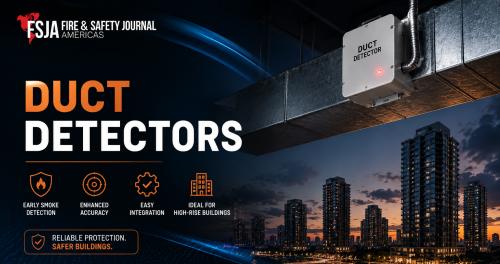
HVAC systems distribute heated, cooled, and fresh air throughout buildings, helping maintain comfortable indoor conditions. However, during a fire, ventilation ducts can also carry smoke between different areas. Duct smoke detectors are designed to monitor air moving through HVAC systems and identify smoke within the ductwork. When smoke is detected, the device can send a signal to the building’s fire alarm system and, when connected to suitable controls, trigger an HVAC response. This may help reduce smoke circulation and support other fire safety measures. Understanding their operation, uses, benefits, applications, and maintenance is important for effective building fire protection.
What Is a Duct Smoke Detector?
A duct smoke detector is a device designed to identify smoke moving through HVAC ductwork. Unlike a standard smoke detector that monitors a specific room or area, it samples air from inside a ventilation duct.
The device is typically connected to a building's fire alarm system and may also interact with HVAC controls. When smoke is detected, it can send a signal to the fire alarm control panel and, depending on the system design, initiate a response from connected ventilation equipment. A duct detector monitors the air passing through the ventilation system and can help identify smoke before it spreads through connected areas.
For example, in a large commercial building, smoke entering a return-air duct can be detected as it moves toward an air-handling unit, providing the fire safety system with additional information about conditions within the ventilation network.
How Does a Duct Smoke Detector Work?
A duct smoke detector samples air from inside an HVAC duct and directs it through a sensing chamber. The sensing system then checks the air for smoke particles.
A sampling tube positioned inside the duct collects air from the moving airstream. The air enters the detector housing, where an optical or other approved sensing method identifies smoke.
When the detected smoke reaches the device's configured threshold, the detector changes its operating condition and sends a signal to the connected fire alarm system. Depending on the installation, this signal may also activate HVAC controls.
For example, an air-handling unit may be shut down when smoke is detected to help limit unwanted smoke movement. The exact response depends on the building's fire protection design, equipment, and applicable requirements.
What Are the Uses of Duct Smoke Detectors?
These devices are mainly used to monitor smoke within HVAC systems and support coordinated fire and ventilation responses.
Monitoring HVAC airflow: Checks air moving through supply or return ductwork.
Detecting smoke movement: Identifies smoke being carried through ventilation pathways.
Supporting fire alarms: Sends detected conditions to the fire alarm control panel.
Supporting HVAC control: Can initiate compatible shutdown or control functions.
Monitoring air-handling systems: Helps monitor large ventilation equipment.
Supporting smoke management: Can contribute to strategies designed to reduce smoke circulation.
What Are the Benefits of Duct Smoke Detectors?
Duct smoke detectors provide additional monitoring within ventilation systems and can support the building's overall fire protection strategy.
Monitors moving air: Detects smoke within HVAC airflow rather than only in occupied spaces.
Supports faster response: Provides information to connected fire alarm and control systems.
Helps limit smoke circulation: Compatible HVAC controls may respond by changing or stopping airflow.
Complements other detectors: Adds another layer of detection alongside area smoke detectors.
Useful for large facilities: Helps monitor extensive and interconnected HVAC networks.
Where Are Duct Smoke Detectors Used?
They are commonly used in buildings with centralized or extensive ventilation systems where monitoring smoke movement through ductwork is important.
Commercial buildings: Offices and large business facilities.
Hospitals: Complex ventilation systems require carefully planned fire protection.
Hotels: Central HVAC networks can connect multiple occupied areas.
Schools: Large educational buildings may use duct-based detection.
Industrial facilities: Manufacturing sites often have extensive ventilation equipment.
Public buildings: Shopping centers and other large facilities may incorporate these devices.
Installation locations depend on the HVAC design, airflow, equipment configuration, applicable codes, and system requirements.
What Are the Applications of Duct Smoke Detectors?
Duct smoke detectors can be applied to several HVAC arrangements as part of an integrated fire protection system.
Return-air ducts: Monitor air moving back toward air-handling equipment.
Supply-air ducts: Monitor air distribution systems where appropriate.
Air-handling units: Provide smoke monitoring around major HVAC equipment.
Central HVAC systems: Monitor smoke movement through large ventilation networks.
Smoke control arrangements: Provide signals for compatible smoke management functions.
How Should Duct Smoke Detectors Be Tested and Maintained?
Regular inspection and testing help ensure the equipment remains functional and communicates correctly with connected systems.
Inspect the housing for damage or contamination.
Check sampling tubes for dust and blockages.
Verify that the required airflow is present.
Perform functional testing according to manufacturer instructions.
Confirm signals reach the fire alarm control panel.
Check connected HVAC control functions where applicable.
Clean components according to approved maintenance procedures.
Record inspections, tests, faults, and repairs.
Conclusion
Duct smoke detectors help monitor smoke moving through HVAC systems and support coordinated fire alarm and ventilation responses. They can provide valuable additional protection in buildings with complex ductwork, but they should work alongside properly positioned area detection rather than replace it. Correct installation, testing, and maintenance are essential for reliable performance. Fire and Safety Journal Americas covers fire protection, detection technology, emergency response, and safety developments relevant to professionals across the industry.
FAQs
What is a duct smoke detector used for?
It monitors air inside HVAC ductwork and identifies smoke moving through a ventilation system.
What are the main benefits of duct smoke detectors?
They provide additional monitoring of HVAC airflow and can support fire alarm and ventilation control responses.
Where are duct smoke detectors commonly used?
They are commonly used in commercial, industrial, healthcare, educational, hospitality, and large public buildings.
How does a duct smoke detector work?
It samples air from inside ductwork and analyzes it for smoke before communicating the detected condition to connected systems.
Are duct smoke detectors a replacement for standard smoke detectors?
No. They have a different purpose and are generally used alongside area smoke detectors as part of a complete fire protection system.
Comments
I am Smith Methu, a technical writer focused on AI-powered security and modern surveillance solutions.