Education App Development: A Complete Guide to Building eLearning Apps in 2026

Jun 30, 2026
7 min read
3 views
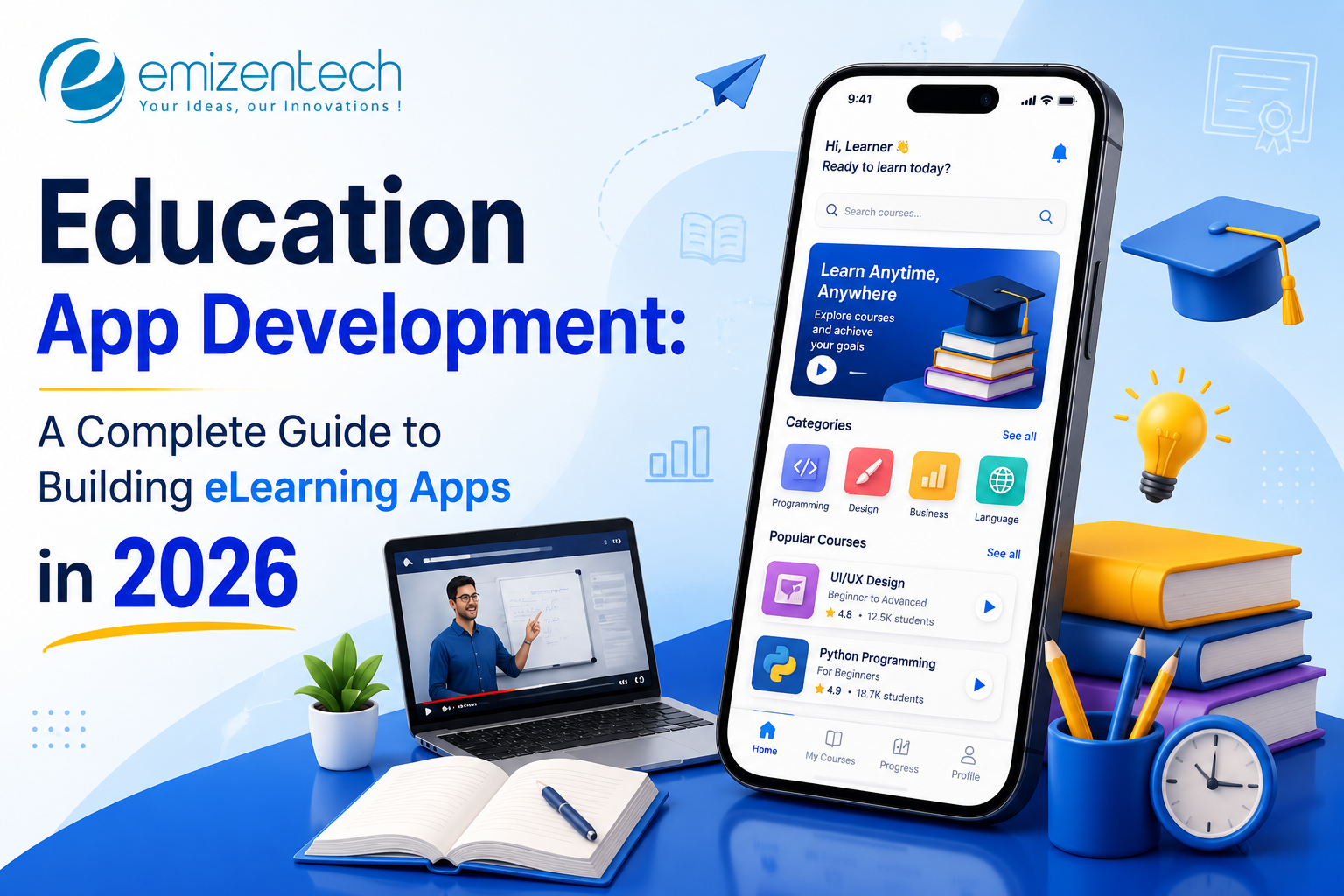
Education has changed dramatically over the past few years. Learning is no longer limited to classrooms, textbooks, or fixed schedules. Students can attend live classes from their homes, professionals can learn new skills during their commute, and children can access interactive lessons through mobile devices. This shift has made educational applications an important part of modern learning.
The growth of online education, mobile learning, and digital classrooms continues to create opportunities for innovative learning platforms. From language-learning apps and virtual tutoring solutions to corporate training platforms and school management systems, educational apps now serve learners of all ages.
For businesses, institutions, and entrepreneurs interested in creating educational technology solutions, understanding the development process is essential. This guide explores everything you need to know about education app development in 2026, including app types, features, technologies, development stages, challenges, and future trends.
Understanding Education App Development
Education app development involves designing and building mobile or web-based applications that help users learn, teach, manage educational content, or improve skills. These apps are created to make learning more accessible, engaging, and personalized.
Educational applications can serve different audiences. Some focus on school students, while others target university learners, professionals, teachers, or corporate employees. The goal is to provide knowledge through digital platforms that are easy to access and use.
A modern education app often combines video content, assessments, progress tracking, communication tools, and interactive learning experiences into a single platform.
Types of Education Apps
Educational applications are designed to address different learning needs and audiences. Some focus on academic learning, while others support professional development, skill enhancement, or institutional management. Understanding these categories helps businesses choose the right development approach.
Online Learning Platforms
These applications provide structured courses through videos, quizzes, assignments, and certifications. They are commonly used for professional development, academic education, and skill-building programs.
Examples include platforms offering programming, marketing, design, or business courses.
Virtual Classroom Apps
Virtual classroom applications enable teachers and students to interact in real time. Features often include video conferencing, screen sharing, attendance tracking, and live discussions.
Many schools and universities use these solutions to conduct online classes.
Language Learning Apps
Language-learning platforms focus on vocabulary building, pronunciation improvement, grammar exercises, and conversational practice. Many of the best language learning apps use interactive lessons, personalized learning paths, and real-world exercises to help users develop language skills effectively. Gamification techniques and progress tracking features further improve user engagement and learning consistency.
School Management Apps
These applications simplify communication between schools, teachers, students, and parents. Common features include attendance tracking, announcements, fee management, and academic reports.
Skill Development Apps
These apps target users who want to learn specific skills such as photography, music, coding, public speaking, or graphic design.
Many professionals use such platforms to stay competitive in rapidly changing industries.
Key Features of a Modern Education App
Features play a crucial role in determining the effectiveness of an education app. Modern learners expect seamless access to content, personalized experiences, and interactive learning tools. A well-designed feature set can improve both engagement and learning outcomes.
User Registration and Profiles
Every learner should have a personalized profile where they can access enrolled courses, saved lessons, achievements, and progress reports.
Personal profiles help create a customized learning experience.
Course Management
Course organization is one of the most important features. Users should be able to browse courses, enroll easily, and access lessons without confusion.
Clear categorization improves usability and helps learners find relevant content quickly.
Video-Based Learning
Video remains one of the most effective educational formats. High-quality video lectures, recorded sessions, and interactive tutorials can significantly improve understanding.
For example, a mathematics lesson often becomes easier to understand when students can watch step-by-step problem-solving demonstrations.
Assessments and Quizzes
Quizzes help learners evaluate their understanding and identify areas for improvement.
Educational apps often include:
Multiple-choice questions
Short-answer assessments
Practice tests
Timed examinations
Regular assessments support better knowledge retention.
Progress Tracking
Learners are more likely to stay motivated when they can see measurable progress.
Progress dashboards can display:
Course completion percentage
Learning streaks
Test scores
Skill development milestones
Push Notifications
Notifications help users stay engaged by reminding them about upcoming classes, incomplete lessons, assignment deadlines, or newly released content.
Technologies Used in Education App Development
The technology stack depends on project goals, scalability requirements, and target platforms.
Frontend technologies commonly include:
Flutter
React Native
Swift (iOS)
Kotlin (Android)
Backend development often uses:
Node.js
Python
Java
.NET
Databases may include:
PostgreSQL
MySQL
MongoDB
Cloud platforms help manage scalability and content delivery efficiently. Services such as video streaming, file storage, analytics, and notifications are often integrated during development.
Whether working with an internal team or an experienced education app development company, selecting the right technology stack is critical for long-term performance and maintainability.
How to Develop an Education App: Step-by-Step Process
Developing an education app requires a structured approach that balances educational goals with technical requirements. From planning and design to testing and deployment, each stage contributes to the overall success of the platform.
Research and Planning
Successful projects begin with understanding the target audience.
Questions typically include:
Who will use the app?
What learning problems does it solve?
What devices will users prefer?
How will content be delivered?
Thorough market research helps identify gaps and opportunities.
Designing the User Experience
Educational apps should prioritize simplicity and accessibility.
Students should be able to navigate lessons without unnecessary complexity. Clear layouts, readable typography, and intuitive navigation improve learning outcomes.
For younger audiences, colorful visuals and interactive elements may enhance engagement. Professional learners, however, often prefer cleaner and more structured interfaces.
Content Structuring
Educational content must be organized logically.
A coding course, for example, should guide learners from basic concepts to advanced topics in a step-by-step manner. Poor content organization can create confusion and reduce completion rates.
Development
During this phase, developers build the frontend and backend systems, integrate APIs, implement security measures, and create core learning functionalities.
Features such as video streaming, quizzes, messaging, and analytics are developed and tested.
Testing
Testing ensures the application works properly across devices and operating systems.
Common testing activities include:
Functional testing
Performance testing
Security testing
Usability testing
Education apps often handle large volumes of user data, making reliability especially important.
Launch and Maintenance
Development does not end after launch.
User feedback, feature updates, bug fixes, and content improvements are ongoing requirements. Continuous monitoring helps maintain a positive learning experience.
Emerging Trends in Education App Development for 2026
The education technology landscape continues to evolve as new innovations reshape digital learning experiences. Emerging technologies are helping educational platforms become more personalized, immersive, and effective for learners.
AI-Powered Personalized Learning
Personalized learning continues to gain popularity. Educational platforms increasingly analyze user behavior to recommend lessons, identify weaknesses, and adjust learning paths.
For example, a mathematics app may provide additional practice exercises when a student repeatedly struggles with a specific concept.
Gamification
Gamification remains an effective strategy for increasing participation.
Points, badges, leaderboards, and achievement systems encourage learners to remain active and complete courses.
Microlearning
Many users prefer short learning sessions rather than lengthy lectures.
Microlearning delivers information in smaller, focused lessons that can be completed within a few minutes, making learning more convenient.
Augmented and Virtual Reality
AR and VR technologies are becoming more practical for educational applications.
Medical students can explore virtual anatomy models, while engineering learners can interact with simulated environments that would otherwise be difficult to access.
Offline Learning Support
Internet access is not always reliable. Offline functionality allows users to download lessons and continue learning without an active connection.
This feature is particularly valuable in regions with inconsistent network coverage.
Conclusion
Education app development continues to play a significant role in shaping how people learn, teach, and acquire new skills. Modern educational applications combine accessibility, personalization, and interactive learning experiences to meet the needs of today's learners.
Building a successful education app requires careful planning, strong content organization, user-focused design, reliable technology, and continuous improvement. As technologies such as AI, gamification, AR, and personalized learning become more common, educational platforms will continue evolving to provide richer learning experiences.
Organizations exploring digital learning solutions can benefit from understanding both educational requirements and technical considerations before starting development. Companies such as EmizenTech contribute to this growing ecosystem by supporting the creation of innovative educational applications that address modern learning needs.
FAQs
What is education app development?
Education app development is the process of creating digital applications that help users learn, teach, manage courses, or access educational content through mobile or web platforms.
How long does it take to develop an education app?
The timeline depends on app complexity, features, and platform requirements. A basic education app may take a few months, while advanced platforms can require significantly longer development cycles.
What are the most important features in an e-learning application?
Key features include course management, video lessons, quizzes, progress tracking, notifications, user profiles, and communication tools.
What is e-Learning app development?
e-Learning app development refers to building digital learning platforms that deliver educational content through online courses, virtual classrooms, assessments, and interactive learning experiences.
Why is user engagement important in education apps?
Higher engagement helps learners complete courses, retain information, and achieve learning goals. Features like gamification, reminders, and progress tracking can improve participation and retention.
Comments
I am Steve Jonas, a technical blogger at EmizenTech, a reputable software development company specializing in Magento 2 solutions and Salesforce development.