What Role Will Digital Travel Assistants Play in Future Travel Apps?

Nov 02, 2026
7 min read
1 views
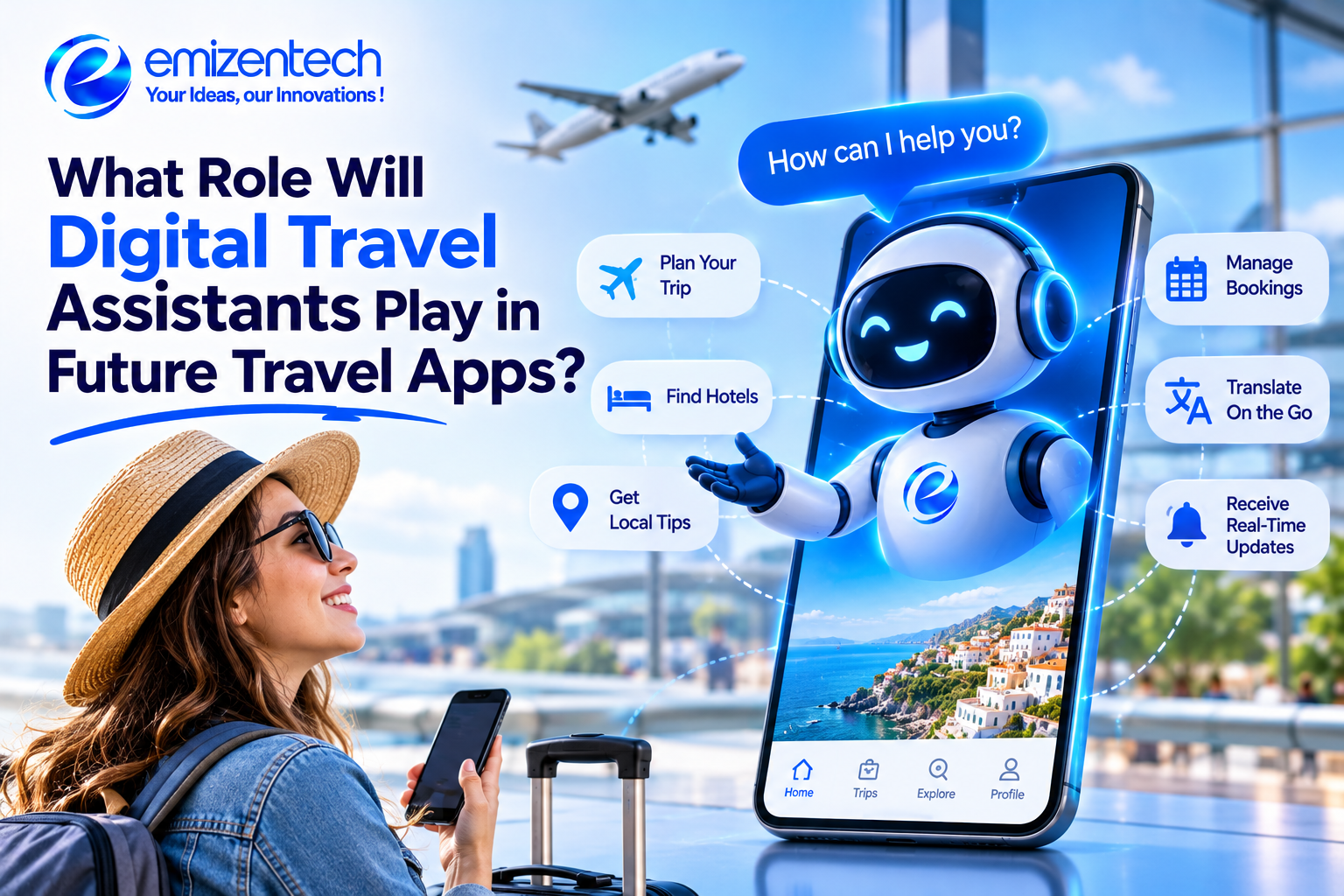
For most of the past two decades, a travel app has been a search box with filters. You typed a destination, picked dates, and scrolled through results. You did the thinking; the app displayed the options.
That model is breaking down. Today's digital travel assistants can listen to a loose idea, ask follow-up questions, and stay with the traveler through every stage of a trip. This article explains what these assistants actually do, how they differ from older tools, where they still fall short, and what travel businesses should get right before building one.
How Is a Digital Travel Assistant Different from a Chatbot in Travel App Development?
A traditional chatbot follows a script. It answers fixed questions about baggage rules or office hours, and it tends to fail the moment a request steps outside that script.
A digital travel assistant works differently. It uses language models and live travel data to understand context, remember what was said earlier, and take action, such as checking flight options or updating an itinerary.
The difference becomes clear when a traveler makes a broad request. A chatbot may ask for an exact destination and date, while an AI assistant can understand something like "a quiet beach trip in March under $1,500," recommend suitable locations, compare prices, and adjust suggestions based on user feedback. Making this possible requires connecting language models with booking platforms, live pricing feeds, and travel policy databases. These integrations are an important part of modern travel app development, where a travel app development company can help create a connected system that delivers relevant recommendations while keeping booking decisions under the user's control.
What Will Travel App Assistants Handle Before, During, and After a Trip?
The strongest assistants are useful at every stage, not only at checkout.
Planning: from a vague idea to a workable itinerary
Many trips begin as a feeling, not a plan. Assistants can turn "somewhere warm, not too touristy" into a draft schedule with realistic travel times and rest days. Tools such as Booking .com's AI Trip Planner and Mindtrip are early examples of this approach.
Booking: comparing options and managing changes
An assistant can compare flights and stays against your stated preferences and explain why one option fits better. It can also manage changes, like shifting a hotel night when a flight is delayed, a task that still often takes several calls or emails.
On the road: real-time answers
During a trip, questions are practical: Where can we eat nearby? How do I reach the station? Is the museum open? An assistant that knows your location and itinerary can answer in seconds, without sending you through five different apps.
After the trip: expenses, reviews, and the next destination
Back home, an assistant can collect receipts, split costs among friends, and prompt you for reviews. It can also use your trip history to suggest a next destination based on what you actually enjoyed.
How Do Travel App Assistants Learn What Each Traveler Wants?
Personalization is what separates a helpful assistant from a generic one. Over time it can learn that you prefer window seats, avoid long layovers, or like small family-run restaurants. Some of this comes from past bookings and searches; some comes from direct feedback, such as a thumbs-down on a suggestion.
The design detail that matters most is visibility. Travelers should be able to see what the assistant has learned and edit it. Someone planning a gift trip for a parent should be able to set aside their own habits for that one plan. Giving people control over their preferences builds trust, and it improves the suggestions too.
Why Disruptions Are the Real Test?
Good weather and smooth connections do not prove much. Disruptions do.
When a flight is cancelled, hundreds of passengers try to rebook at once, and phone lines and airport desks fill up. An assistant can detect the cancellation early, check alternatives, and present new options before the traveler even reaches the counter.
It can also repair the rest of the trip. If you land six hours late, the assistant can notify the hotel, adjust the airport transfer, and reschedule a tour. Airlines such as KLM have used messaging-based assistants for years to handle booking and flight questions, which takes routine load off human agents so they can focus on complex cases.
This is also where mistakes cost the most. A wrong rebooking at 2 a.m. is far worse than a mediocre restaurant suggestion, which is why high-stakes actions should always include a confirmation step.
Voice, Chat, or Both?
Travelers do not always want to type. In a taxi or while walking, speaking is easier. At a quiet gate or in a meeting, typing wins. The best assistants will let people switch between the two without losing context.
Voice raises real engineering questions: speech recognition must work in noisy airports and handle different accents and languages. Visuals matter as well. A map, booking card, or photo often explains an answer better than a paragraph, so expect assistants to blend speech, text, and visuals on one screen.
Where Assistants Are Already Working?
This is not purely futuristic. Several travel brands already offer assistants for parts of the journey:
Expedia: its assistant, Romie, supports trip planning and group coordination.
Google: AI-generated trip suggestions are appearing across search and maps.
Hopper: prediction models advise travelers on the best time to buy flights.
Hotels: chat-based concierge services handle check-in questions, local tips, and room requests.
Editor's note: confirm each product's current name and features before publishing, as these tools change quickly. Consider adding one or two verified statistics here, such as the share of travelers who have used AI for trip planning, from a recent industry survey.
Results vary. Some assistants are excellent at inspiration but weak at completing bookings; others book well but give impersonal advice. Expect steady improvement, not perfection.
What Travel Businesses Need to Get Right?
Adding an assistant is a product decision as much as a technical one. Four principles usually decide whether it succeeds:
Start with one use case. Pick something valuable and measurable, like itinerary help or flight changes, instead of trying to do everything at once.
Connect to trusted data. Tie the assistant to reliable systems for inventory, prices, and policies. An assistant that guesses prices destroys trust fast.
Keep humans reachable. Make handoff to a real person quick and obvious, especially for payments and disruptions.
Track and learn from errors. Review complaints and wrong answers every week, and feed them back into the system.
What to Expect in the Next Five Years?
More proactive help. Assistants will warn about weather, suggest leaving earlier for the airport, or offer a better connection before you ask.
More devices. Expect support across phones, watches, cars, and smart glasses.
Booking inside the conversation. Travelers will plan and pay without leaving the chat.
Better offline ability. This matters in areas with weak signal.
Pickier users. Travelers will gravitate toward assistants that are accurate and transparent about what they know and don't know.
Conclusion
Digital travel assistants are turning travel apps from tools that display options into companions that help people decide. Their strengths are personal planning, fast support when things go wrong, and sparing travelers from juggling many apps. Their weaknesses are accuracy and trust, which must be treated as core requirements, not afterthoughts.
For businesses exploring this space, the path is straightforward: choose one problem travelers genuinely struggle with, solve it reliably, and expand from there. If you want a partner for that process, EmizenTech works on travel app projects with this step-by-step approach. In the end, an assistant earns its place by being dependable when travelers need it most.
FAQs
1. What is a digital travel assistant?
It is an AI-based tool inside a travel app that understands natural-language requests and helps with planning, booking, and support during a trip.
2. How is it different from a chatbot?
A chatbot follows set scripts and answers limited questions. An assistant understands context, remembers earlier replies, and can take actions like checking flights or updating an itinerary.
3. Can digital travel assistants handle flight cancellations?
Many can spot a cancellation early, suggest alternatives, and update related bookings. Complex cases may still need a human agent.
4. Are they always accurate?
No. They can make mistakes, so travelers should confirm important details such as prices, dates, and policies before booking.
5. Will they replace human travel agents?
Unlikely. They handle routine tasks well, while human agents remain important for complicated trips and sensitive situations.
Comments
I am Steve Jonas, a technical blogger at EmizenTech, a reputable software development company specializing in Magento 2 solutions and Salesforce development.