Email Validation 101: Finding Real Leads Before They Get Lost to Spam

Jul 04, 2026
6 min read
2 views
Not every email address that enters your system is worth pursuing. Some are mistyped. Some belong to disposable inboxes that will never be checked again. Some are fake entries submitted just to get past a gated form. Mixed in with all of that noise, though, are real people who are genuinely interested in what you offer. The challenge is telling the difference before that opportunity slips away into a spam folder or a dead inbox.
This is the core problem email validation solves. It is not just a technical checkbox. It is the process that determines whether the leads your marketing team worked hard to generate ever actually reach a human being who can convert.
What Email Validation Actually Means
Email validation is the process of checking whether an email address is properly formatted, actively in use, and safe to send to. It goes well beyond confirming that an address contains an "@" symbol and a domain. A truly validated email has passed several layers of scrutiny that confirm it belongs to a real, reachable inbox.
There are generally three levels of validation worth understanding.
Syntax Validation
This is the most basic check. It confirms that an email address follows correct formatting rules, such as having a valid structure before and after the "@" symbol, no illegal characters, and a properly formatted domain. While necessary, syntax validation alone catches only the most obvious errors.
Domain and MX Record Validation
This step checks whether the domain in the email address actually exists and is configured to receive mail. It looks at the domain's MX records to confirm that a mail server is set up to accept messages. An email might look correctly formatted, but if the domain is expired or does not accept mail, it is still a dead end.
Mailbox Level Validation
This is the deepest and most valuable layer. It attempts to confirm that the specific mailbox exists and is active, without actually sending an email. This step is what separates a technically valid-looking address from one that will genuinely reach someone.
Why This Matters for Lead Generation
Every lead capture form, whether it is a newsletter signup, a demo request, or a quote form, is a moment where interest is expressed. But interest alone does not guarantee a usable contact. Without validation, a portion of these submissions will always be unusable, and worse, they can quietly damage your ability to reach everyone else.
Typos Happen More Than You Think
People type quickly, especially on mobile devices. A dropped letter or a mistaken domain, like typing "yaho.com" instead of "yahoo.com," is far more common than most businesses realize. These leads are almost always genuine; they are just one small correction away from being reachable.
Disposable Emails Hide Real Intent
Some visitors are cautious about giving out their primary email address, so they use a temporary inbox instead. In some cases, this signals low intent. In other cases, it is simply a habit, and the person is still a legitimate prospect who could be reached through a better validation and follow-up process.
Invalid Addresses Hurt Deliverability for Everyone Else
Every time an email is sent to an address that does not exist, it results in a hard bounce. A pattern of hard bounces damages your sender's reputation with mail providers, which can cause your emails to future genuine leads to be filtered as spam as well. In other words, unvalidated bad addresses do not just fail on their own; they put your entire list at risk.
The Business Cost of Skipping Validation
Consider a company that collects 2,000 leads a month through various forms and campaigns. Industry data consistently shows that a meaningful percentage of submitted emails, often in the range of 5 to 10 percent, contain errors, fake entries, or disposable addresses. That means somewhere between 100 and 200 leads a month may be complete dead ends without any warning.
Multiply that across a year, and a business could be losing over a thousand leads it has already worked to generate, simply because there was no system in place to catch and correct these issues at the point of entry.
Beyond the lost leads themselves, there is the compounding cost of reduced deliverability across the board. Once a sending domain develops a poor reputation due to repeated bounces, even perfectly valid leads may start landing in spam folders. The damage extends far beyond the bad addresses that caused it.
How to Build a Better Validation Process
Validate at the Point of Capture
The most effective strategy is catching problems the moment an email is submitted, rather than discovering them later during a send. Real-time validation at the form level can flag typos, suggest corrections, and block clearly fake or disposable addresses before they ever enter your system. This single step prevents a large share of deliverability problems before they start.
Run Periodic List Audits
Even a clean list degrades over time. People change jobs, close old accounts, or stop checking inboxes they used to use frequently. Running scheduled validation checks on your existing list helps identify addresses that were valid at signup but are no longer active.
Segment Based on Validation Confidence
Not every result is a simple valid or invalid. Some addresses fall into a gray area, technically formatted correctly, but with lower confidence of being active. Rather than discarding these entirely, consider segmenting them into a separate re-engagement or confirmation flow rather than your primary sending list.
Monitor Ongoing Bounce Rates
Validation is not a one-time fix. Keeping an eye on bounce rates over time helps you catch new issues early, whether that means a shift in where leads are coming from or a new pattern of low-quality submissions.
Where SpamRescue Comes In
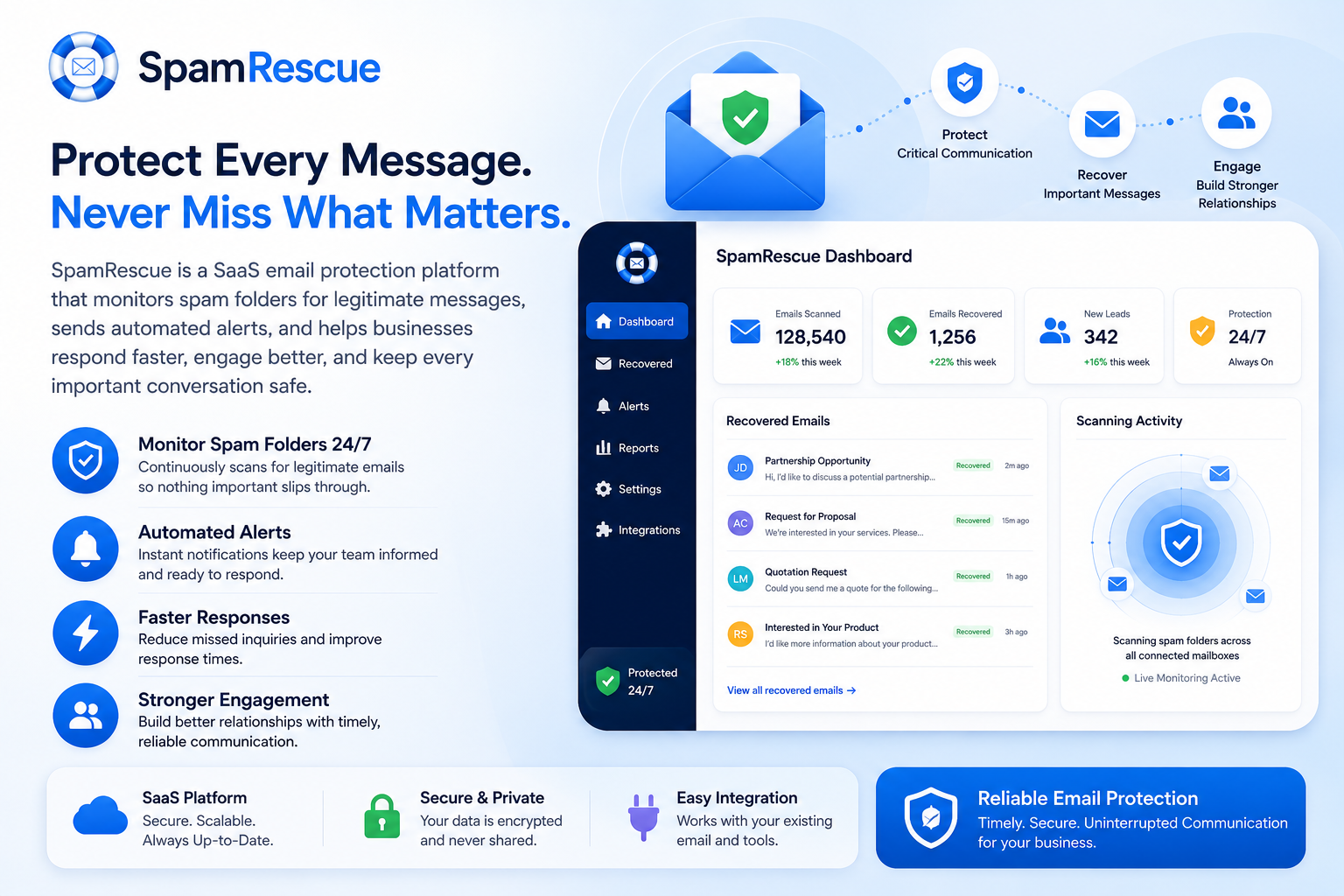
This is exactly the gap SpamRescue is designed to close. Instead of discovering weeks later that a portion of your list was never reachable, SpamRescue validates emails at the point of capture, checking syntax, domain activity, and mailbox-level signals before a lead ever becomes part of your pipeline. It filters out disposable addresses, flags high-risk domains, and helps ensure that the contacts you are building your outreach around are ones that can actually be reached.
For businesses that depend on lead generation to grow, this is not a minor technical detail. It is the difference between a list full of real opportunities and a list quietly filled with dead ends.
Final Thoughts
Email validation is not about being overly cautious or filtering out too many leads. It is about protecting the value of the leads you already have. Every genuine contact that gets lost to a typo, a fake address, or a damaged sender reputation is a missed opportunity that was already within reach.
By building validation into your process from the very first point of contact, you protect not just individual leads but the overall health and deliverability of your entire email program. Tools like SpamRescue exist to make that process automatic, so the leads your business works hard to generate actually have a chance to convert.
Comments
SpamRescue is a cloud based spam recovery service that restores lost emails, improves deliverability, and ensures inbox reliability for businesses.