How to Prepare an Effective Disaster Management Plan for Industrial Businesses

Oct 01, 2026
5 min read
0 views
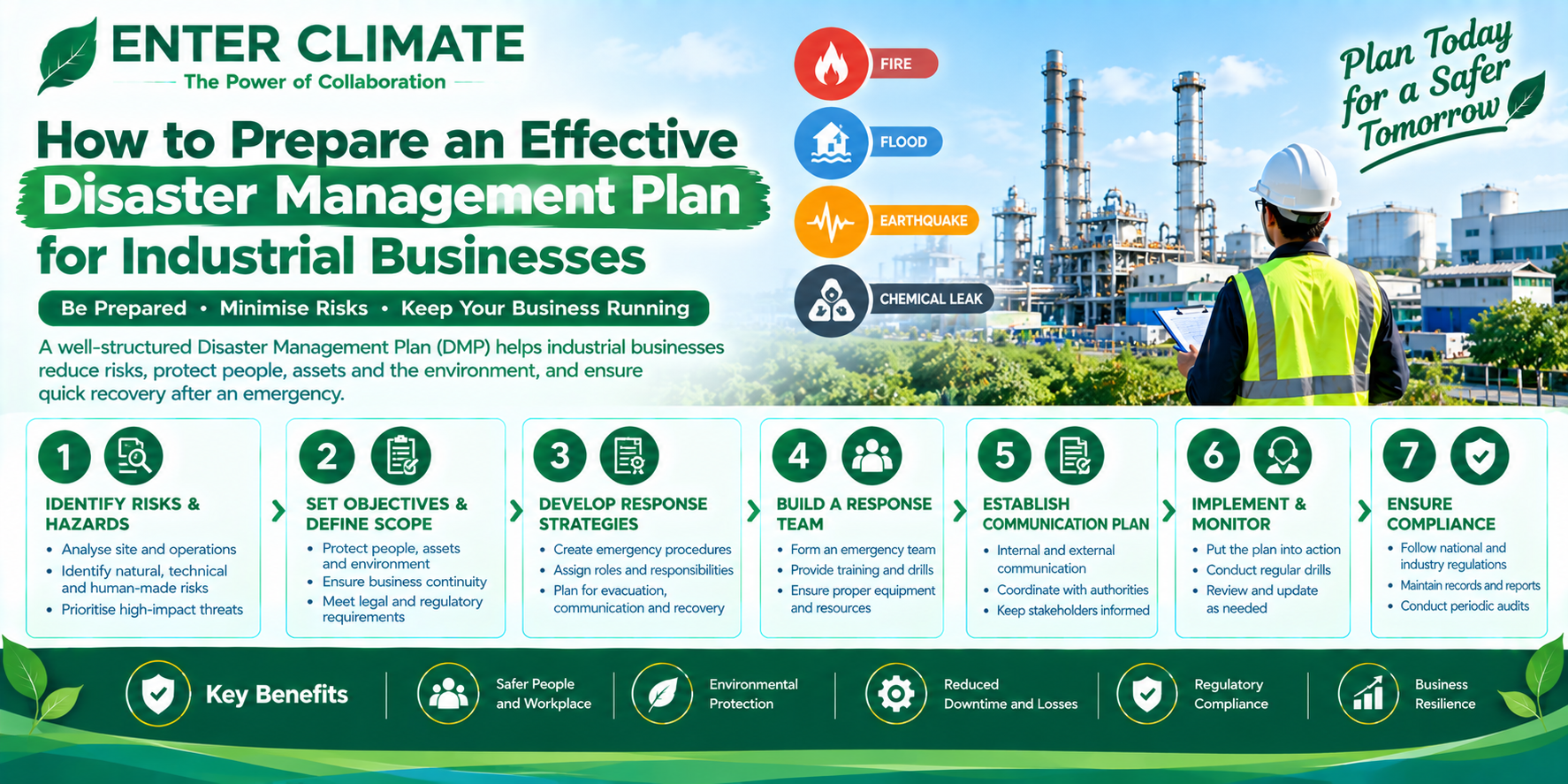
Running an industrial business involves more than machines, workers, and production targets. Every factory or industrial unit also needs to be ready for unexpected events. A fire, chemical leak, flood, equipment failure, or other emergency can happen without much warning.
This is why having a proper Disaster Management Plan is important. It gives workers clear instructions about what to do during an emergency and helps a business reduce damage to people, property, and the environment.
The good news is that a disaster plan does not have to be complicated. It simply needs to be practical, easy to understand, and regularly tested.
What Is a Disaster Management Plan?
A Disaster Management Plan is a written plan that explains how an industrial business will prepare for, respond to, and recover from an emergency.
For example, a factory may face risks such as:
Fire or explosion
Chemical spills or gas leaks
Machinery accidents
Electrical failures
Floods and storms
Structural damage
Environmental pollution
Worker injuries
The plan should explain who will take charge, how workers will be informed, where they should go, and what steps should be taken to control the situation.
Step 1: Identify Possible Risks
The first step is to understand what can go wrong.
Every industrial unit is different. A chemical factory may have a higher risk of chemical leakage, while a manufacturing plant may need to focus more on machinery and fire-related incidents.
Make a list of possible hazards in the workplace. Check storage areas, machines, electrical systems, chemicals, waste handling areas, and emergency exits.
Once the risks are known, the company can prepare suitable safety measures.
Step 2: Understand the Impact on People and Communities
A disaster may affect more than just the factory. Nearby residents, workers, local businesses, roads, water sources, and the surrounding environment may also be affected.
This is where a social impact assessment can be useful. It helps a business understand how its activities or an unexpected event may affect people and communities.
Looking at these impacts early can help companies improve their emergency planning and communicate better with people living nearby.
Step 3: Create a Clear Emergency Response System
During an emergency, people can become confused or frightened. A good plan should therefore clearly assign responsibilities.
For example, the plan can identify:
An emergency response team
First-aid and medical support staff
Fire safety personnel
Evacuation coordinators
Communication officers
People responsible for contacting emergency services
Each person should know what their job is before an emergency happens.
Step 4: Plan Evacuation Routes
Workers should never have to guess where to go during a fire, leak, or other emergency.
Factories should have clearly marked emergency exits and safe assembly points. Evacuation routes should remain free from equipment, materials, and other obstacles.
Emergency signs should be easy to see, even when there is low visibility.
Businesses should also conduct evacuation drills from time to time. A short practice can help workers understand what to do when a real emergency occurs.
Step 5: Keep Emergency Equipment Ready
Having safety equipment is not enough. It must also be available and working properly.
Depending on the type of industry, this may include:
Fire extinguishers
First-aid kits
Emergency alarms
Personal protective equipment
Spill control materials
Emergency lighting
Communication systems
Equipment should be inspected regularly, and damaged or expired items should be replaced.
Step 6: Consider Environmental Risks
Industrial emergencies can sometimes cause environmental damage. For example, a chemical spill may enter soil or water if it is not controlled quickly.
Businesses should therefore include environmental protection steps in their disaster plans. These may cover waste storage, spill control, emergency containment, and safe disposal procedures.
For renewable energy projects, environmental and social risks also need careful attention. Environmental and Social Due Diligence in the Renewable Energy Industry can help identify potential environmental and community-related risks before they become larger problems.
Step 7: Keep Compliance Records Updated
Following environmental rules is an ongoing responsibility. Businesses should regularly check whether their permits, approvals, records, and safety procedures are up to date.
For industries operating in Gujarat, Post Compliance Auditing under GPCB can help businesses review their compliance status and identify areas that may need improvement.
Regular reviews are useful because regulations, operations, equipment, and site conditions can change over time.
Step 8: Train Employees Regularly
Even the best disaster plan will not work if employees do not know what it says.
Companies should provide simple training on emergency procedures. Workers should know where the exits are, whom to contact, where to assemble, and how to use basic safety equipment when appropriate.
New employees should receive safety information when they join, while existing employees should receive refresher training.
Step 9: Review and Improve the Plan
A disaster plan should not be treated as a document that is prepared once and forgotten.
After every drill, incident, equipment change, or major operational change, the company should review its plan.
Ask simple questions:
Did everyone know what to do?
Were emergency exits easy to reach?
Was communication quick?
Was the emergency equipment available?
What could be improved?
Small improvements made regularly can make the plan much stronger.
Final Thoughts
Disasters cannot always be prevented, but businesses can prepare for them. A simple and well-tested Disaster Management Plan can help protect employees, communities, property, and the environment.
Industrial businesses should look at safety, environmental responsibilities, community impacts, employee training, and regulatory compliance together. With proper planning and regular reviews, companies can be better prepared to respond when something unexpected happens.
For businesses looking for support with environmental compliance, risk assessment, and related requirements, Enterclimate provides professional environmental compliance guidance to help businesses understand and manage their responsibilities.
Author Profile
Upendra Sharma
Upendra Sharma is an Environmental Compliance Consultant who writes about environmental regulations, industrial compliance, sustainability, and business-related environmental requirements. Through his work with Enterclimate, he focuses on making complex compliance topics easier for businesses to understand and follow.
Comments
Upendra Sharma works with Enterclimate, India’s premier environmental consultancy, where he helps businesses meet their licensing and compliance goals efficient