Why Is Mobile App Development Important for the Laundry Industry in 2026?

Feb 27, 2026
5 min read
4 views
The laundry industry used to rely on walk-in customers and manual work. Now, it is undergoing rapid changes due to digital transformation. In 2026, laundry businesses must modernize. Customer expectations, operational demands, and competitive pressures are driving this change. One of the most significant shifts is the adoption of mobile applications.
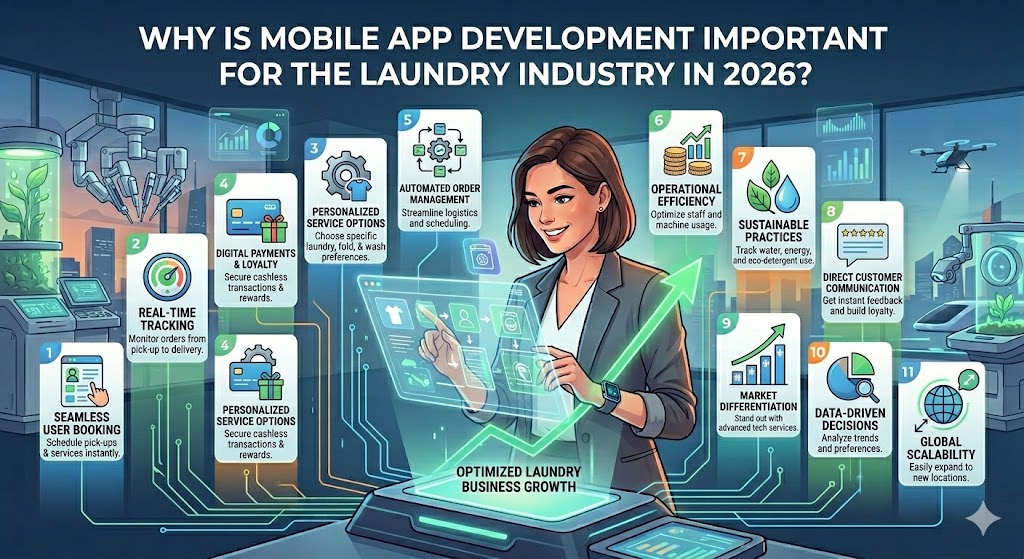
Mobile app development is no longer limited to large enterprises or tech-driven startups. For laundromats, dry cleaners, and on-demand laundry services, a mobile app is now a key tool. It’s no longer a nice extra. It affects customer acquisition, retention, logistics efficiency, and long-term scalability.
Here’s a look at why mobile app development is crucial for the laundry industry in 2026.
1. Changing Consumer Behavior
Customers today expect convenience, speed, and digital accessibility. On-demand service models are changing laundry businesses. They are like how food delivery and ride-sharing apps changed their industries.
Modern consumers prefer to:
Schedule pickups online
Track order status in real time
Make cashless payments
Receive digital notifications
If a laundry service lacks digital convenience, customers might switch. They will look for competitors that offer it. Mobile apps align services with current consumer expectations.
2. Increased Demand for On-Demand Services
In 2026, urban lifestyles are busier than ever. Professionals, students, and families value time-saving services. On-demand laundry platforms allow customers to:
Book pickup and delivery within minutes
Select service types
Choose preferred time slots
Manage recurring orders
Mobile app development allows for greater flexibility. It also supports automated scheduling systems, which cut down on manual coordination.
3. Improved Operational Efficiency
Improved operational efficiency becomes achievable when a professional laundry app development company integrates automated order management, real-time tracking, optimized routing, and centralized dashboards, reducing manual workload, minimizing errors, and streamlining overall business operations.
Beyond customer convenience, mobile apps streamline backend operations. Laundry businesses can integrate:
Order management systems
Inventory tracking
Driver routing optimization
Staff allocation dashboards
Automated billing
This reduces human error and administrative workload. With centralized dashboards, business owners gain real-time visibility into performance metrics, improving decision-making.
Operational efficiency has a direct effect on profitability.
4. Real-Time Order Tracking and Transparency
Transparency has become a critical factor in customer satisfaction. Through mobile apps, customers can track:
Pickup confirmation
Cleaning progress
Delivery status
Payment confirmation
This visibility builds trust and reduces support inquiries. Customers get automated notifications for updates instead of calling the store. This change improves the service experience.
5. Stronger Customer Retention
Customer retention costs less than acquisition. Mobile apps enhance retention through:
Loyalty programs
Push notifications
Discount offers
Subscription plans
Personalized promotions
For example, businesses can send reminders for recurring services or offer discounts after a certain number of orders. These engagement features keep customers returning.
In 2026, retention-focused strategies are central to sustainable growth.
6. Competitive Differentiation
The laundry market in many regions faces intense competition. Traditional storefront businesses often compete on price alone.
Mobile app integration provides differentiation through:
Seamless booking experience
Branded digital interface
Faster service coordination
Transparent communication
Businesses that adopt mobile technology position themselves as modern, reliable, and customer-centric.
7. Data-Driven Business Insights
Mobile apps generate valuable data, including:
Customer preferences
Order frequency
Peak demand times
Revenue trends
Geographic service patterns
Analyzing this data helps make smart choices. You can adjust pricing models, launch targeted promotions, or expand into high-demand areas.
Data-driven optimization improves both marketing and operational performance.
8. Secure and Cashless Transactions
Digital payment integration is now standard. Customers prefer secure, cashless options such as:
Credit/debit cards
Digital wallets
UPI or bank transfers
Subscription billing
Mobile apps centralize payment processing, reducing cash handling risks and simplifying accounting.
Secure payment gateways also improve customer trust and transaction transparency.
9. Scalability for Growing Businesses
Mobile app development supports scalability. As a laundry business expands to many locations or service zones, the app can manage:
Multi-branch coordination
Centralized order routing
Standardized pricing models
Unified reporting
Without digital infrastructure, scaling operations becomes complex and inefficient.
A structured app system provides the foundation for regional or even national expansion.
10. Integration with Emerging Technologies
In 2026, technology adoption is accelerating across industries. Laundry apps can integrate with:
AI-based demand forecasting
Automated customer support chatbots
Smart locker systems
GPS fleet tracking
CRM systems
These integrations improve automation, reduce costs, and enhance service reliability.
Businesses that adopt emerging technologies early often gain competitive advantages.
11. Enhanced Brand Identity
A mobile app strengthens brand recognition. Businesses can build direct relationships with customers. This is better than relying only on third-party marketplaces.
Branded mobile platforms allow companies to:
Control user experience
Maintain pricing autonomy
Avoid marketplace commission fees
Build long-term brand loyalty
Owning the digital channel strengthens independence and long-term profitability.
Broader Industry Impact in 2026
The digital transformation of the laundry industry reflects broader economic shifts. Customers are checking service providers more often based on digital accessibility and responsiveness.
Businesses without digital infrastructure may face:
Declining customer acquisition
Operational inefficiencies
Limited scalability
Reduced competitive positioning
Mobile app development connects traditional services with today’s consumer needs.
Key Benefits Summary
Mobile app development for the laundry industry in 2026 matters. It provides:
Greater customer convenience
Operational automation
Improved retention strategies
Real-time tracking transparency
Secure digital payments
Scalable infrastructure
Competitive differentiation
Data-driven growth insights
Each of these factors contributes to long-term sustainability.
Final Thoughts
Mobile app development is key for the laundry industry in 2026. It improves customer experience and boosts operational efficiency. It enables convenience-driven service models, strengthens brand positioning, and supports scalable growth.
Consumers are now choosing digital interactions. Laundry businesses that use mobile platforms can compete better. They can maintain customer loyalty and achieve sustainable growth.
Digital integration is essential now. It forms the base for the future of the laundry industry.
Comments
I’m Ryan Wilson, a digital strategist driving online growth through data-driven strategies that improve visibility, engagement, and measurable results.