Why Post Compliance for Plastic Waste Management Is Essential for Producers, Importers & Brand Owners

Aug 05, 2026
4 min read
0 views
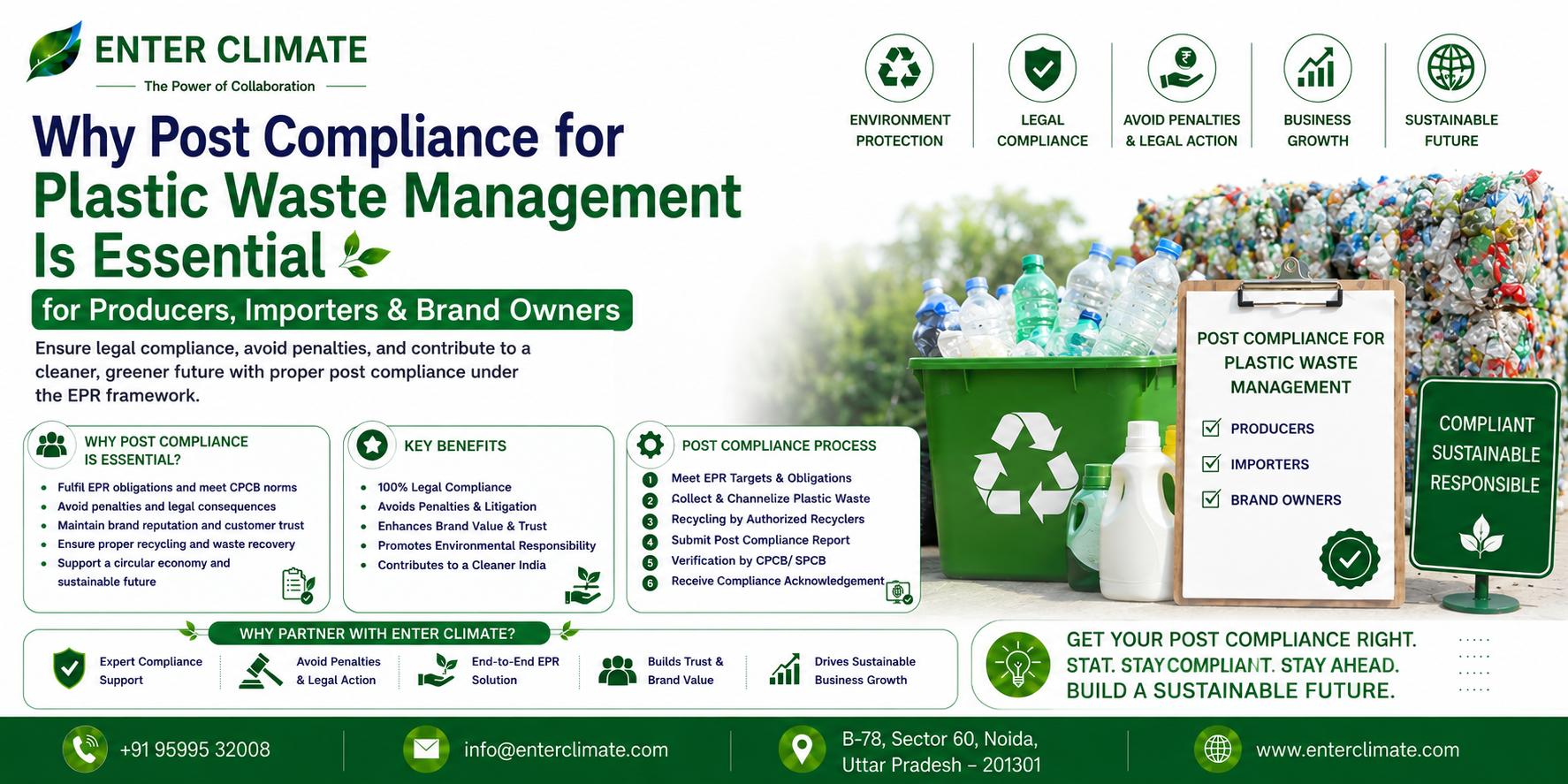
Plastic is useful in our daily lives, but plastic waste is becoming a big problem for the environment. To reduce this problem, the Government of India has introduced Extended Producer Responsibility (EPR). Under this system, producers, importers, and brand owners are responsible not only for selling plastic products but also for making sure the plastic waste is collected and recycled.
Many businesses think their work is complete after getting EPR Certification, but that is only the beginning. The real responsibility starts after registration. This is where post compliance for plastic waste management becomes important.
What Is Post Compliance for Plastic Waste Management?
Post compliance means completing all the tasks that come after getting EPR approval. It helps businesses prove that they are following government rules throughout the year.
Some important post-compliance activities include:
Meeting annual recycling targets
Working with authorized plastic waste processors
Keeping proper records of plastic waste collection
Filing reports on time
Maintaining all compliance documents
Without these steps, even a business with valid EPR registration may face legal problems.
Why Is Post Compliance So Important?
Imagine getting a driving license but never following traffic rules. The license alone cannot protect you from penalties.
The same applies to EPR. EPR Compliance is not only about registration. It is about continuously following the rules.
Good post compliance helps businesses:
Stay compliant with government regulations
Avoid penalties and legal notices
Build customer trust
Improve brand reputation
Support environmental protection
Businesses that complete their post-compliance activities regularly also find future renewals and inspections much easier.
Who Needs Post Compliance?
Post compliance is required for businesses that introduce plastic packaging into the Indian market, including:
Plastic product manufacturers
Importers
Brand owners
Online sellers using plastic packaging
FMCG companies
Food and beverage businesses
If your company generates plastic packaging waste, post compliance is an important responsibility.
How Does Post Compliance Help the Environment?
Every year, millions of tons of plastic waste are produced. If it is not collected and recycled, it ends up in rivers, oceans, landfills, and public places.
By following post compliance for plastic waste management, businesses help:
Increase plastic recycling
Reduce pollution
Keep cities cleaner
Save natural resources
Support a circular economy where materials are reused instead of wasted
Small actions by thousands of businesses create a big positive impact on the environment.
Common Mistakes Businesses Make
Many companies unknowingly make mistakes after obtaining EPR registration.
Some common errors include:
Missing annual reporting deadlines
Not maintaining recycling records
Working with unauthorized recyclers
Failing to achieve recycling targets
Keeping incomplete documentation
These mistakes can result in penalties or compliance issues.
Choosing the Right Compliance Partner
Managing post compliance can be challenging, especially for growing businesses. Professional guidance helps companies complete documentation, reporting, target fulfilment, and regulatory updates correctly.
Enterclimate helps producers, importers, and brand owners manage their environmental compliance requirements with practical and reliable support. From EPR Certification to complete EPR Compliance and post-compliance reporting, the team helps businesses stay compliant while focusing on their growth.
What About Battery EPR Credits?
Many businesses also work with batteries along with plastic packaging. In such cases, they may need to comply with battery waste regulations as well.
Battery EPR Credits are used under Battery Waste Management Rules to help businesses fulfil their battery recycling obligations. Although battery compliance is different from plastic waste compliance, both are important parts of responsible environmental management. Companies dealing with multiple products should understand the compliance requirements for each category.
Final Thoughts
Getting EPR Certification is only the first step. The real responsibility begins after registration through post compliance for plastic waste management. Regular reporting, proper record keeping, and achieving recycling targets help businesses remain legally compliant while protecting the environment.
For producers, importers, and brand owners, strong EPR Compliance is more than a legal requirement—it is a commitment to building a cleaner and more sustainable future. By taking post compliance seriously today, businesses can reduce risks, improve their reputation, and contribute to a healthier planet for future generations.
Author Profile
Upendra Sharma is an Environmental Compliance Consultant with expertise in EPR regulations, waste management compliance, and sustainability solutions in India. He regularly writes easy-to-understand articles that help businesses learn about environmental laws, EPR Compliance, EPR Certification, plastic waste management, and recycling requirements. Through his work with Enterclimate, he supports producers, importers, and brand owners in achieving regulatory compliance while promoting responsible environmental practices.
Comments
Upendra Sharma works with Enterclimate, India’s premier environmental consultancy, where he helps businesses meet their licensing and compliance goals efficient