Why I Switched to an eSIM for Travel Instead of a SIM Card

Aug 05, 2026
3 min read
7 views
Last year I landed in a new country and spent the first hour of my trip standing in a phone shop line instead of getting to my hotel. That was the last time I did that. Now I set up an eSIM before I leave Toronto, and by the time I land, I’m already online.
An eSIM is a digital SIM. Instead of a physical card you pop into your phone, it's a profile you install through an app. You pick a data plan for wherever you're going, scan a code or tap install, and it's active. No shop, no queue, no language barrier at a counter trying to explain what plan you want.
What actually changed for me
I work while I travel, which means I'm not on vacation-mode data usage. I'm uploading files, sending emails, sometimes on calls. Before the eSIM, I was buying a local SIM at every destination and usually overpaying for data I didn't fully use, because I'd guess wrong on how much I needed.
With an eSIM, I set the plan before I fly. On a two week trip to Japan, I picked an unlimited data plan and paid about 40 euros for the whole two weeks. My old carrier used to charge me close to that for 4 GB a week at home. That's the kind of gap that actually changes how you plan a trip, not just a minor convenience.
You keep your regular number
This is the part people don't expect. Your normal SIM stays in the phone. The eSIM runs alongside it. So your usual number keeps working, people can still reach you the normal way, and you're not swapping cards in an airport bathroom trying not to lose the tiny original SIM tray pin.
For freelance work specifically, this matters more than it sounds. Clients message me on my regular number. I don't want to explain a temporary foreign number every time I travel for a few weeks.
Setup takes less time than ordering coffee
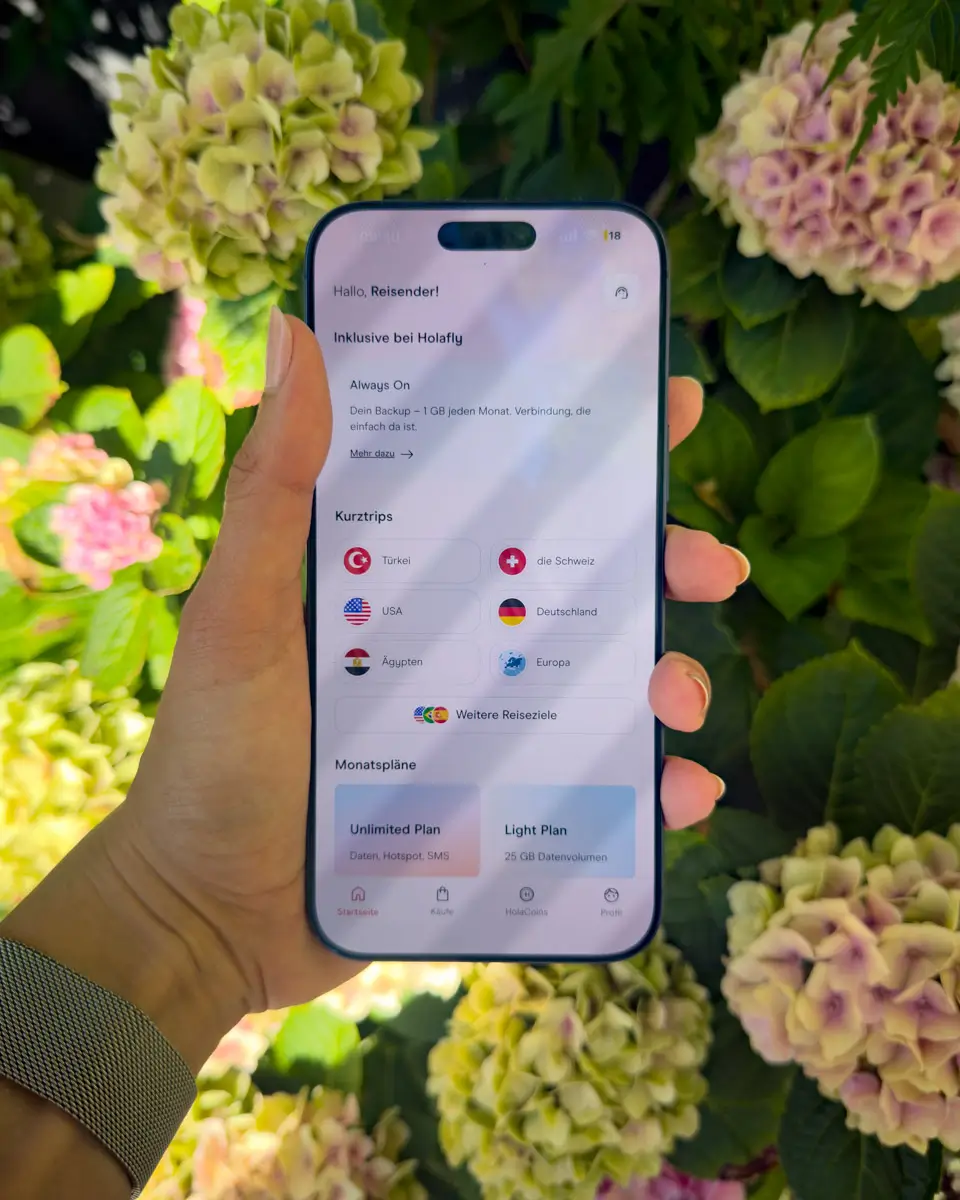
The whole process, from opening the app to being connected, takes about two minutes. You choose your destination or region, pick how many days you need, from 1 up to 90, and that's it. If you're the type who travels often and doesn't always know exactly how long you'll stay, some providers also offer monthly plans instead of a fixed number of days, which fits better if your schedule shifts.
The one detail that saved me once
Most eSIM setups quietly give you a small amount of backup data each month at no extra cost, even after your paid plan runs out, as long as the eSIM stays installed. I didn't think much of this until a flight got delayed and I needed an extra day of connectivity I hadn't paid for. It wasn't much data, but it was enough to sort out a new hotel booking and let people know I'd be late. Small detail, but it's the kind of thing you're glad exists when you actually need it.
Is it worth switching
If you travel a few times a year, it's a clear yes. The cost per GB is usually lower than a physical SIM bought on arrival, the setup is faster, and you're not relying on a shop being open or having stock when you land. If you only travel once every couple of years, the savings are smaller, but the time saved on day one of a trip is still worth something on its own.
I'm not going back to standing in phone shop lines. The two minutes I spend setting up an eSIM before a flight save me an hour I used to lose after landing, every single time.
Comments
I am Nathalie, a travel blogger from Germany sharing guides and real travel experiences. Find more destination ideas and tips at voyagefox.net.