What Are the Different Types of Earthing Systems?

Sep 10, 2026
5 min read
1 views
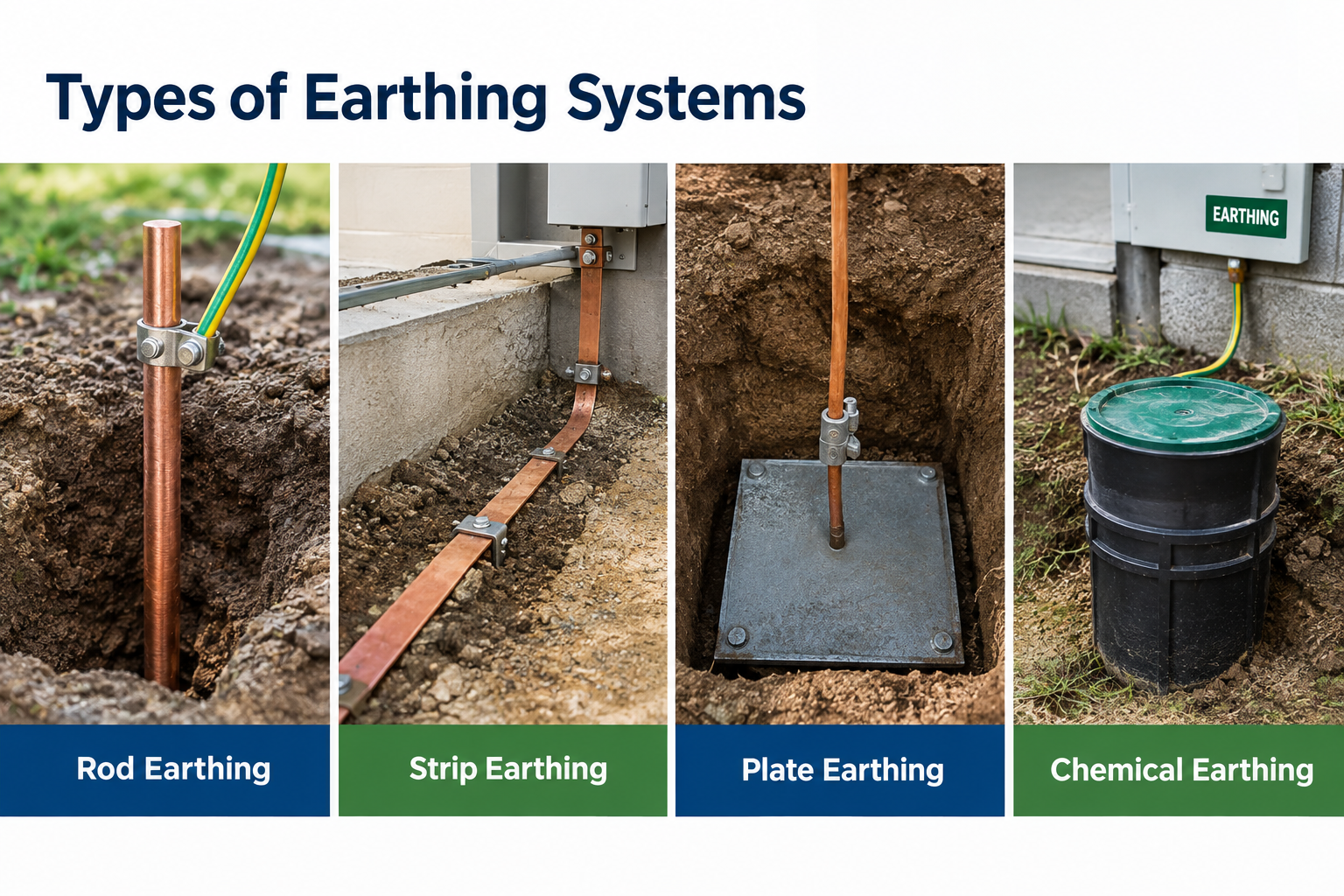
When an electrical fault or lightning strike occurs, there is very little room for error. A properly designed earthing system provides a controlled path for unwanted electrical current to reach the ground, helping protect people, buildings, and electrical equipment.
But earthing is not a one-size-fits-all solution. Different installations require different approaches depending on the electrical supply, building structure, soil conditions, equipment, and level of protection required.
For businesses planning electrical installations in the UK, understanding the different earthing arrangements and the components used in Earthing And Lightning Protection systems can make equipment selection and maintenance much easier.
What Is an Earthing System?
An earthing system connects relevant parts of an electrical installation to earth through suitable conductors and electrodes.
Under normal operating conditions, the protective earthing path should not carry the installation's normal load current. If a fault occurs, however, it provides a route for fault current and helps protective devices operate as intended.
Earthing also plays an important role in lightning protection. A lightning protection system needs a suitable path from the point where lightning is intercepted through down conductors and ultimately into the earth.
What Are the Main Types of Earthing Systems?
In the UK, electrical installations can use different earthing arrangements. The most commonly discussed types include TN-S, TN-C-S and TT systems, with each having its own characteristics.
1. TN-S Earthing
A TN-S arrangement uses separate conductors for the neutral and protective earth throughout the relevant supply system.
This separation means the protective conductor has a dedicated role rather than carrying normal neutral current. TN-S arrangements can be found in certain commercial, industrial, and existing electrical installations.
The actual suitability of this arrangement depends on the characteristics of the incoming supply and the installation.
2. TN-C-S Earthing
TN-C-S is another common arrangement encountered in UK electrical installations. Here, the neutral and protective functions are combined in part of the supply network and separated within the installation.
This arrangement is often associated with Protective Multiple Earthing (PME).
Because the protective and neutral functions are related within part of the supply network, bonding and installation design need careful attention. Electrical work should always follow applicable UK requirements and be carried out by competent professionals.
3. TT Earthing
A TT system uses a local earth electrode for the installation's connection to earth.
Instead of relying on a protective conductor provided through the supply network, the installation has its own earth electrode. Residual current protection is particularly relevant to TT arrangements because fault-loop characteristics can differ from those of TN systems.
The effectiveness of a TT installation depends on factors including electrode design and the surrounding ground conditions.
What Components Are Used in Earthing and Lightning Protection?
An earthing arrangement is more than simply putting an earth rod into the ground. A complete system may contain several components working together.
Raiden's Earthing & Lightning Protection range includes solid copper earth rods and stainless-steel earth rods, along with other components used in lightning protection systems. The company's product information also highlights lightning earthing terminals, roof conductors, down conductors, test links, and earth electrodes.
Copper Earth Rods
Copper is widely valued for its electrical conductivity and corrosion resistance. Raiden states that its solid copper earth rods use high-conductivity hard-drawn copper and are manufactured to BS2874 C101 specifications. The rods use roll-threaded construction rather than cut threads.
Stainless Steel Earth Rods
Stainless steel can be useful where corrosion resistance is a major consideration. Raiden highlights Grade 304 and 316 stainless-steel options for situations where dissimilar metals and harsh ground conditions may create corrosion concerns.
The right earth electrode should therefore be selected according to the installation environment rather than simply choosing a material based on price.
How Does Earthing Connect With Lightning Protection?
Earthing and lightning protection have different functions, but they need to work together in a properly designed system.
A lightning protection installation can include roof conductors that intercept or carry lightning current, down conductors that provide a route towards ground, test links for inspection, and earth electrodes for the final connection to earth.
Raiden specifically identifies these components as part of its lightning protection system offering.
The design also needs to consider conductor routing, bonding, electrode selection, building characteristics, and the surrounding environment. Simply installing an earth rod does not automatically create a complete lightning protection system.
How Do You Choose the Right Earthing Solution?
Start by understanding the installation.
Is it a domestic property, commercial building, factory, warehouse, telecommunications site, or another type of facility? What type of electrical supply is available? Is the site exposed to moisture, salt, chemicals, or other corrosive conditions?
Ground conditions also matter. An electrode that works well in one environment may not provide the same performance in another.
For larger or higher-risk installations, a competent electrical or lightning protection professional should assess the site and determine the appropriate system design.
Final Thoughts
A reliable earthing system is an essential part of electrical safety, while a properly designed lightning protection system helps provide a controlled path for lightning current. The choice between TN-S, TN-C-S, TT, or another arrangement depends on the installation and its supply characteristics.
For projects requiring dependable electrical protection, the quality of the individual components matters just as much as the overall system design. Raiden Electric offers earthing and lightning protection products including copper and stainless-steel earth rods and associated protection components for different installation requirements.
If you are planning an electrical or lightning protection project in the UK, explore Raiden Electric's Earthing And Lightning Protection range and contact the team to discuss the products and configuration suited to your application.
Frequently Asked Questions
Which earthing system is commonly used in the UK?
TN-S, TN-C-S, and TT arrangements are commonly encountered, depending on the electrical supply and installation. The correct arrangement should be determined from the actual site and supply characteristics.
Are copper earth rods suitable for all environments?
Not necessarily. Copper offers excellent conductivity and corrosion resistance, but the surrounding soil and presence of other metals should be considered before selecting an electrode material.
What is the purpose of an earth rod?
An earth rod provides an electrode connection between the earthing system and the surrounding ground. Its suitability depends on the system design, ground conditions, and applicable requirements.
Does earthing alone provide lightning protection?
No. Lightning protection normally involves a coordinated system of components, which can include terminals, conductors, down conductors, test links, earth electrodes, and other protective measures.
Comments
Raiden is a electrical manufacturing company based in Leicestershire, UK and production unit being held in UK, UAE, China, India, Taiwan, and Sweden.