How to Choose the Right Ground Up Construction Lender for Your Investment Strategy

Jul 17, 2026
9 min read
5 views
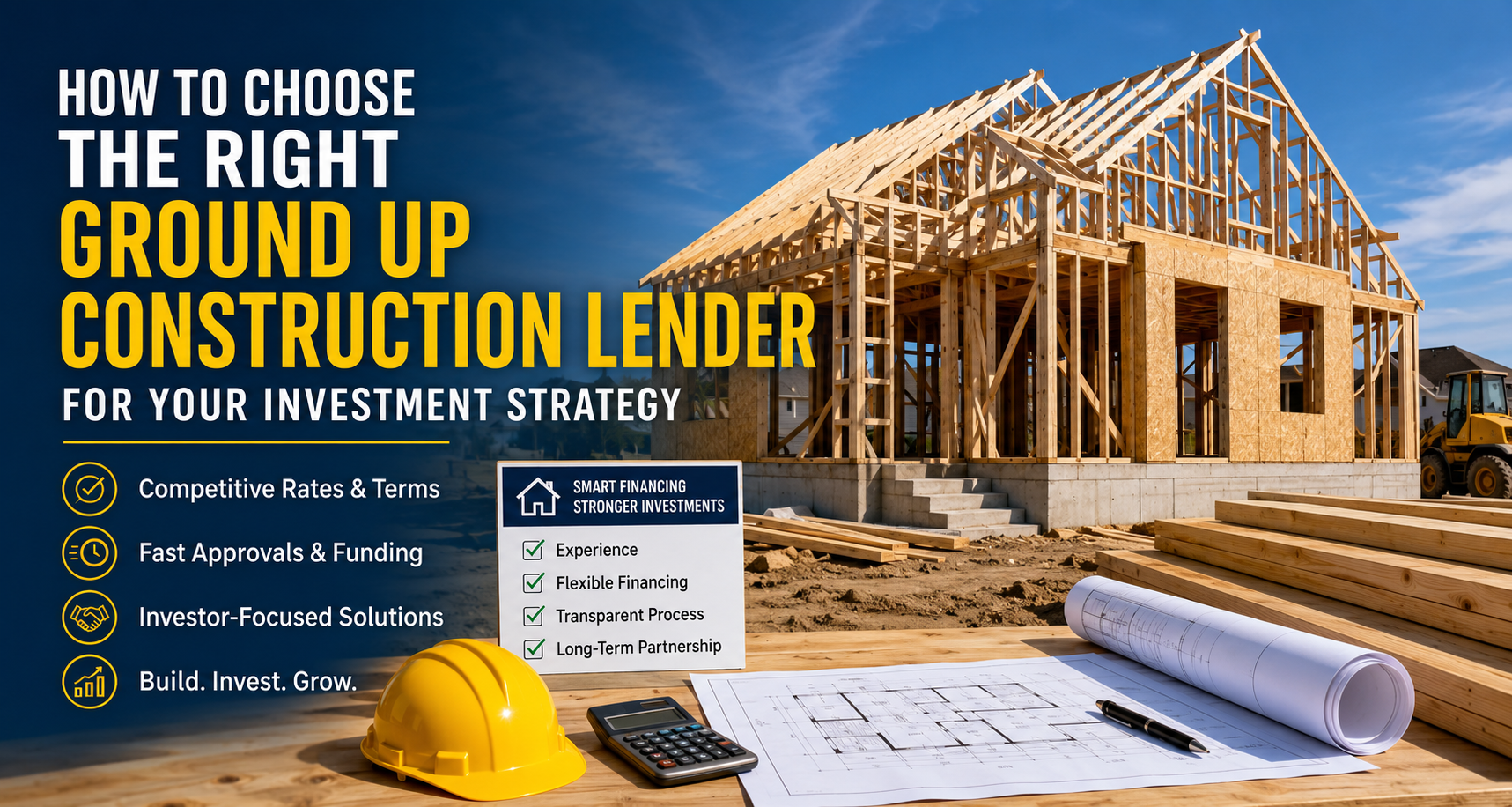
Building a property from the ground up can be one of the most profitable real estate investment strategies in the United States. Whether you are developing a single family home, a build to rent property, or a small multifamily project, the success of your investment often depends on the financing partner you choose.
Many investors spend a lot of time evaluating land, construction costs, and projected returns, but they overlook one critical factor. Choosing the right lender can make the difference between a smooth project and a costly delay.
Not all ground up construction lenders offer the same loan terms, approval process, funding speed, or experience. Understanding how to compare lenders can help you secure the right financing and keep your project on track from start to finish.
In this guide, we will explain how to choose the right ground up construction lender for your investment strategy and what factors you should consider before applying.
What Is a Ground Up Construction Loan?
A ground up construction loan is a financing solution designed to help investors build a property from vacant land to a completed structure. Unlike traditional mortgages, these loans provide funding for land acquisition, construction costs, labor, materials, permits, and other project related expenses.
Ground up construction loans are commonly used for:
Single family homes
Build to rent properties
Spec homes
Townhomes
Duplexes and triplexes
Small multifamily developments
Since construction projects involve more risk than purchasing an existing property, lenders carefully evaluate both the borrower and the project before approving financing.
Why Choosing the Right Lender Matters
The lender you choose will play an important role throughout the entire construction process. They will review your plans, approve draw requests, monitor project progress, and provide funding at different stages of construction.
The right lender can help you:
Get approved faster
Access higher loan amounts
Reduce project delays
Improve cash flow
Increase overall profitability
Scale your real estate portfolio
On the other hand, choosing the wrong lender can lead to funding delays, unexpected costs, and challenges that impact your return on investment.
Understand Your Investment Strategy First
Before comparing ground up construction lenders, take time to define your investment goals.
Ask yourself:
Are you building a home to sell quickly?
Are you creating a rental property for long term cash flow?
Are you developing multiple homes at once?
Are you planning a multifamily project?
Different strategies often require different financing structures.
For example, an investor building a spec home may prioritize fast funding and flexible terms. A buy and hold investor may look for a lender that offers both construction financing and long term rental financing.
Understanding your strategy will help you identify lenders that align with your goals.
Look for Experience in Ground Up Construction Financing
One of the most important factors to consider is lender experience.
Ground up construction financing is very different from traditional mortgage lending. Construction projects involve budgets, permits, inspections, draw schedules, contractor management, and timelines.
Experienced lenders understand these challenges and can provide valuable guidance throughout the process.
When evaluating a lender, ask:
How long have they been providing construction loans?
How many projects have they financed?
Do they specialize in investor loans?
Have they financed projects similar to yours?
A lender with extensive experience can help identify potential issues before they become major problems.
Evaluate Loan to Cost and Loan to Value Ratios
Ground up construction lenders typically determine loan amounts based on Loan to Cost and Loan to Value calculations.
Loan to Cost refers to the percentage of total project costs a lender is willing to finance.
Loan to Value refers to the relationship between the loan amount and the property's completed value.
Higher leverage may reduce the amount of cash you need to invest upfront.
When comparing lenders, review:
Maximum Loan to Cost limits
Maximum Loan to Value limits
Land value considerations
Equity requirements
Choosing a lender with competitive leverage can improve your cash flow and help you preserve capital for future projects.
Compare Interest Rates and Fees
Interest rates are important, but they should not be the only factor in your decision.
Some lenders advertise lower rates but charge higher fees that increase the overall cost of financing.
Review all potential costs including:
Origination fees
Underwriting fees
Processing fees
Inspection fees
Extension fees
Interest reserve requirements
Request a complete breakdown of costs before making a decision.
A transparent lender will clearly explain all fees and provide realistic expectations.
Consider Funding Speed
In today's competitive real estate market, speed matters.
Opportunities can disappear quickly if financing takes too long.
Many private ground up construction lenders can approve and fund loans much faster than traditional banks.
Ask potential lenders:
How long does approval take?
How quickly can funding occur?
What documents are required?
How efficient is the underwriting process?
Fast funding can help you secure deals and start construction sooner.
Review the Draw Process
Construction loans are typically funded through a draw schedule.
Instead of receiving the entire loan amount upfront, funds are released in stages as construction progresses.
The draw process is a critical part of any construction project.
A lender with an efficient draw system can help keep contractors paid and projects moving forward.
Questions to ask include:
How often can draws be requested?
How quickly are draws processed?
Are inspections required?
Is the process digital or paper based?
Delays in draw funding can create cash flow issues and slow construction progress.
Understand Credit and Experience Requirements
Different lenders have different qualification standards.
Some lenders focus heavily on credit scores and financial history.
Others place more emphasis on project viability and investor experience.
If you are a newer investor, look for lenders that work with first time developers.
Ask about:
Minimum credit score requirements
Experience requirements
Liquidity requirements
Net worth requirements
Understanding these criteria can help you avoid wasting time on lenders that are not a good fit.
Look for Flexible Loan Programs
Every project is unique.
The best ground up construction lenders understand this and offer flexible financing solutions.
Flexibility can include:
Financing for land acquisition
Higher leverage options
Interest only payments during construction
Flexible draw schedules
Multiple exit strategies
A lender that can customize financing to your project may provide significant advantages.
Evaluate Communication and Customer Service
Construction projects involve many moving parts.
Good communication is essential throughout the process.
Before selecting a lender, pay attention to how responsive they are during the application process.
Consider:
Do they answer questions clearly?
Are they easy to reach?
Do they explain loan terms in simple language?
Do they provide updates throughout the process?
Strong communication can reduce stress and improve the overall borrowing experience.
Check Their Understanding of Local Markets
Real estate markets vary across the United States.
Construction costs, property values, regulations, and demand can differ significantly from one region to another.
Lenders with strong market knowledge can better evaluate opportunities and provide relevant insights.
Local expertise can be especially valuable when developing properties in growing markets.
Review Online Reputation and Testimonials
Researching a lender's reputation can help you make a more informed decision.
Look for:
Client reviews
Investor testimonials
Case studies
Industry recognition
While no lender will have perfect reviews, consistent positive feedback is often a good sign.
Pay attention to comments regarding:
Funding speed
Customer service
Transparency
Reliability
These factors often reveal what working with the lender is actually like.
Ask About Exit Strategies
Before taking out a construction loan, understand how you plan to repay it.
Common exit strategies include:
Selling the completed property
Refinancing into a long term loan
Converting to a rental property
Some lenders offer financing solutions that support multiple exit strategies.
For example, an investor building a rental property may benefit from working with a lender that also offers rental property financing after construction is complete.
This can simplify the transition and reduce financing challenges.
Red Flags to Watch For
Not every lender is the right choice.
Be cautious if you encounter:
Hidden fees
Unclear loan terms
Slow responses
Limited construction experience
Unrealistic promises
Poor online reviews
Taking time to research lenders can help you avoid costly mistakes.
Questions to Ask Ground Up Construction Lenders
Before making a final decision, ask these important questions:
How much of the project cost can you finance?
What are your interest rates and fees?
How long does approval take?
How does the draw process work?
What are your credit requirements?
Do you finance first time investors?
Can you finance land acquisition?
What happens if construction takes longer than expected?
Do you offer financing after construction is complete?
How many similar projects have you funded?
The answers will help you compare lenders more effectively.
Why Many Investors Choose Private Ground Up Construction Lenders
Private lenders have become increasingly popular among real estate investors.
Compared to traditional banks, private lenders often provide:
Faster approvals
Flexible underwriting
Investor focused loan programs
More competitive funding timelines
Greater flexibility for unique projects
These advantages can be particularly valuable in competitive markets where timing is critical.
Many investors prefer private ground up construction financing because it allows them to move quickly and take advantage of opportunities that might otherwise be missed.
Final Thoughts
Choosing the right lender is one of the most important decisions you will make when starting a construction project.
The best ground up construction lenders do more than provide funding. They become valuable partners who help keep your project on schedule and support your investment goals.
As you compare lenders, focus on experience, loan terms, funding speed, communication, flexibility, and overall reputation. Take time to understand your investment strategy and choose a lender that aligns with your objectives.
Whether you are building your first investment property or expanding a growing portfolio, selecting the right ground up construction financing partner can improve your chances of success and help maximize your returns.
Frequently Asked Questions
What is a ground up construction lender?
A ground up construction lender provides financing for real estate projects that are built from vacant land through project completion. These lenders fund land acquisition, construction costs, labor, materials, and related expenses.
How do ground up construction loans work?
Ground up construction loans provide funding in stages through a draw schedule. Funds are released as construction milestones are completed and verified.
What credit score is needed for a ground up construction loan?
Requirements vary by lender. Many lenders prefer credit scores above 680, but some private lenders may offer financing options for borrowers with lower scores depending on the project.
Can first time investors qualify for ground up construction financing?
Yes. Some lenders offer programs specifically designed for first time investors and developers. Strong project planning and sufficient capital can improve approval chances.
How much can ground up construction lenders finance?
Many lenders finance a percentage of total project costs based on Loan to Cost and Loan to Value guidelines. Financing amounts vary depending on the lender, project type, and borrower qualifications.
Are private lenders better than banks for construction loans?
Private lenders often provide faster approvals, flexible underwriting, and investor focused loan programs. Banks may offer lower rates but usually have stricter qualification requirements.
How long does it take to get approved for a ground up construction loan?
Approval timelines vary. Private lenders may approve loans within days, while traditional banks can take several weeks or longer.
Can ground up construction financing include land purchase costs?
Yes. Many lenders offer financing that includes both land acquisition and construction expenses, depending on the project's structure and borrower qualifications.
What documents are required for a ground up construction loan?
Most lenders require construction plans, project budgets, contractor information, financial statements, property details, and loan application documents.
What is the difference between ground up construction financing and a traditional mortgage?
A traditional mortgage finances an existing property, while ground up construction financing funds the process of building a property from vacant land through completion.
Comments
Written by Simplending Financial
Simplending Financial is a trusted private lending firm offering customized financing solutions for real estate investors.