Step-by-Step Guide to Haryana Road Tax Rates and Payment

Aug 03, 2026
7 min read
0 views
Buying a vehicle involves more than choosing a model, arranging finance, and completing registration. State-level taxes are also an important part of the ownership process. For vehicle owners in Haryana, understanding haryana road tax can help avoid unexpected costs and ensure that the vehicle remains legally compliant on the road.
The road tax is collected by the state government for vehicles used or kept for use in Haryana. Under the Haryana Motor Vehicles Taxation Act, the applicable tax depends on factors such as vehicle category, value, usage and applicable government notifications.
What Is Road Tax in Haryana?
Road tax, commonly referred to as motor vehicle tax, is a state-imposed charge on vehicles. The amount and payment frequency depend on whether the vehicle is a private, commercial, transport or special-purpose vehicle.
For many private non-transport vehicles, Haryana applies a one-time tax at the time of registration. Commercial and transport vehicles can follow different tax structures, including periodic payments based on their category, seating capacity, weight or other applicable parameters.
The Haryana Motor Vehicles Taxation Act also requires the applicable tax to be paid before a motor vehicle is used or kept for use in the state.
Haryana Road Tax Rates for Two-Wheelers
For private two-wheelers, the applicable one-time tax is generally linked to the vehicle's cost.
These rates are generally applicable to non-transport two-wheelers. Certain categories, including electric vehicles, may receive separate concessions or exemptions under applicable government policies.
For example, if an eligible motorcycle costs ₹1.5 lakh, a 6% rate would result in a tax of approximately ₹9,000 before considering any applicable concession or other charges.
Haryana Road Tax Rates for Cars
For private four-wheelers such as cars and similar vehicles, the tax is generally calculated as a percentage of the vehicle cost.
For instance, a private car costing ₹8 lakh would fall in the applicable middle slab, making the tax approximately ₹64,000 at an 8% rate.
The exact amount payable can depend on the applicable government notification and the vehicle details recorded during registration. Therefore, owners should verify the amount generated in the official tax-payment system before completing the transaction.
Recent Haryana Road Tax Relief for Vehicle Owners
Haryana has introduced additional tax-related incentives aimed at encouraging electric mobility and supporting women vehicle owners.
The state's 2026 budget announced a 1% rebate in motor vehicle tax for non-transport vehicles registered in the name of women. It also proposed enhancing the existing electric-vehicle tax concession.
More recently, the Haryana government approved a 100% exemption from motor vehicle tax for new electric vehicles costing up to ₹30 lakh, along with a 1% rebate for eligible non-transport vehicles registered in women's names. Vehicles above the specified EV price threshold may be subject to different treatment under the applicable notification.
Because incentives can depend on vehicle type, purchase date, registration conditions and government notifications, buyers should verify eligibility before calculating their final payable amount.
Factors That Can Affect Haryana Road Tax
The tax is not necessarily identical for every vehicle. Several factors can influence the amount, including:
Vehicle category and intended use
Vehicle cost or applicable taxable value
Seating capacity for certain transport vehicles
Gross vehicle weight or load capacity
Whether the vehicle is new or transferred from another state
Fuel or power type
Applicable government rebates or exemptions
Tax period selected for transport vehicles
The Haryana Motor Vehicles Taxation Act gives the state government authority to specify tax rates, vehicle types, periods and payment methods through notifications.
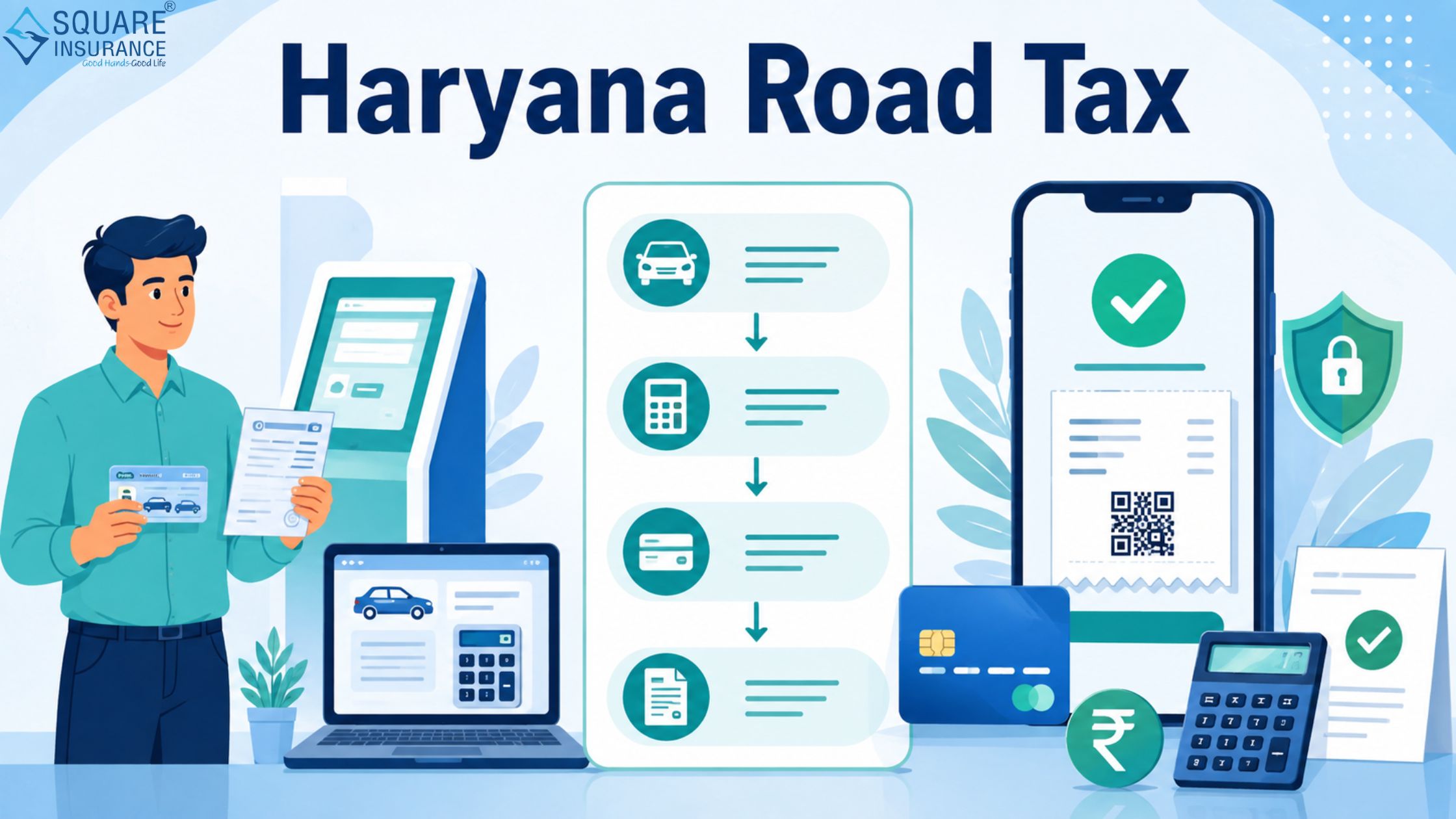
Step-by-Step Process to Pay Haryana Road Tax Online
Online payment can make tax compliance easier because the payable amount can be generated electronically based on the vehicle information.
Step 1: Keep Your Vehicle Details Ready
Before beginning the payment process, keep the registration number and other relevant vehicle details available. For a newly registered vehicle, registration and tax information may be processed together through the vehicle registration system.
Step 2: Access the Appropriate Vehicle Tax Service
Use the government vehicle-service system applicable to your transaction. VAHAN provides online facilities for several vehicle-related payments and services, including motor vehicle tax transactions.
Step 3: Enter the Vehicle Information
Enter the registration number and other requested information. Depending on the transaction, the system may retrieve existing vehicle details automatically.
Step 4: Check the Tax Calculation
Review the tax amount displayed by the system. The payable amount is calculated according to the applicable state rules and vehicle information.
This step is important because selecting the wrong service or entering incorrect information can lead to an incorrect transaction. Government tax-payment guidance also advises users to select the service carefully before making payment.
Step 5: Complete the Online Payment
Proceed to the available payment gateway and complete the transaction using the payment method offered by the portal.
Step 6: Save the Receipt
After successful payment, download or print the receipt and keep it safely. The receipt can be useful when verifying tax payment or completing future vehicle-related procedures.
Road Tax for Vehicles Coming From Another State
People relocating to Haryana or using an outside-state vehicle for an extended period should pay attention to tax requirements. The applicable rules can differ from those for a vehicle originally registered in Haryana.
For certain transactions involving movement between states, tax clearance and proof of up-to-date motor vehicle tax may also be relevant. The national vehicle-services system provides online facilities for several interstate vehicle-related transactions.
If a vehicle is being permanently transferred or re-registered in Haryana, the owner should check the applicable tax, registration and documentation requirements rather than assuming that the original state's tax payment is sufficient.
What Happens If Road Tax Is Not Paid?
Failure to pay applicable motor vehicle tax can create compliance issues. The Haryana Motor Vehicles Taxation Act states that a motor vehicle should not be used or kept for use in the state unless the applicable tax has been paid.
Unpaid tax can also become an issue during vehicle transfer or other registration-related procedures. Keeping tax payments up to date is therefore an important part of responsible vehicle ownership.
Documents and Details to Keep Handy
Although requirements can vary by transaction, vehicle owners should generally keep the following information available:
Registration Certificate details
Vehicle registration number
Owner details
Chassis or other vehicle identification information when requested
Applicable tax or payment information
Previous tax receipt, where relevant
Insurance and pollution-related documents when required for a particular RTO service
Keeping digital copies of important vehicle documents can make future transactions easier.
Frequently Asked Question (FAQs)
Q1. What is Haryana road tax? Haryana road tax is a motor vehicle tax charged by the state government on vehicles used or kept for use in Haryana. The applicable amount depends on the vehicle category and relevant tax rules.
Q2. How is road tax calculated for a car in Haryana? For private cars, the tax is generally calculated as a percentage of the vehicle cost according to the applicable price slab. Common slabs are 5%, 8% and 10% for different vehicle-value ranges.
Q3. Is Haryana road tax a one-time payment for cars? For many private non-transport cars, the tax is generally collected as a one-time tax at registration. Transport and commercial vehicles can follow different periodic tax structures.
Q4. How much road tax is charged on bikes in Haryana? For eligible private two-wheelers, commonly applicable rates are 4% for vehicles up to ₹75,000, 6% for vehicles above ₹75,000 up to ₹2 lakh and 8% above ₹2 lakh.
Q5. Can Haryana road tax be paid online? Yes. Government vehicle-service platforms provide online facilities for applicable motor vehicle tax payments. The system can calculate the payable tax based on the vehicle and selected service.
Conclusion
Understanding Haryana road tax rates before buying or registering a vehicle helps owners plan their expenses and avoid compliance-related complications. Private two-wheelers and cars generally follow percentage-based one-time tax slabs, while commercial and transport vehicles can have different calculation methods and payment periods.
Recent policy changes have also introduced additional incentives for eligible women vehicle owners and electric vehicles. Since tax rates, rebates and exemptions can change through government notifications, checking the applicable amount at the time of payment is essential.
Along with keeping road tax updated, vehicle owners should maintain valid motor insurance and other mandatory documents. For insurance-related assistance and policy management, Square Insurance can help vehicle owners manage their insurance requirements conveniently.
Comments
Square Insurance is a trusted name in the insurance industry, offering customers the ability to compare, buy, claim and review insurance policies at one place t