Life, at Its Edge, Is Built from Smaller Switches
Hatched by balazius
May 21, 2026
10 min read
4 views
83%
What if survival is not a matter of strength, but of switching states?
Why does a mind that can no longer feel joy still sometimes survive long enough to be reached by a joke? And why does life itself, from bacteria to human consciousness, seem to depend on not just having parts, but on changing what those parts do at the right moment?
Those two questions belong together more than they first appear. One comes from the brink of despair, where the world becomes all pain and no possibility. The other comes from biology, where the leap from simple cells to complex life is not explained by size alone, but by different patterns of gene expression. In both cases, the deepest mystery is not the presence of capacity. It is the ability to reconfigure capacity into a new state.
That is the hidden link between psychological rescue and biological complexity: life persists, and becomes more than itself, when it can switch from one mode of being to another. A person in despair is not merely lacking happiness, but trapped in a configuration so rigid that even love, music, and friendship cannot get through. A simple cell is not inferior because it lacks all possible tools, but because its tools are not organized into the layered, conditional, cooperative arrangements that make multicellular life possible.
The question is not only how to build more. It is how to make what already exists capable of becoming something else.
The danger of a single state
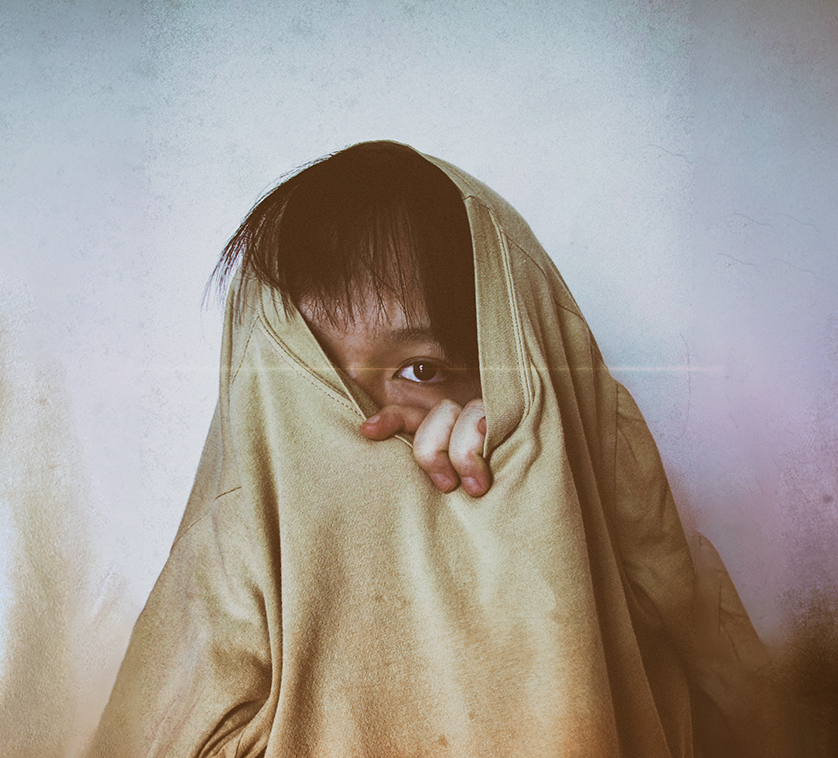
Extreme despair is often misunderstood as an emptiness. It is not. It can be a totalized state, a closed system in which everything is interpreted through the same lens of futility. In that condition, even the things that once gave joy can feel inaccessible, not because they are gone, but because the mind can no longer change its settings enough to receive them.
That is what makes the image of people leaping from burning windows so devastating. The terror of falling does not vanish in the crisis. It remains fully intact. The tragedy is that the fear of falling is now outweighed by a different, more absolute condition: the certainty that staying put is worse. The mind has been forced into a narrow corridor where every option is horrifying.
This is not merely an emotional problem. It is a structural one. A mind in despair may retain memory, intelligence, and sensitivity, but lose the capacity to move among mental states. It cannot easily shift from shame to curiosity, from numbness to amusement, from pain to relief. The world becomes one big locked room.
That is why a raw, grotesque joke can matter so much. Laughter is not just a pleasant distraction. It is a state change. For a moment, it opens a second channel of consciousness. It says: the present interpretation is not the only interpretation. Even in unbearable conditions, the mind can still flicker into another configuration.
Hope is often imagined as a bright feeling. More often, it is a usable transition.
That distinction matters. People do not always recover because they suddenly believe everything will be fine. Sometimes they recover because, for thirty seconds, something becomes bearable enough to permit a different mental posture. The smallest shift can be decisive, not because it solves everything, but because it breaks the monopoly of one state.
Complexity is not more parts, it is more ways to organize the parts
Biology offers a striking parallel. Bacteria are astonishingly successful, ancient, and adaptive, yet they remain mostly single-celled. Eukaryotes, by contrast, did something much stranger. They made a leap into complex bodies, tissues, and differentiated functions. The key difference is not that one class of life merely accumulated more stuff. It is that multicellularity emerged through different patterns of gene expression.
That phrase hides a profound idea. The same genes can produce radically different outcomes depending on when, where, and how they are expressed. A cell becomes muscle, neuron, skin, or immune cell not by inventing a new genome from scratch, but by learning to use the same underlying material in distinct arrangements. Complexity arises from coordination, timing, and selective activation.
This is a model of life that should unsettle our usual habits of thinking. We tend to equate growth with addition. More knowledge, more effort, more information, more resilience. Yet the biological story suggests a different principle: the breakthrough comes when existing components are differentiated and made to serve distinct roles.
A multicellular organism is not just a pile of cells. It is a society of cells whose identities depend on regulated cooperation. One cell stops being everything and becomes one thing. That limitation is not a loss. It is the condition for a higher order of life.
The same may be true of the mind. Psychological flourishing is not about maximizing a single feeling. It is about developing a repertoire of states and the flexibility to move among them. Grief, delight, concentration, play, discipline, rest, sorrow, and awe all have their place. A healthy mind is not one that remains cheerful at all times. It is one that can differentiate experience rather than flatten it into one dominant mood.
The catastrophic opposite is not sadness. It is rigidity.
The real threshold: from fixation to flexibility
This gives us a deeper way to understand both mental illness and biological evolution. The crucial threshold is not simply between less and more, or simple and complex. It is between fixation and flexibility.
A fixed system can be powerful, but only within narrow bounds. It repeats what it knows. It survives through consistency. But as conditions change, rigidity becomes brittle. A flexible system, by contrast, can repurpose the same elements into new forms. It can specialize, coordinate, and adapt.
Think of a one-room workshop. Every tool is available, but every task happens in the same cramped space. Compare that with a factory where different stations do different jobs, and the output depends on handoffs, timing, and signals. The factory is not just larger. It is organized for transformation. That is what gene expression does in biology. It is what emotional regulation does in the psyche.
This matters because we often treat suffering as a simple deficit of positive content. We ask: why not just add more good experiences, more affirmations, more stimulation? But if the system is locked, adding more inputs may do little. What matters is whether the system can recognize, route, and metabolize those inputs.
A person may be surrounded by love and still feel nothing. That is not proof that love is meaningless. It may simply mean the channels are not open. Similarly, a cell may carry enormous genetic potential without expressing it in a useful form. Potential is not the same as functioning.
Here is the unsettling implication: what looks like absence is often a failure of organization.
The deepest limitation is not lack of material. It is inability to change the rules by which material becomes meaningful.
That is why certain interventions matter so much even when they seem tiny. A joke, a conversation, a change of scene, a ritual, a new responsibility, a biological signal, a moment of safety. These do not always add happiness directly. They alter the conditions under which happiness can reappear.
Why humor, differentiation, and survival belong to the same logic
Humor is sometimes dismissed as trivial beside pain, but in severe suffering it can be the first proof that the mind is not fully conquered. A joke works by making two incompatible frames available at once. You hear the setup one way, then the punchline forces a reorganization. The mind has to switch.
That is a surprisingly close analogue to biological differentiation. The same genome, under different regulatory signals, becomes different tissues. The same sentence, under a comic turn, becomes a surprise. The same self, under a slightly altered perspective, becomes less trapped.
This is why some moments of laughter in dark times feel almost miraculous. They are not a denial of the darkness. They are evidence that the darkness is not the only available state. The person does not become cured because they laugh. But laughter restores a lost competence: the ability to recontextualize experience.
We can think of this as expressive plasticity. In biology, plasticity is the capacity to develop different forms under different conditions. In consciousness, it is the capacity to inhabit different meanings without collapsing into one. A life that can only mean one thing, especially one terrible thing, is in danger. A life that can mean multiple things can endure contradiction.
This reframes resilience. Resilience is not stoicism, and it is not endless positivity. It is the ability to switch without shattering. The resilient organism or psyche does not pretend that pain is not real. It stays capable of alternate organization while pain exists.
That is why recovery often involves restoring the middle layer of life, the layer of transitions. Sleep, conversation, play, work, appetite, routine, curiosity, and humor are not side dishes of existence. They are the connective tissue between states. When these transitions break down, the organism becomes a prisoner of extremes.
A practical model: ask not what is missing, but what cannot yet change
If you want a usable framework, here is one: whenever a system seems stuck, ask three questions.
- What states can it enter?
- What signals move it between states?
- What makes the transition impossible?
This applies to the brain, to organizations, and even to habits.
A grieving person may still be capable of love, but unable to transition from grief into rest. A team may still have talented members, but no mechanism for shifting from brainstorming into execution. A student may have intelligence, but no reliable way to move from confusion into focus. In each case, the issue is not simply shortage. It is failure of state transition.
That is a better diagnostic lens than asking whether someone has enough motivation. Motivation is often downstream of structure. Before you can act differently, you need a pathway between modes.
A few concrete examples make this clearer:
- A tired mind may need a walk before it can think, because movement changes state before insight appears.
- A tense conversation may need humor or silence before honesty, because direct confrontation is sometimes blocked until the system softens.
- A stuck organization may need distinct roles and rituals, because undifferentiated responsibility produces confusion rather than excellence.
- A person in despair may need one genuine interruption of certainty, because certainty itself has become the prison.
The important lesson is that transformation is usually indirect. We change by changing the conditions for change. That is true in developmental biology and in emotional life.
This is also why some forms of help are more effective than they look. The first goal is not always to fix the problem. It is to restore the capacity for state change. Once that capacity returns, new possibilities can emerge on their own.
Key Takeaways
- Do not confuse more input with more complexity. Real complexity comes from new ways of organizing existing capacities.
- When a person seems unreachable, look for rigidity, not emptiness. The issue may be a locked state, not a lack of feeling.
- Treat humor, ritual, sleep, and conversation as transition technologies. They help systems move between states.
- Ask what signals enable change. In biology, it is gene expression. In life, it may be safety, perspective, timing, or a shift in context.
- Measure resilience by flexibility, not by positivity. The goal is not to stay in one good mood, but to remain capable of reconfiguration.
The strange dignity of becoming something else
The deepest connection between psychic survival and biological complexity is that both depend on relinquishing the fantasy of permanence. No living system stays healthy by remaining identical to itself at every moment. Cells specialize. Minds fluctuate. Organisms sleep, wake, repair, and reorganize. Life is not a statue. It is an ongoing negotiation among states.
That is why despair is so dangerous: it mistakes one condition for the whole truth. And that is why biology is so instructive: it reminds us that life is built not only from substance, but from regulated change. To live is to remain capable of becoming different without ceasing to be oneself.
In that sense, a joke in a dark room and a gene turning on in the right cell are not so far apart. Each says the same thing in its own language: the system is still alive enough to reconfigure.
And perhaps that is the most hopeful definition of life we have. Not the absence of pain. Not the accumulation of power. But the stubborn, miraculous ability to cross from one state into another, and thereby become more than what the present moment seems to allow.
Sources
Hatch New Ideas with Glasp AI 🐣
Glasp AI allows you to hatch new ideas based on your curated content. Let's curate and create with Glasp AI :)
Start Hatching 🐣