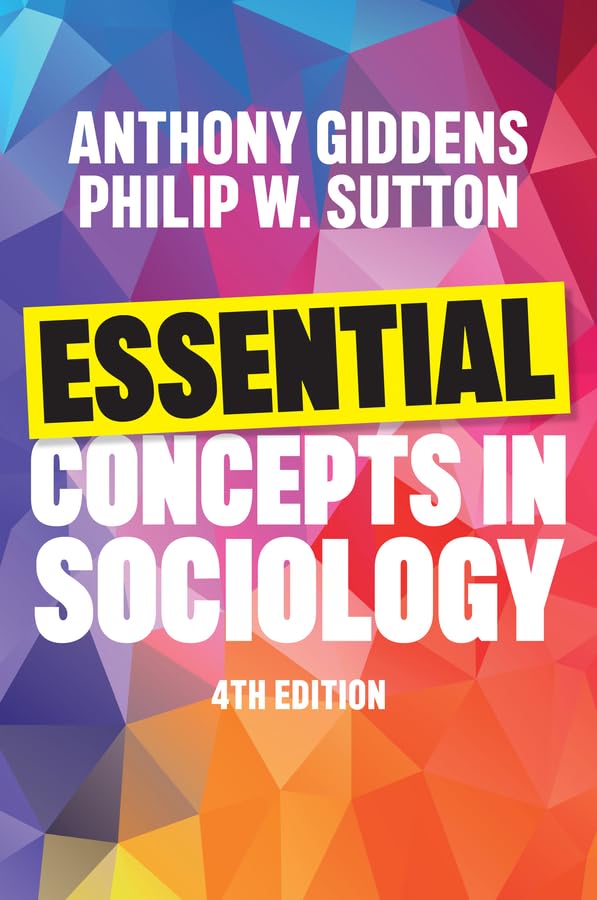

Top Highlights
Some sociologists argue that modernization theory fails to account for the persistence of gross inequalities in the global system and the apparent ‘failure’ of many developing economies to take off as predicted. In particular, recent postcolonial scholarship has argued forcefully that theories of modernity have failed to acknowledge the significance of colonialism (Bhambra 2007). Colonial expansion promoted economic development in the West but had severe consequences for the colonized countries, effectively stunting their development. Hence, the idea of endogenous economic development may be seen as, in essence, ideological rather than explanatory.
A political and intellectual movement seeking to better understand the historical and continuing impact of colonial regimes on the world’s societies and the global production of knowledge. Postcolonial theorists seek to ‘decolonize’ the academic disciplines, which remain dominated by Western scholars and institutions. Origins of the Concept The development of sociology from its inception has been largely focused on the period of modernity as this emerged and developed in Western Europe and North America, later impacting on the rest of the world. Western modernization theory argued that all countries would develop economically, though at different rates and times. Marxist critics argued that ‘underdevelopment’ was a policy pursued by colonial regimes which systematically plundered resources and actively ‘underdeveloped’ the colonized regions and countries. Hence, Bhambra (2023) argues that the concept of modernity needs to be understood as ‘colonial modernity’, which undermines many earlier theories of modernization and demonstrates their essentially Eurocentric character. Since the 1980s, debates around the colonial period and its legacy have shifted from theories of economic underdevelopment to the broader concerns of post colonialism. This is a growing intellectual movement that is highly critical of sociology’s Eurocentrism, theoretical sidelining of the significance of colonialism and a lack of scholarly voices from the Global South (Bhambra 2014a). Postcolonial ideas can be traced back to the early twentieth century, but the origins of the emerging postcolonial intellectual movement lie in the 1980s and 1990s. Bhambra (2014b) argues that contemporary postcolonialism owes much to debates around the work of Homi Bhabha (1994) on alternative cultural traditions disrupting the Western narrative of modernity, Gayatri Spivak (1988) on the historical development of dominant discourses and Edward Said (1978) on power relations and knowledge production. Said’s (1978) work on the discourse of ‘orientalism’ is often cited as a foundational work of postcolonial theory. Many Western academics in the nineteenth and early twentieth centuries discussed ‘the Orient’ or ‘the East’ in their studies of the Middle East, Africa and Asia, contrasting this with the Western Occident. Said argues that this contrast was hardly ever drawn in a neutral way. Instead, the Orient was exoticized and presented as the ‘other’ set against the normal and superior (Western) Occident. The persistence of this discourse was facilitated by the exclusion of scholarly accounts from academics based outside the West. Hence, the apparent cultural differences between East and West came to be seen as a key part of the explanation for Western global economic, industrial and military dominance. In sum, orientalism played a crucial ideological role in legitimizing many brutal colonial regimes. Meaning and Interpretation The state policy of colonialism, adopted by Western states between the…
Recommended Books





Revisit Your Highlights, Deepen Your Understanding
Import your Kindle highlights to review, organize, and share the ideas that matter most to you.
Get the free browser extension