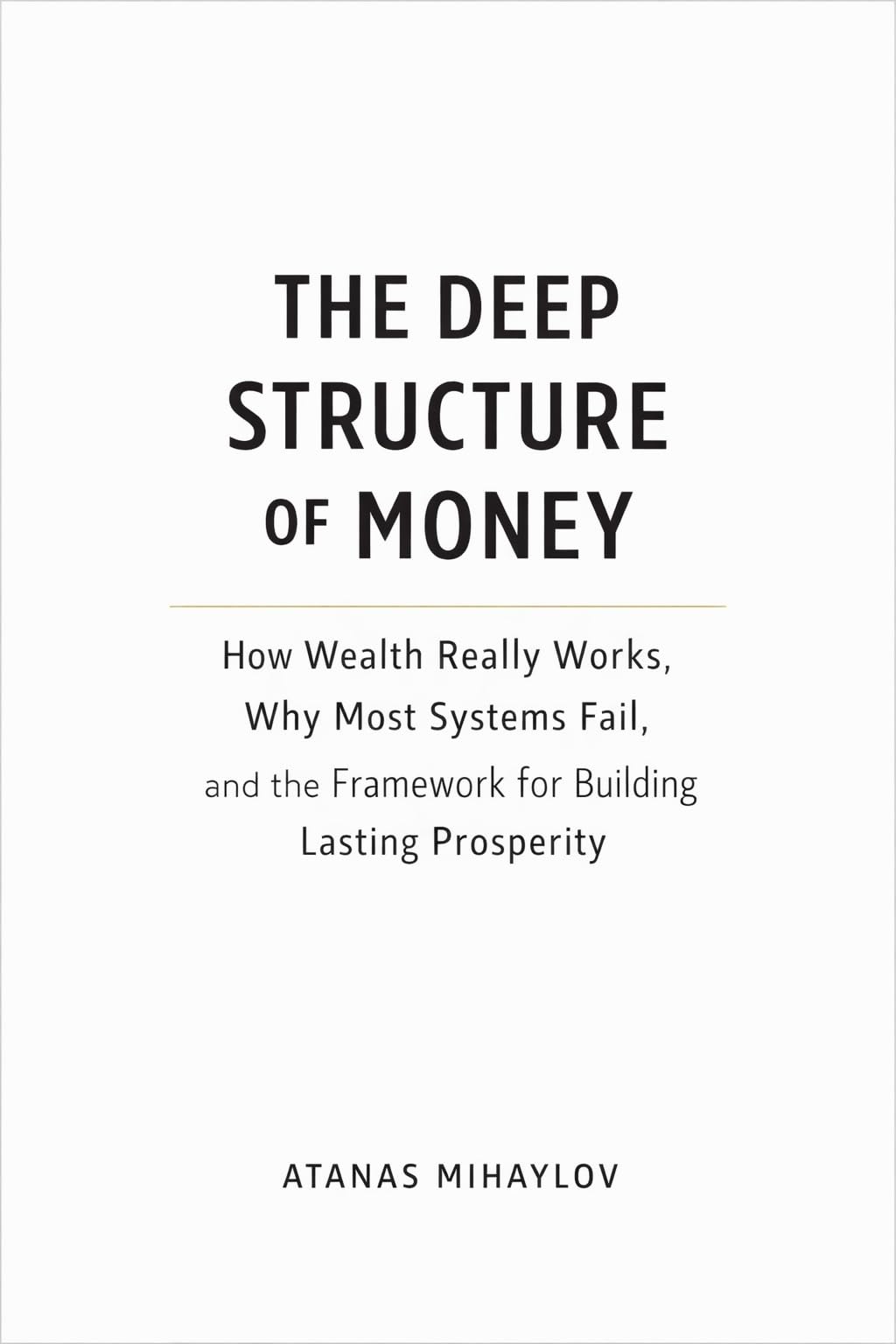
The Deep Stucture of Money: How Wealth Really Works, Why Most Systems Fail, and the Framework for Building Lasting Prosperity (Deep Structure Series)

Top Highlights
Contents Title Page Copyright INTRODUCTION About This Book Part I 1. Money Is a Pattern, Not a Possession 2. The Conditions That Shape Financial Outcomes 3. Why Old Money Beliefs Hold You Back PART II 4. The Principle of Cashflow Dominance 5. The Principle of Position 6. The Principle of Sequence 7. The Principle of Constraint 8. The Principle of Trend 9. The Principle of Reversibility PART III 10. Building Skills That Compound 11. Creating Multiple Streams of Cashflow 12. Using Assets the Right Way 13. Positioning Yourself for Opportunity PART IV 14. The Myth of “Working Harder” 15. Debt Without Strategy 16. Over‑Saving and Under‑Investing 18. The Cost of Staying in the Wrong Environment 19. When Your Identity Blocks Your Wealth 20. The Pattern of Avoidance PART V 21. Designing a Pattern‑Aligned Life 22. Building a Self‑Reinforcing Wealth System 24. The Long Game: Wealth as Pattern Stability 25. Becoming the Person Who Can Handle More About the Author
The Dominant Pattern in Your Financial Life At any given moment in your life, one central money habit is steering your course. Think of your financial journey like a river: sometimes the current pulls you swiftly forward, sometimes it holds you back, but there is always one main force carrying you along. This prevailing force, or dominant pattern, can be summed up in a few simple words: Earning — When earning is in the driver’s seat, your focus is squarely on bringing in more money. You might be working extra hours, learning new skills, or seeking promotions. The direction is clear: you are building your income, and your finances tend to grow. Spending — When spending dominates, money seems to flow out as quickly as it comes in. Bills, shopping, entertainment — your attention is on meeting needs or wants, and your financial reserves shrink. If this pattern leads for too long, your savings can dwindle before you realize it. Saving — In periods when saving takes precedence, you deliberately set money aside for the future. Whether it is for an emergency, a big purchase, or peace of mind, this pattern creates a cushion beneath you and opens doors to new possibilities. Investing — When investing becomes the chief pattern, you are planting seeds that can grow into something greater. It is about putting money to work — whether in stocks, property, or a business — so it multiplies over time and builds real wealth. Borrowing — If borrowing leads, you are relying on money that is not yours yet. Loans, credit cards, or mortgages can help in a pinch or open doors, but if this pattern holds sway, your future income is already spoken for, and your choices become more limited.
Income Stability
Opportunity Access
Skills
Environment
Incentives
Constraints
1. See beliefs for what they are: habits, not hard facts
2. Use feedback like a compass—adjust when things are not working
Recommended Books






Revisit Your Highlights, Deepen Your Understanding
Import your Kindle highlights to review, organize, and share the ideas that matter most to you.
Get the free browser extension