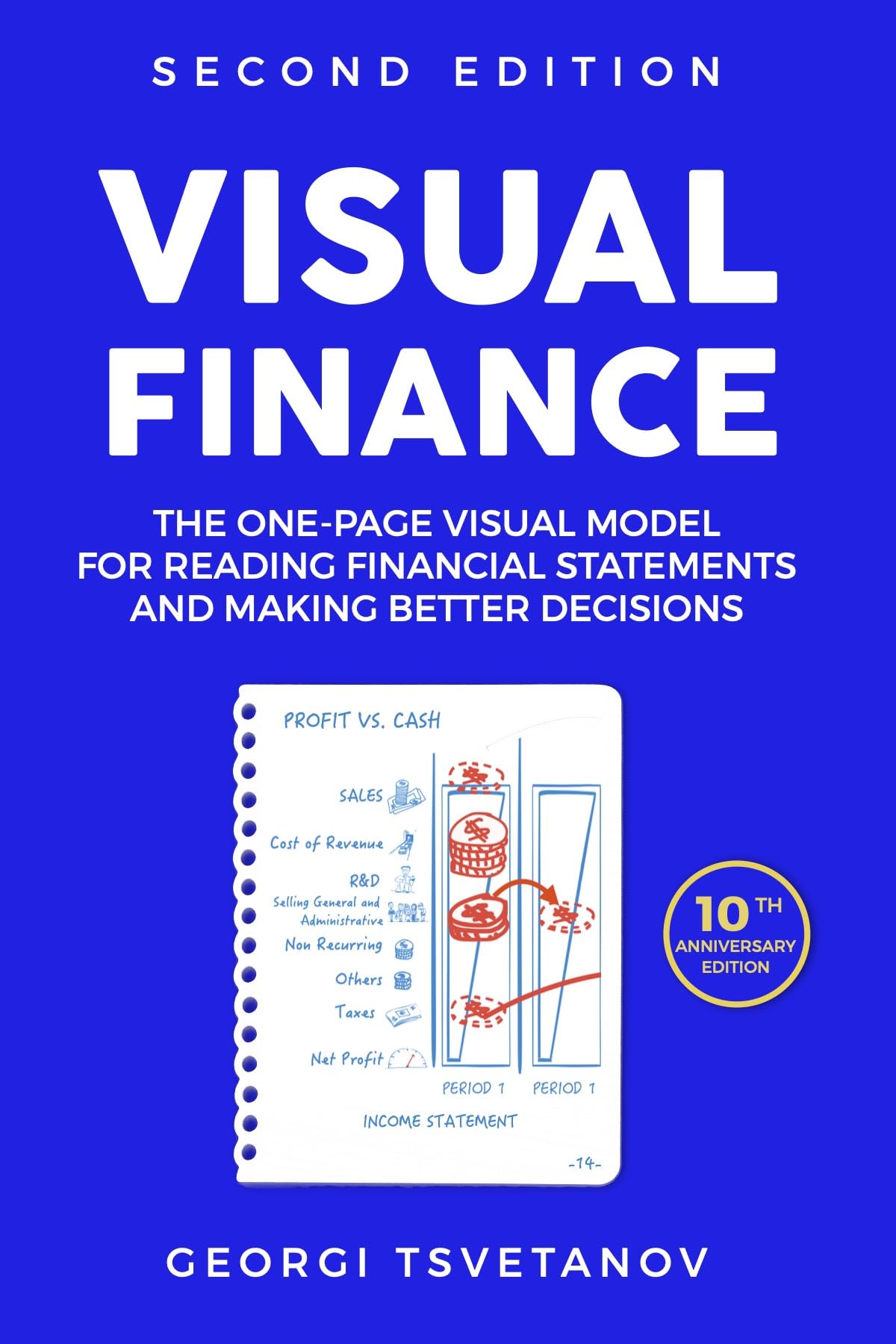
Visual Finance: The One-Page Model for Reading Financial Statements and Making Better Business Decisions

Top Highlights
Contents Introduction: When Numbers Become Visible Do You Speak the Language of Finance? Small Decisions, Big Consequences Trusting the Numbers Blindly Emotion over Evidence Why Visual Finance? Who Is This Book For? What You’ll Learn A Roadmap for What’s Ahead The Test Quick Reference: Questions This Book Answers Chapter 1: The Value Engine Defining Value How Companies Are Valued Creating Value Whose Value? Business as a Value Engine Chapter 2: Resources for Creating Value Assets Liabilities Equity Introducing the Balance Sheet Personal Balance Sheets and Net Worth Keeping the Equation in Balance Case Study: A Real Balance Sheet (NVIDIA) Vertical (Common-Size) Analysis Horizontal Analysis Chapter 3: The Income Statement Revenue: The Engine of Value Creation How and When Is Revenue Recognized?
What If Customers Don’t Pay?—Bad Debts Expenses: The Cost of Doing Business The Income Statement as a Layered Story Not All Businesses Are Equally Profitable Where the Revenue Goes: Four Companies Cost–Volume–Profit Analysis Case Study: Apple’s Income Statement Chapter 4: The One-Page Model Revealed Funding the Dream Investing in Equipment and Inventory Year One: Operations Operating Expenses, Depreciation, and Financing Year-End: The Picture Comes Together Why the Balance Sheet as a One-Page Model? Chapter 5: Statement of Cash Flows Profit vs. Cash The Three Sections of the Cash Flow Statement Cash Inflows vs. Outflows The Café’s Cash Flow Statement: Direct Method The Indirect Method Free Cash Flow The Time Value of Money: Net Present Value and Internal Rate of Return Chapter 6: Ratios—What’s Behind the Numbers Profitability Ratios Leverage Ratios Liquidity Ratios Efficiency Ratios Chapter 7: What Is a Company Really Worth? The Asset-Based Approach The Market Approach The Income Approach: Discounted Cash Flow The Real Options Approach Triangulation: Putting It All Together
Chapter 8: Making Better Decisions Growth: Sell More, Sell Better Where Price Really Lives Mini Cases: Strategic Value Drivers in Action Profitability: The Discipline of Margins Efficiency: Using Assets and Capital Well Capital Structure: How You Finance Matters Putting It All Together: An Impact Table Functional Alignment: Everyone Drives Value Chapter 9: Financial Statement Fraud Learning from Scandals How the Numbers Get Cooked Defenses and Detection Appendix A: Test Answers and Explanations Appendix B: The One-Page Model Appendix C: Reading Your Company’s Financial Report Acknowledgements Notes Make the Learning Even More Engaging About the Author
GFLEC Personal Finance Index—a
Recommended Books




Revisit Your Highlights, Deepen Your Understanding
Import your Kindle highlights to review, organize, and share the ideas that matter most to you.
Get the free browser extension