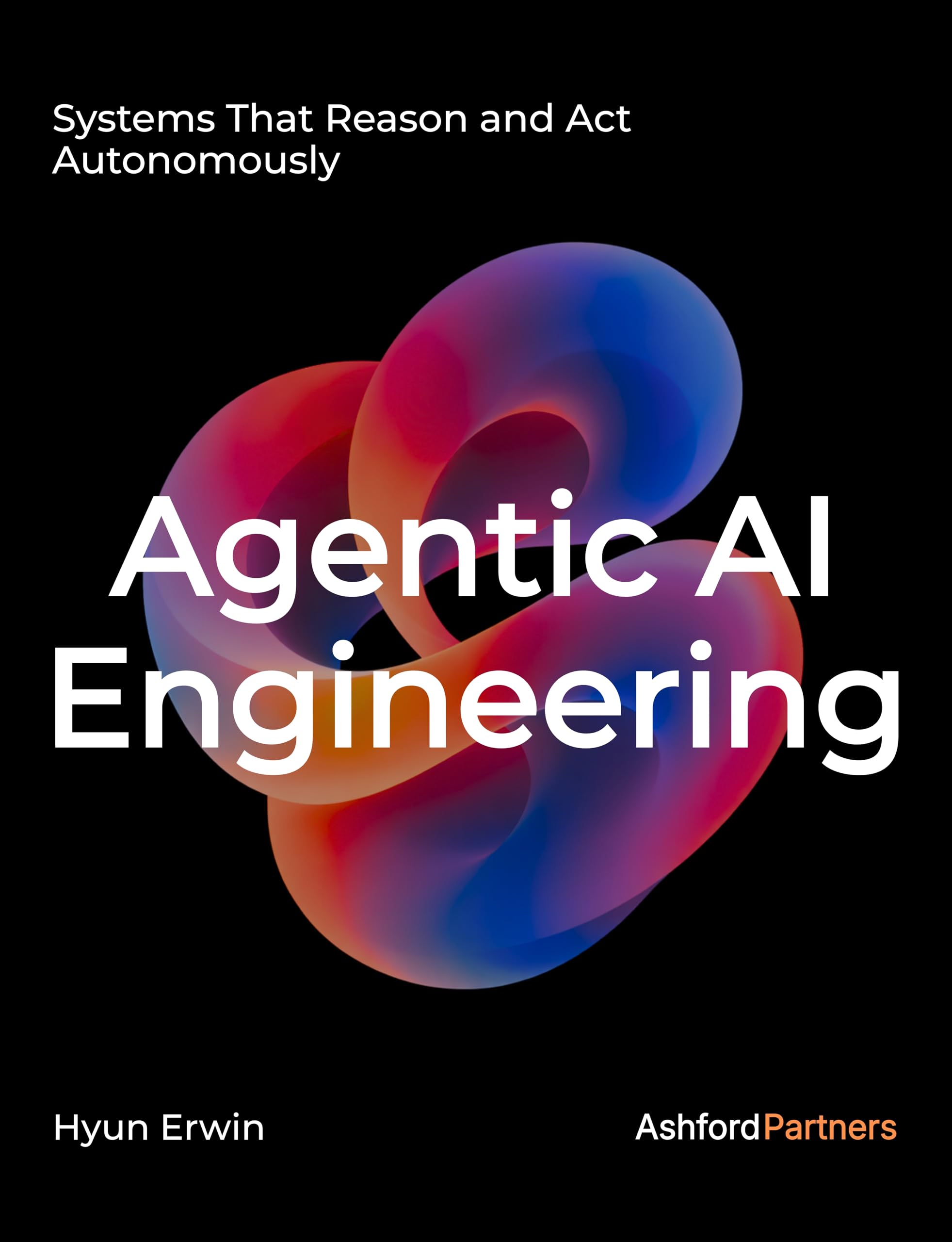
Agentic AI Engineering: Systems That Reason and Act Autonomously – Designing, Building, and Prompting LLM-Based Agents for Real-World Deployment

Top Highlights
Table of Contents Preface Preface Author Perspective Guiding Principles Coding AI Agents How to Read This Book Foundations Module 01: What Is Agentic AI The Evolution of Scripts to Systems That Pursue Goals The Path to Persistent Actors The Creation of a New System The Emergence of Agentic AI as a Distinct Concept Module 02: The Distinction Between Autonomy and Automation What Automation Really Means in Software Systems What Autonomy Adds to Automation Common Misconceptions About "Autonomous" AI Module 03: The Current Standing of Agentic AI What Agentic Systems Can Actually Do Today Early Adoption Patterns Early Performance Metrics and Observed Limitations How Everyday LLM Use Already Shows Agent-Like Behavior Module 04: The Agentic Reasoning Loop The Core Idea of Perceive, Decide, Act, Reflect Why Loops Matter More Than Single Prompts Failure Modes Inside the Reasoning Loop Reasoning Loops as an Engineering Abstraction Module 05: The Core Components of an Agent The Model Is a Decision Engine Memory, Tools, and Control as Separate Concerns The Role of Planning and Evaluation in Agent Behavior How These Components Work Together as a System Module 06: Multi-Agent Systems and Frameworks Why One Agent Is Often Not Enough Coordination as a First-Class Problem The Implementation of Multi-Agent Frameworks When Multi-Agent Designs Are the Wrong Choice
Module 07: Choosing Between Pre-Built Agents and Building Your Own The Spectrum Between Off-the-Shelf and Custom Systems Trade-Offs in Control, Speed, and Responsibility Organizational and Skill Considerations How This Choice Shapes the Rest of the System Pre-Built Agents Module 08: The Agent Landscape Categories of Pre-Built Agent Offerings Where Different Platforms Specialize Trade-Offs Between Convenience and Control How to Evaluate the Right Platform for a Use Case Module 09: ChatGPT Agents by OpenAI The ChatGPT Agent Model and Interaction Style Strengths in Reasoning and Flexibility Codex Limitations Around Control and Determinism Typical Use Cases and Integration Patterns Module 10: Claude Code and Agentic Development with Anthropic Claude Code as a Developer-Facing Agentic Environment Performance in Long-Context and Large-Codebase Reasoning Guardrails and Their Practical Impact on Development Strategic Use of Claude Code in Real Agent Stacks Module 11: Gemini Agents, Google’s Multimodal Agent Stack The Gemini Agent Ecosystem and Product Integration Strengths in Multimodality and Data-Rich Contexts Platform Constraints and Enterprise Considerations Typical Deployment Scenarios Module 12: Orchestrating Agents with Pre-Built Tools No-Code and Low-Code Orchestration Platforms Connecting Agents to Business Processes Limits of Visual Orchestration When to Move Beyond Pre-Built Orchestration Building Agents from Scratch Module 13: Pre-Build, Requirements Engineering for Agents Defining the Agent's Mission and Success Criteria Scoping Capabilities and Non-Goals Choosing Interaction Modes and Operational Context Constraints as Design Inputs Module 14: Memory Architectures for Agents Functional Roles of an Agent's Memory
Short-Term and Persistent Memory Trade-Offs Structuring Memory for Access and Relevance Failure Modes in Memory Systems Module 15: Knowledge Injection and Retrieval The Difference Between Internal Knowledge and External Knowledge Retrieval as a Reasoning Aid Designing Knowledge Sources Managing Drift Module 16: Building the Agent Skeleton Project Setup: Dependencies and Environment Configuration Defining the Agent's Tool Surface Wiring the Model, Schema, Prompt, and Agent Executing a Single-Turn Agent and Verifying the Loop Module 17: Adding Memory and Multi-Turn State Introducing a Memory Summarization Helper Converting the Agent into a Stateful Session Module 18: Additional Tools and Interface Expanding the Tool Surface for Research Work Fetching Web Page Content Querying an Academic Paper Index Validating Citation Links Exporting a Markdown Report Integrating New Tools into the Agent and Model Runtime Updating the System Prompt and Execution Contract Hardening Runtime and Dependencies for Real Research Tasks Module 19: System Topology Single-Agent Systems and Their Limits Supervisor and Hierarchical Architectures Peer and Swarm-Like Topologies Choosing Topology Based on Task Structure Module 20: Data Plane What Agents Need to Say to Each Other Designing Message Formats and Contracts Task Handoff and…
Unit Testing Agent Components in Isolation Simulation Environments for Long-Horizon Behavior Defining Success and Failure Prompt Engineering for Agents Module 23: Prompt Components of an Agent Role and Identity Goals, Tasks, and Success Conditions Constraints, Instructions, and Behavioral Boundaries Output Formats and Structured Response Contracts Module 24: Prompting Strategies for Agents Prompting for Pre-Built Agents and Custom Agents Iterative and Declarative Prompt Styles Prompting for Planning, Execution, and Self-Checking Managing Prompt Drift Over Long Tasks Module 25: Internal Prompts and Hidden Control Layers Internal Prompt Layers in In-House Agents How Changing Internal Prompts Changes Agent Behavior Pre-Built Agents and Their Hidden Prompt Systems Debugging and Versioning of Internal Prompts Module 26: Modular Prompt Architectures Treating Prompts as Composable System Components Versioning and Evolving Prompt Modules Reuse Across Agents and Use Cases Failure Modes of Over-Abstracted Prompt Systems Safety and Governance Module 27: Threat Modeling for Agentic Systems Expanding the Threat Surface with Autonomy Tool Abuse and Unintended Side Effects Prompt Injection and Control Hijacking Autonomy as a Risk Multiplier Module 28: Guardrails and Alignment Layers The Purpose of Guardrails in Agentic…
Module 30: Legal Compliance, Auditing, and Explainability Why AI Agents Raise New Legal and Compliance Questions Compliance-by-Design Infrastructure Explainability in Law Governance for Deployment Deployment and Operations Module 31: Monitoring, Telemetry, and Observability for Agents What to Observe in Agentic Systems Tracing Multi-Step Reasoning and Actions Metrics and Operational Health Indicators Using Observability to Improve System Design Module 32: Versioning in Deployment Treating Agents as Shippable Software Artifacts Safe Deployment Pipelines for Agent Updates Managing Prompt Evolution Over Time Module 33: Cost and Performance Optimization Understanding the Cost Structure of Agent Systems Optimization Levers Without Changing Behavior Trade-Offs Between Speed, Cost, and Quality Module 34: Human-in-the-Loop Control for Deployed Agent Systems Why Human-in-the-Loop Design Matters in Deployment Intervention Patterns Designing Effective Human-Agent Handoffs Building Feedback Loops from Human Decisions Module 35: Scaling Agent Systems in Deployment From Single Instances to Fleet Operations Managing Concurrency and Queues State Management at Scale Infrastructure Patterns for Large Agent Deployments Real World Use Cases Module 36: Finance Research and Analysis Workflows…
Module 38: IT and Software Development Development Workflow Assistance Operations and Incident Response Support Security Analysis and Threat Intelligence Constraints Around Trust and Change Control Module 39: Marketing and Growth Market Research and Audience Analysis Content Planning and Production Pipelines Experimentation and Performance Monitoring Brand and Reputational Boundaries Module 40: Manufacturing and Supply Chain Planning and Scheduling Support Monitoring and Exception Handling Supplier and Logistics Coordination Safety and Physical World Constraints Module 41: Scientific Research Literature Review and Knowledge Mapping Experiment Planning and Workflow Coordination Data Analysis and Result Summarization Research Integrity Constraints Module 42: Legal Services and Compliance Operations Monitoring Policy and Regulatory Change Confidentiality and Professional Oversight Constraints The Future of Agentic AI Module 43: The Impact on Traditional Jobs and Knowledge Work Offloading Repetition and Administrative Overhead to Agents Refocusing Human Work on Judgment and Creativity Avoiding the Trap of Universal Automation Module 44: The Next Five Years of Agentic Systems Technical Maturation of Agent…
References Foundational…
Recommended Books









Revisit Your Highlights, Deepen Your Understanding
Import your Kindle highlights to review, organize, and share the ideas that matter most to you.
Get the free browser extension