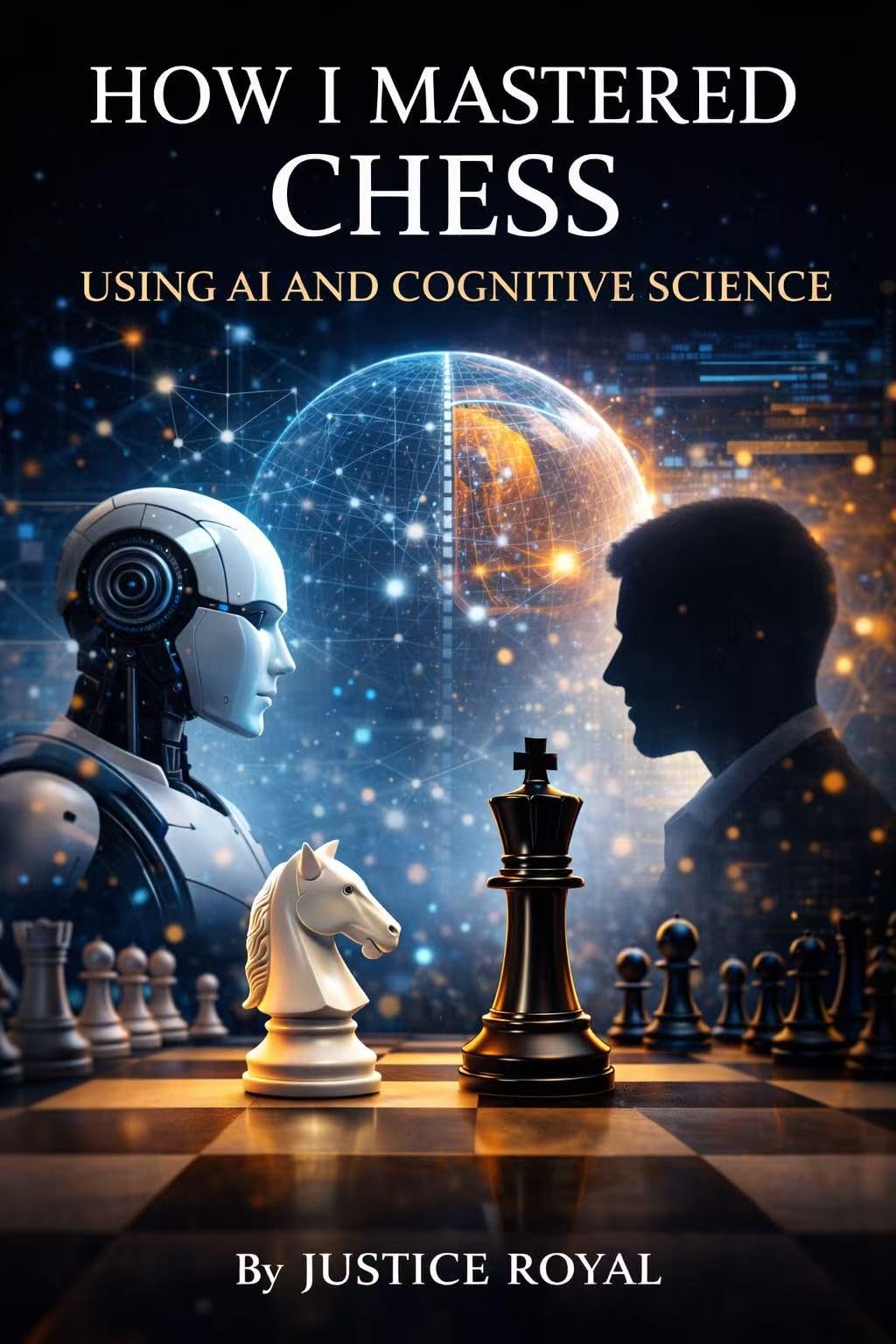
How I Mastered Chess Using AI & Cognitive Science

Top Highlights
Table of Contents Chapter 1: Introduction Chapter 2: Creating Your Chess Training Program The Shark Think Tank The SPAR Training Method Chapter 3: Strategy General Principles Opening Choosing an Opening Repertoire Middle Game The Great Space Race Attacking Defense & Prophylaxis Endgame Chapter 4: Tactics Developing Your Tactical Radar Tactical Motifs Tactical Weaknesses Calculating Tactics Common Tactical Calculation Errors When Things Go Sideways Chapter 5: Move Selection Algorithms Kotov’s Algorithm The OODA Chess Algorithm Chapter 6: Evaluation Positional Factors Imbalances Chapter 7: Calculation
The LOVE Algorithm Calculation Tips Chapter 8: Visualization Visualization Training Static Visualization Dynamic Visualization Partial Blindfold Chess Blindfold Chess Chapter 9: Blunder Prevention Why We Blunder: Situational Chess Blindness Board Awareness Beyond the Board Awareness Missed Opportunities Drawbacks SWOT Analysis Blunder Busters The 3 Ply Rule Blumenfeld’s Rule Flip the Board SLAM Blunder Checklists Legendary Blunders by Legendary Players Chapter 10: Practice Puzzles Games Playing to Lose Miscellaneous Methods Chapter 11: Analyze Analyzing GM Games
Analyzing Your Own Games Using an Analysis Engine Using an AI Chatbot Chapter 12: Reflect Why am I reflecting? Who should I reflect with? Where should I reflect? What should I reflect on? When should I reflect? How should I reflect? Chapter 13: Epilogue The SPAR System The Shark Factor My Top 10 Chess Improvers Appendix 1: Chess Aphorisms Appendix 2: Chess Rating Tiers Appendix 3: Chess Online Resources AI Coaching Appendix 4: The Top 25 Books For Adult Chess Improvers
Recommended Books


Revisit Your Highlights, Deepen Your Understanding
Import your Kindle highlights to review, organize, and share the ideas that matter most to you.
Get the free browser extension