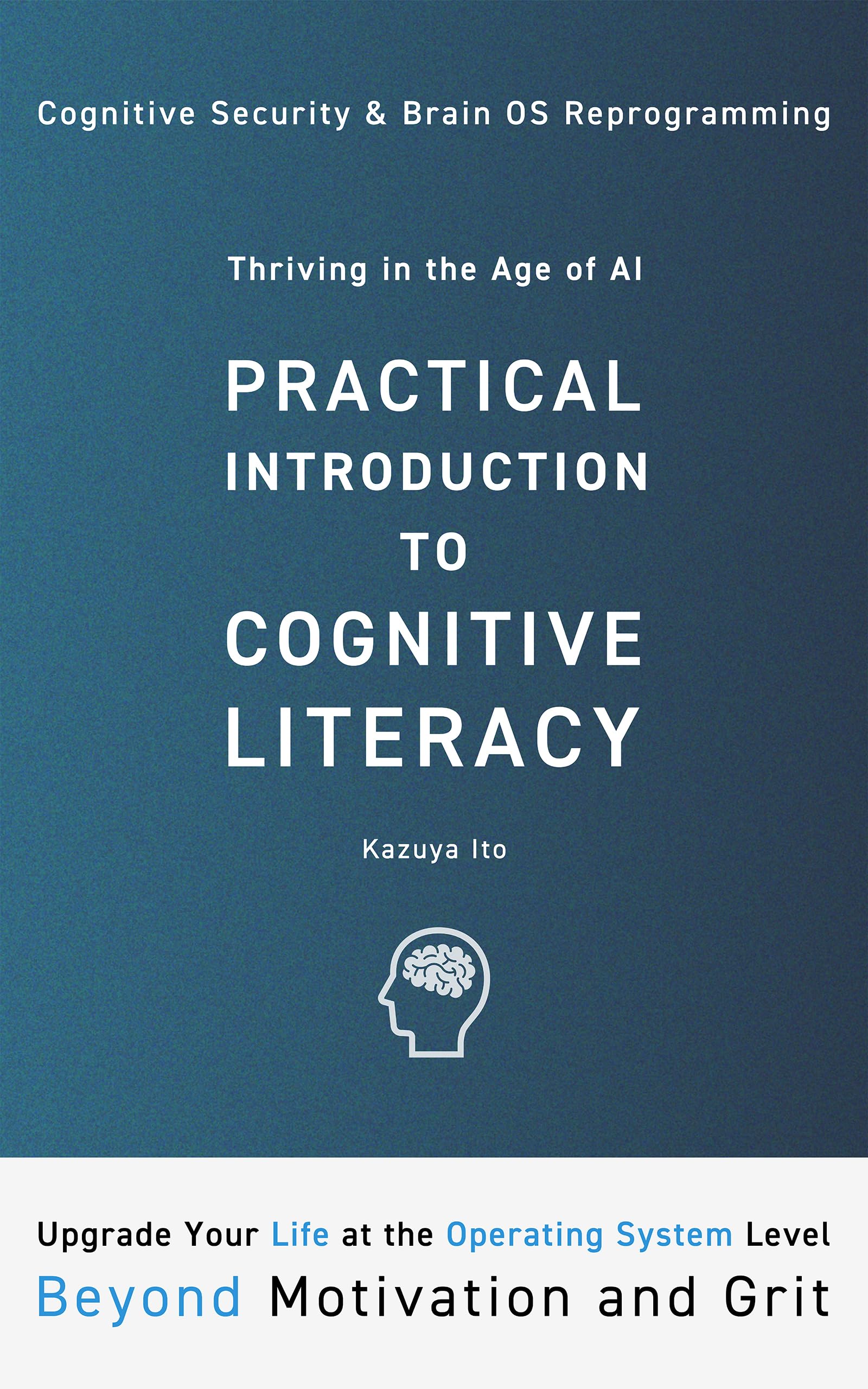
Practical Introduction to Cognitive Literacy

Top Highlights
Table of Contents Introduction Before the system, the "human brain" was targeted Cyber warfare has expanded into the realm of cognition. Bringing Neuroscience and Cognitive Science to Security Practice Cognitive security transcends traditional security Because they are powerful, they can also be misused. Beyond traditional security literacy: "Cognitive Literacy" Who is this book for, and what is its stance? Prologue Living in an Era Where "Cognition" is Under Attack 01|The New Battlefield of "Cognition" Following Cyber 02|Fake News, Viral Outrage, Conspiracy Theories──What's Really Happening to Us? 03|Why Attacks That Can't Be Prevented by Information Literacy Are Increasing 04|The "Scenes of People Breaking Down" I've Witnessed as a Security Expert 05|What This Book Covers: Cognitive Security and Cognitive Literacy 06|Update Your "World-Viewing OS" and "Self-Protection OS" Part 1: What is Cognitive Security? Chapter 1: The Era Where "Cognition" Becomes the Target ――The Battlefield Shifts from Beyond the Screen to Inside Your Mind 01|The Three Layers of Warfare: Physical Space → Cyberspace → Cognitive Space When people hear the word "war," most likely imagine "physical combat." 02|An Era Where "Narratives" Have Become More Powerful Than Bombs 03|The "Cognitive Initiative" Sought by Nations, Corporations, and Individuals 04|Infodemics and Echo Chambers: What's Happening in the Flood of Information 05|The Concept of Taking Control of the Other Person's Mind Chapter 2: Definition and Scope of Cognitive Security ――"What does it protect, and what does the concept cover?" 01|What is Cognitive Security? 02|Differences and Connections with Information Security/Cybersecurity 03|What to protect and from what ―Cognition, Emotion, Decision-Making, Action 04|Problems occurring at the individual, organizational, and societal layers 05|"Protecting" Alone Is Insufficient—The Concept of Updating the Entire OS 06|The Scope of Cognitive Security Covered in This Book and What It Does Not Cover Part 2: The Brain and Cognitive Mechanisms— : Why Are We So Easily Hacked? Chapter 3: The Human Brain Excels at Shortcuts 01|The Brain Evolved to Survive 02|System 1 / System 2: The Brain's Fast Mode and Cautious Mode 03|Bias Heuristics──A Catalog of "Shortcuts in Thinking" 04|Emotion First, Reason Second: The Reality of Decision-Making 05|Humans as "Information Weaklings": No One Is Exempt 06|Accepting Vulnerability as a Specification Chapter 4: The Cognitive Vulnerability Map—Where Are You Most Vulnerable to Attack? 01|Input Vulnerability: What Are You Choosing Not to See? 02|Vulnerabilities in Interpretation: The Brain's Automatic Story Completion 03|The Fragility of Memory: A Past That Can Be Rewritten Conveniently 04|Emotional Vulnerability: Hijacking by Anger, Anxiety, and the Need for Approval 05|Behavioral Vulnerabilities: Procrastination, Dependency, Habit Hijacking 06|The Concept of Having Your Own "Cognitive Profile" Part 3: The Cognitive Kill Chain…
Cognitive Security is "a mindset for protecting your own and your loved ones' cognition, emotions, and decision-making from unintended attacks and influences." Cognitive literacy, newly defined in this book, is "the power to understand the mechanisms and vulnerabilities of your own cognition, to design information, environments, tools, and actions, and to keep making judgments with your own mind."
In other words, in modern times, the power that moves people and society lies not so much in "what weapons one possesses," but in "what stories one can make others believe."
An infodemic refers to "a state where, during a crisis, a flood of information—some true, some false—overwhelms us, making it harder to make calm judgments or take rational action due to the sheer volume and speed of the information." Pandemic Large-scale disasters Economic crisis In such times, information that stirs up anxiety unverified "inside information" and narratives scapegoating someone will inevitably circulate in large quantities. On the other hand, an echo chamber refers to a state where "only voices similar to one's own reach you, and those opinions become amplified."
Cognitive security is a survival strategy for ordinary people to avoid unnecessary exhaustion, protect what matters most to them, and move closer to becoming the person they aspire to be.
02|System 1 / System 2: The Brain's Fast Mode and Cautious Mode
04|Emotion First, Reason Second: The Reality of Decision-Making
The goal here is to "make System 1 (emotion/intuition) reach a conclusion before System 2 (careful thinking) kicks in."
The underlying structure at work is quite similar. Observe "where anxiety, anger, and loneliness exist" draw lines between "enemies" and "allies," Stimulate emotions give them a simple, powerful narrative repeatedly reinforce it and connect it to action creating a mindset of "I've come this far, so it must be right."
Cognitive Security's Four Layers Information Entry Design Interpretation & Narrative Check Handling Emotions and Impulses Rules for Actions and Habits
Recommended Books






Revisit Your Highlights, Deepen Your Understanding
Import your Kindle highlights to review, organize, and share the ideas that matter most to you.
Get the free browser extension