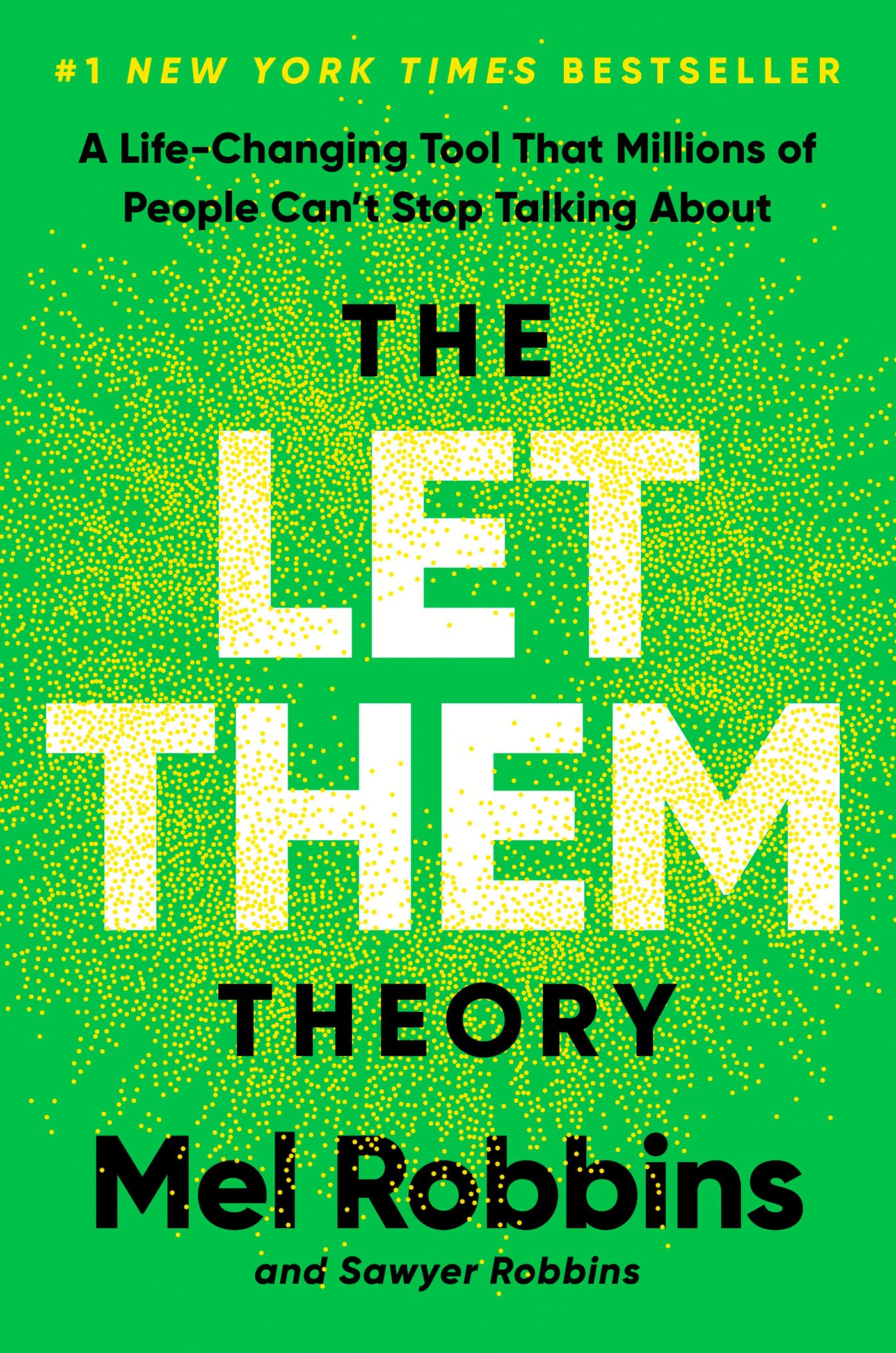
The Let Them Theory: A Life-Changing Tool That Millions of People Can't Stop Talking About
About This Book
The Let Them Theory by Mel Robbins presents a deceptively simple two-word tool for reclaiming your time, energy, and peace of mind. The premise, repeated across the most-highlighted passages, is that other people hold no real power over you unless you give it to them. Robbins argues that humans have a hardwired, fear-driven need for control, and that we exhaust ourselves trying to manage other people's opinions, moods, and choices—things we can never actually control.
The theory has two essential halves. Let Them is the act of releasing your grip on how others behave: let them judge, let them go silent, let them be themselves, because they're revealing who they are. But Robbins is emphatic that stopping there leads to isolation and false superiority. The second half, Let Me, is where the real power lives—taking responsibility for your own response, attitude, and next move.
The book grounds itself in psychology and neuroscience. Drawing on Dr. Aditi Nerurkar's work, Robbins explains how stress hijacks the brain, letting the amygdala override the rational prefrontal cortex. Saying Let Them becomes a switch to reset the stress response. She also draws on Stoicism, Buddhist Radical Acceptance, and research showing you cannot motivate others—pressure only breeds resistance; people change only when ready.
Later chapters apply the framework to friendship, dating, family, comparison, careers, and supporting struggling loved ones (where she distinguishes support from enabling). Throughout, Robbins connects the idea to her earlier 5 Second Rule: action, not feeling, is the answer. Where that book changed her relationship with herself, this one aims to transform her readers' relationships with everyone else.
Key Takeaways
- 1.Other people hold no real power over you unless you give it to them—your happiness depends on your actions, not their behavior, opinions, or moods.
- 2.The theory only works in two parts: Let Them releases control, but Let Me is where your real power lives by taking responsibility for your next move.
- 3.The urge to control comes from fear, and trying to control the uncontrollable amplifies anxiety rather than calming it.
- 4.You cannot motivate another adult to change—pressure creates resistance, and people only change when they're ready to do it for themselves.
- 5.Saying Let Them can reset your stress response, switching control back from the survival-driven amygdala to the rational prefrontal cortex.
- 6.There's a critical difference between support and enabling—rescuing someone from natural consequences often keeps them stuck.
- 7.Action, not feeling, is the answer: you'll never feel ready, so you push yourself through small, consistent moves forward.
Top Highlights
The truth is, other people hold no real power over you unless you give it to them.
Highlighted by 4 people · 1 left a note
the urge to control things comes from a very primal place: fear.
Highlighted by 3 people
“5 Second Rule.”
Highlighted by 2 people · 1 left a note
The 5 Second Rule taught me that action is the answer. Thinking about your problems will never solve them. Waiting around to feel like doing something means you’ll never do it. It taught me that no one is coming to save you. You must save yourself from yourself. You have to force yourself to make little moves forward, all day, every day, especially when you don’t feel like it.
Highlighted by 2 people · 1 left a note
Small, Consistent Action Changes Everything
Highlighted by 2 people · 1 left a note
One day, you just get tired of your own excuses and force yourself to do it.
Highlighted by 2 people
The 5 Second Rule will help you push through your own internal obstacles and take action
Highlighted by 2 people
The reality is, no matter how hard you try or what you do, you cannot control other people. And yet, you live your life as if you can.
Highlighted by 2 people
What Is the Let Them Theory?
Highlighted by 2 people · 1 left a note
When you stop trying to control things that aren’t yours to control, you stop wasting your energy. You reclaim your time, your peace of mind, and your focus. You realize that your happiness is tied to your actions, not someone else’s behavior, opinions, or mood.
Highlighted by 2 people
AI Review
Based on Glasp's analysis of highlights from 7 readers, The Let Them Theory resonates most for its memorable, repeatable core tool and its insistence that real power lies in the often-overlooked Let Me step.
Pros
- +A simple, sticky two-word tool that readers can apply immediately across many situations
- +Strong emphasis that Let Me—taking responsibility for your response—is where the real power lies
- +Grounded in psychology and neuroscience, including the amygdala-driven stress response
- +Practical applications to friendship, dating, family, comparison, and careers
- +Useful distinction between genuine support and enabling when helping struggling loved ones
- +Reinforces the actionable mindset of Robbins' earlier 5 Second Rule
Cons
- −Heavy repetition of the central idea across many highlights may feel padded to some readers
- −Risk of misapplication—readers who stop at Let Them can end up isolated rather than empowered
Glasp AI analysis based on highlights from 7 readers.
Who Should Read This
This book speaks to people-pleasers, over-controllers, and anyone exhausted by managing others' opinions, moods, and choices. It's ideal for readers navigating friendship drama, dating uncertainty, family conflict, workplace stress, or chronic comparison. Parents, partners, and those supporting a struggling loved one will find specific guidance on the line between support and enabling. Fans of Mel Robbins' 5 Second Rule, and newcomers to self-help who want a simple, repeatable mental tool rather than dense theory, will get the most value.
Frequently Asked Questions
What is The Let Them Theory about?
Who is this book for?
What are the key lessons?
Is The Let Them Theory worth reading?
Is Let Them the same as just letting things go?
Does the theory apply to children and parenting?
How does Let Them help with stress?
How to Apply What You Read
- 1.Pause the moment something stresses you out: say Let Them to detach, then Let Me and take a breath to reset your stress response before reacting.
- 2.Pair every Let Them with a concrete Let Me action—decide what you will do, think, or say next instead of withdrawing into superiority.
- 3.Audit where you're trying to control others (a partner's habits, a friend's choices, a boss's decisions) and consciously release that grip.
- 4.Reframe comparison: only compare against aspects of others' lives you could actually change for yourself, and use it as instruction rather than torture.
- 5.Distinguish support from enabling with struggling loved ones—offer love, space, and tools, but set clear conditions and stop subsidizing self-destructive behavior.
Discussion Questions
- Q1.Where in your life are you spending the most energy trying to control something—or someone—you cannot actually control?
- Q2.Robbins says the urge to control comes from fear. What specific fear drives your need to manage others?
- Q3.Have you ever stopped at Let Them without the Let Me step? What happened, and did it leave you feeling empowered or isolated?
- Q4.How do you tell the difference between genuinely supporting someone and enabling them?
- Q5.The book claims you can't motivate another adult to change. Do you agree, and how does that change how you approach the people you want to see grow?
- Q6.When you compare yourself to others, are you torturing yourself or learning something useful? How could you shift toward the latter?
- Q7.What would change in your relationships if you fully accepted that your happiness is tied to your response, not others' behavior?
Recommended Books






Revisit Your Highlights, Deepen Your Understanding
Import your Kindle highlights to review, organize, and share the ideas that matter most to you.
Get the free browser extension