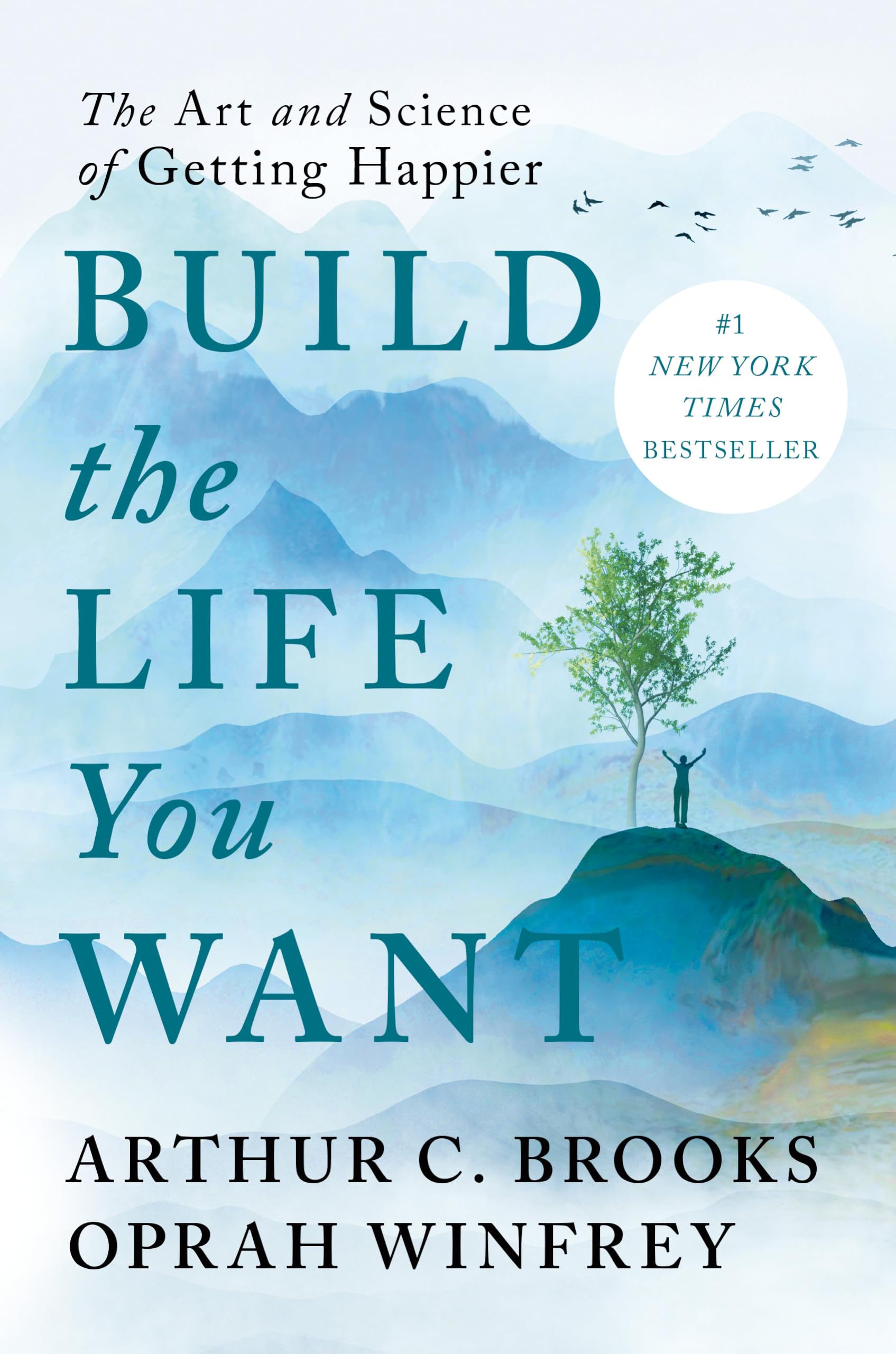
Build the Life You Want: The Art and Science of Getting Happier
About This Book
Build the Life You Want, by Arthur Brooks and Oprah Winfrey, argues that happiness is not a destination but a direction — something you can actively get more of through deliberate practice. The book's central framework defines happiness through three "macronutrients": enjoyment, satisfaction, and purpose.
- Enjoyment is pleasure elevated by communion and consciousness — fleeting pleasure becomes lasting enjoyment when shared and remembered.
- Satisfaction is the thrill of earned accomplishment, which requires sacrifice and never fully lasts.
- Purpose, the most important, gives us hope and inner peace to face life's inevitable difficulties.
A core insight is that each of these contains some unhappiness — enjoyment requires forgoing easy pleasures, satisfaction demands suffering, and purpose entails struggle. Trying to eliminate suffering is therefore futile; the goal is to accept unhappiness and learn from it.
The emotional engine of the book is metacognition — "thinking about thinking." Emotions are merely signals that something needs attention; your conscious brain decides how to respond. Tools like journaling, gratitude practice, and reframing help you manage feelings rather than be ruled by them.
The second half organizes happiness around four pillars: family, friendship, work, and faith. Brooks counsels accepting family conflict as the cost of abundant love, cultivating "real" over "deal" friendships, pursuing intrinsic rewards and avoiding self-objectification at work, and committing to a transcendent or philosophical practice. Throughout, he draws on Stoic and Epicurean philosophy, religious wisdom, and contemporary psychological research.
The book closes on a unifying theme: love. To work on your own happiness is an act of self-love, and the four pillars are all expressions of love — for family, friends, work, and the divine. The final charge is to teach what you've learned, becoming a source of hope for others.
Key Takeaways
- 1.Happiness is a direction, not a destination — you can always get happier, no matter where you start.
- 2.Happiness has three macronutrients: enjoyment (pleasure plus communion and consciousness), satisfaction (earned through sacrifice), and purpose (the most important).
- 3.Your emotions are only signals to your conscious brain; you get to decide how you respond to them.
- 4.Trying to eliminate suffering is futile — accepting unhappiness is what lets you learn, grow, and find meaning.
- 5.An outward focus — caring for others rather than self-objectifying — is one of the best ways to boost your own well-being.
- 6.The four pillars of a happy life are family, friendship, work, and faith, and all must be tended deliberately.
- 7.Conflict is the cost of abundant love; the goal isn't to eliminate it but to manage it and forgive.
Top Highlights
Enjoyment takes an urge for pleasure and adds two important things: communion and consciousness.
Highlighted by 6 people
The macronutrients of happiness are enjoyment, satisfaction, and purpose.
Highlighted by 5 people
“Your emotions are signals to your conscious brain that something is going on that requires your attention and action—that’s all they are. Your conscious brain, if you choose to use it, gets to decide how you will respond to them.”
Highlighted by 5 people · 1 left a note
The second macronutrient of happiness is satisfaction. It’s that thrill from accomplishing a goal you worked for.
Highlighted by 4 people
The third macronutrient is the most important: purpose. We can make do without enjoyment for a while, and even without a lot of satisfaction. Without purpose, however, we are utterly lost, because we can’t deal with life’s inevitable puzzles and dilemmas. When we do have a sense of meaning and purpose, we can face life with hope and inner peace.
Highlighted by 4 people
The common strategy of trying to eliminate suffering from life to get happier is futile and mistaken; we must instead look for the why of life to make pain an opportunity for growth.
Highlighted by 4 people
Happiness is a combination of enjoyment, satisfaction, and purpose. To get happier is to get more of these elements, in a balanced way—not all of one and none of another. But if you were reading closely, you noticed one funny thing about all three: they all have some unhappiness within them. Enjoyment takes work and forgoing pleasures; satisfaction requires sacrifice and doesn’t last; purpose almost always entails suffering. Getting happier, in other words, requires that we accept unhappiness in our lives as well, and understanding it isn’t an obstacle to our happiness.
Highlighted by 4 people · 1 left a note
To be happier, you should never settle for pleasure, but rather make it into enjoyment.
Highlighted by 3 people
Here’s the bottom line: Without unhappiness, you wouldn’t survive, learn, or come up with good ideas. Even if you could get rid of your unhappiness, it would be a huge mistake. The secret to the best life is to accept your unhappiness (so you can learn and grow) and manage the feelings that result.
Highlighted by 3 people
but for some reason, she stopped waiting for the world to change and took control of her life.
Highlighted by 2 people
AI Review
Based on Glasp's analysis of highlights from 6 readers, this is a resonant and practical happiness framework whose memorable definitions and metacognition tools drew strong, repeated reader engagement.
Pros
- +Clear, memorable framework of the three macronutrients of happiness: enjoyment, satisfaction, and purpose
- +Actionable tools like metacognition, journaling, and gratitude practice
- +Counterintuitive but liberating insight that unhappiness is necessary, not an obstacle
- +Well-organized four pillars (family, friendship, work, faith) covering whole-life well-being
- +Grounded in both psychological research and classical philosophy
Cons
- −Heavy emphasis on faith and transcendence may not resonate with secular readers
- −Some prescriptions (e.g., complete honesty, single romantic partner) are presented firmly and may feel reductive
Glasp AI analysis based on highlights from 6 readers.
Who Should Read This
This book suits anyone who feels stuck in unhappiness and wants concrete, science-backed tools rather than vague self-help platitudes. It's ideal for readers navigating midlife transitions, strained family or romantic relationships, or burnout from overwork and self-objectification. Those drawn to a blend of Stoic philosophy, psychological research, and spiritual reflection will find it especially rewarding. People comfortable with — or open to — religious and transcendent framing of meaning will get the most from its later chapters on faith and purpose.
Frequently Asked Questions
What is the book about?
Who is it for?
What are the key lessons?
Is it worth reading?
What is metacognition and why does it matter?
What are the four pillars of happiness?
Why does the book say we shouldn't try to eliminate unhappiness?
How to Apply What You Read
- 1.Journal daily to practice metacognition: note how you feel each hour and how you responded, building emotional regulation over two weeks.
- 2.Cultivate gratitude by listing things you're thankful for and reviewing them regularly to train your mind for difficult moments.
- 3.Invest in real friendships on purpose — reconnect with friends who've drifted, since these relationships won't maintain themselves.
- 4.Seek intrinsic rewards at work like earned success and service to others, and protect space so you don't become your job.
- 5.Commit fifteen minutes daily to a spiritual or philosophical practice, prioritizing consistency over duration.
Discussion Questions
- Q1.How do you personally define happiness, and how does the enjoyment-satisfaction-purpose framework change that definition?
- Q2.Can you recall a time when accepting unhappiness — rather than fighting it — led to growth?
- Q3.Which of the four pillars (family, friendship, work, faith) is strongest in your life, and which most needs attention?
- Q4.The book claims empathy can make things worse while compassion helps. Do you agree, and where have you seen the difference?
- Q5.How much does your sense of self depend on your work, and what would it mean to stop self-objectifying professionally?
- Q6.The authors argue conflict is the cost of abundant love. How does this reframe family or relationship tensions in your own life?
- Q7.What role, if any, does transcendence or faith play in your sense of meaning, and how did the book's emphasis on it land for you?
Recommended Books







Revisit Your Highlights, Deepen Your Understanding
Import your Kindle highlights to review, organize, and share the ideas that matter most to you.
Get the free browser extension