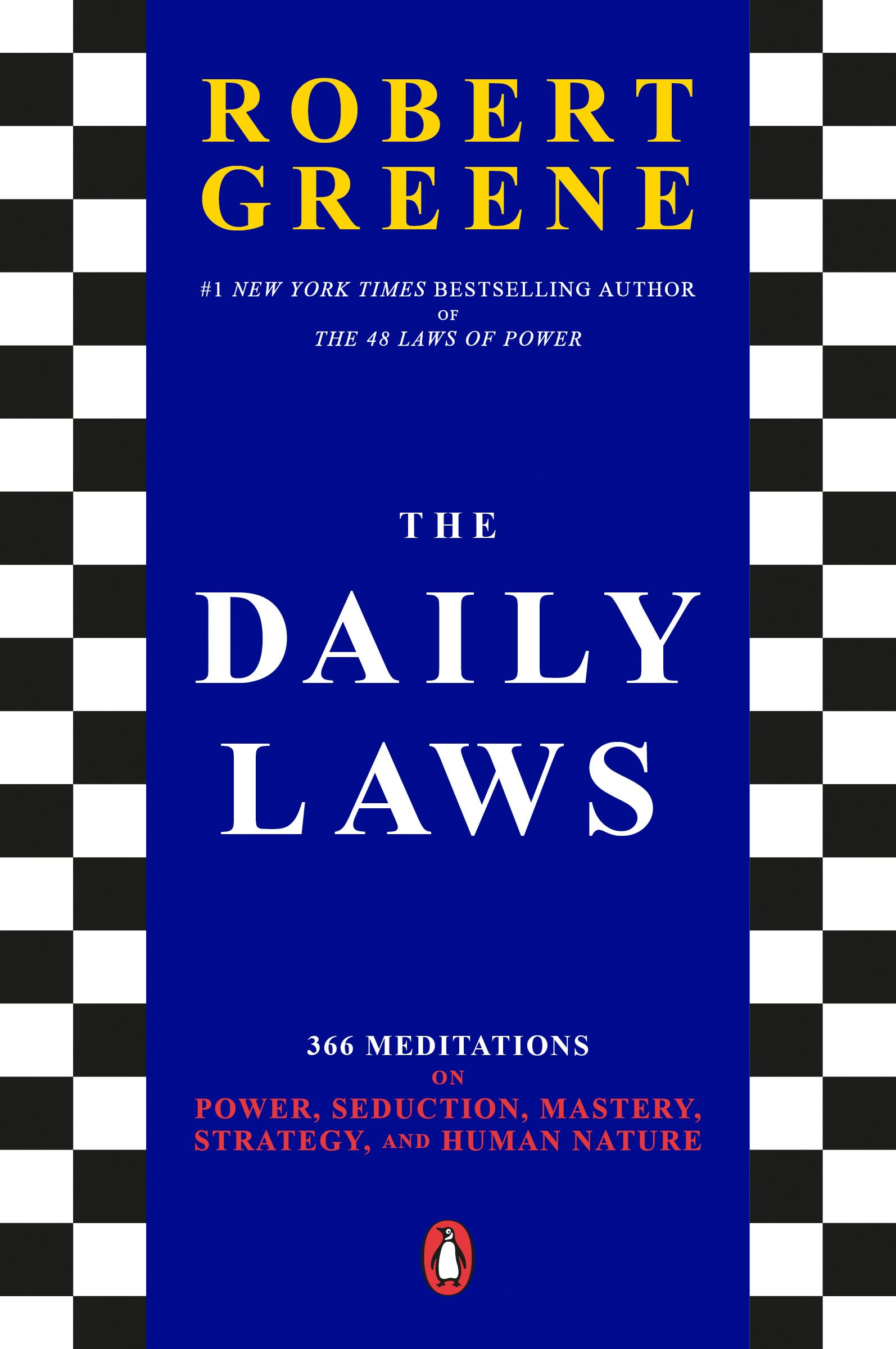
The Daily Laws: 366 Meditations on Power, Seduction, Mastery, Strategy, and Human Nature
About This Book
The Daily Laws distills Robert Greene's body of work—Mastery, The 48 Laws of Power, The Laws of Human Nature, The Art of Seduction, and The 33 Strategies of War—into 366 daily meditations, one for each day of the year. The book is organized thematically by month, moving from self-discovery toward strategic engagement with the world.
At its core, Greene argues that life mastery begins inward. Each person carries a unique "seed" or Life's Task, and the first move toward power is reconnecting with one's innate calling rather than chasing money or status. From there, Greene maps the rigorous Apprenticeship Phase—a period of disciplined practice where the goal is transforming your mind and character, not earning titles. He insists there are no shortcuts; creativity is "the fruit of the Master's efforts and nothing else."
The later sections turn outward to human nature and power dynamics. Greene treats the social world as a kind of royal court where everything appears civilized but ugly emotions still simmer beneath. He counsels readers to:
- Cultivate a sense of purpose and surround themselves with purposeful people
- Master their emotional selves and observe others' actions rather than words
- Confront and integrate their Shadow instead of being timid and overly nice
- Court attention, guard their reputation, and never outshine the master
Recurring threads include developing the dimensional mind, embracing your strangeness as a source of power, viewing setbacks as education, and ultimately meditating on mortality to sharpen daily focus. The daily format encourages slow, repeated reflection, pairing each meditation with a concrete "Daily Law" prompt that translates Greene's philosophy into action.
Key Takeaways
- 1.Mastery begins inward—reconnecting with your Life's Task is the starting point, and it can begin at any age.
- 2.There are no shortcuts through the Apprenticeship Phase; its real goal is transforming your mind and character, not money or titles.
- 3.Advance with a deep sense of purpose, and surround yourself with people who live purposefully.
- 4.Confront and integrate your Shadow—asserting your uniqueness, even when it offends, is a genuine source of power.
- 5.Judge people by their actions, not their words, and master your emotions by observing life like moves on a chessboard.
- 6.Embrace what makes you weird and different; your strangeness is your source of power and originality.
- 7.Guard your reputation, never outshine the master, and use scarcity and mystery to heighten your presence.
Top Highlights
what matters is not education or money, but your persistence and the intensity of your desire to learn;
Highlighted by 3 people
Concentrate on maintaining a high sense of purpose, and the success will flow to you naturally.
Highlighted by 3 people
Daily Law: Make a list of the people in your life who live with purpose. Prioritize spending more time with them.
Highlighted by 3 people
In order to master a field, you must love the subject and feel a profound connection to it. Your interest must transcend the field and border on the religious.
Highlighted by 2 people
Daily Law: Reflect on those moments in life when you were active (followed your own path) and those moments when you were passive (followed what others wanted). Compare the emotions you experienced.
Highlighted by 2 people
Daily Law: What would you work on if no one was looking? If money were no object?
Highlighted by 2 people
Daily Law: Strive to be the only one who can do what you do and make the fate of those who hire you so entwined with yours that they cannot possibly get rid of you.
Highlighted by 2 people
Daily Law: Find the deepest pleasure in absorbing knowledge and information. Feel like you never have enough.
Highlighted by 2 people
Daily Law: Be relentless in your pursuit for expansion. Whenever you feel like you are settling into some circle, force yourself to shake things up and look for new challenges.
Highlighted by 2 people
Daily Law: Expand your knowledge to related fields. Pick an auxiliary skill and start practicing.
Highlighted by 2 people
AI Review
Based on Glasp's analysis of highlights from 11 readers, this is a resonant, highly quotable daily reader whose mastery and Life's Task passages drew the strongest consensus. It rewards slow, repeated reflection over a single sitting.
Pros
- +Strong reader consensus around purpose and discovering your Life's Task
- +Distills five major Robert Greene books into one accessible daily format
- +Pairs each meditation with a concrete Daily Law action prompt
- +Blends inward self-mastery with outward power and strategy
- +Highly quotable, memorable passages on creativity and apprenticeship
Cons
- −Drawing from multiple books, themes can feel repetitive across the year
- −The strategic, occasionally Machiavellian tone may unsettle some readers
Glasp AI analysis based on highlights from 11 readers.
Who Should Read This
Ideal for ambitious self-improvers, professionals navigating office politics, and creatives seeking mastery in their craft. Existing Robert Greene fans will appreciate the curated daily format, while newcomers get an accessible entry point into his major works. It suits anyone drawn to Stoic-flavored realism about human nature and power—people willing to confront uncomfortable truths about ambition, envy, and their own Shadow. Readers who prefer warm, idealistic self-help may find its strategic, sometimes Machiavellian tone challenging.
Frequently Asked Questions
What is The Daily Laws about?
Who is this book for?
What are the key lessons?
Is it worth reading?
What does Greene mean by your Life's Task?
What is the Shadow and why does Greene emphasize it?
Do I need to read his other books first?
How to Apply What You Read
- 1.List the people in your life who live with purpose and prioritize spending more time with them.
- 2.Reconnect with an activity that obsessed you as a child and identify how it points toward your Life's Task.
- 3.Practice asserting yourself and compromising less—do it under control, at opportune moments, and care less what others think.
- 4.Resist reacting to pressing problems; wait a day to cool your emotions and gain perspective before acting.
- 5.Choose one auxiliary skill outside your field and start practicing it to expand your mental landscape.
Discussion Questions
- Q1.What activity were you obsessed with as a child, and how might it reveal your Life's Task today?
- Q2.Where in your life have you been passive—following what others wanted—versus active, and how did each feel?
- Q3.Is Greene's advice to "stop being so nice" and embrace your Shadow empowering or potentially harmful? Where is the line?
- Q4.How do you reconcile Greene's strategic, court-like view of power with a desire for genuine, authentic relationships?
- Q5.Which is harder for you: enduring a long apprenticeship without shortcuts, or resisting the urge to make a quick splash?
- Q6.How might meditating on your own mortality change the way you spend your time and energy?
- Q7.Do you agree that creativity comes from disciplined effort rather than innate talent? What does your own experience suggest?
Recommended Books









Revisit Your Highlights, Deepen Your Understanding
Import your Kindle highlights to review, organize, and share the ideas that matter most to you.
Get the free browser extension