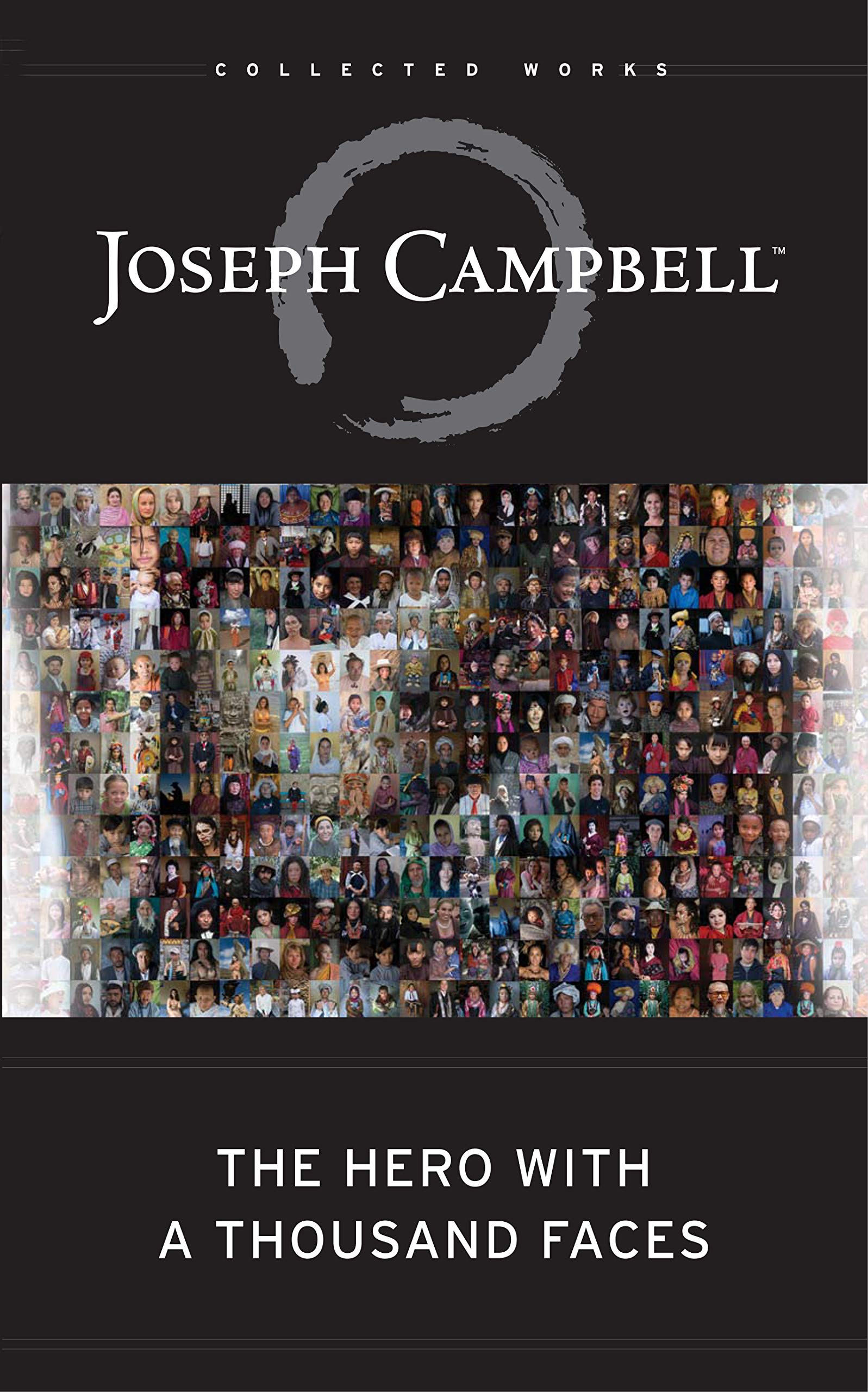
The Hero with a Thousand Faces (The Collected Works of Joseph Campbell)
About This Book
The Hero with a Thousand Faces is Joseph Campbell's foundational study in comparative mythology, arguing that beneath the world's seemingly endless variety of myths lies a single, recurring narrative — what Campbell calls the monomyth or hero's journey. As one widely highlighted passage summarizes it: "A hero ventures forth from the world of common day into a region of supernatural wonder: fabulous forces are there encountered and a decisive victory is won: the hero comes back from this mysterious adventure with the power to bestow boons on his fellow man."
Drawing on Sumerian epics, Pacific and African folktales, the lives of Gautama and Jesus, and the case notes of psychiatric patients, Campbell shows this pattern repeating everywhere. He maps its stages — the call to adventure, the refusal, the crossing of the threshold (the "belly of the whale"), trials, atonement with the father, and the return.
Central to the book is Campbell's psychological reading of myth, informed by Freud and especially Jung. "Mythology," he writes, "is psychology misread as biography, history, and cosmology." Myths are "public dreams; dreams are private myths." To interpret them literally is to kill them.
The refusal of the call, Campbell argues, is a refusal to surrender one's present system of ideals and security. True transformation requires self-annihilation and rebirth — "only birth can conquer death." The hero ultimately realizes that the essence of the self and the essence of the world are one.
The closing chapters turn to the modern condition: where once meaning resided in the group and its great coordinating mythologies, today "all is in the individual." Man himself, not nature or the cosmos, has become the crucial mystery. The book has since become a blueprint for storytellers — most famously George Lucas's Star Wars.
Key Takeaways
- 1.All myths across cultures share a single monomyth: a hero departs, faces trials, wins a victory, and returns to bestow boons on humanity.
- 2.Myths should be read as psychological truths, not literal history — "myths are public dreams; dreams are private myths."
- 3.Crossing the threshold into the unknown — the belly of the whale — is a form of self-annihilation leading to rebirth.
- 4.The refusal of the call stems from clinging to one's present interests, ideals, and sense of security.
- 5.Existence is a cycle of life, death, and rebirth — "only birth can conquer death — the birth, not of the old thing again, but of something new."
- 6.The ultimate aim is not merely to see truth but to realize that the essence of the self and the world are one.
- 7.In the modern era, meaning has shifted from the group to the individual — man himself is now the crucial mystery.
Top Highlights
As Campbell said, artists are the modern mythmakers,
Highlighted by 2 people
AI Review
Glasp's analysis of highlights from 3 readers shows strong engagement with Campbell's core monomyth framework and his psychological reading of myth, with the hero's-journey structure and life-death-rebirth cycle drawing the most consistent attention.
Pros
- +Articulates the influential monomyth structure that has shaped modern storytelling
- +Vast cross-cultural sourcing — Sumerian epics, folktales, world religions
- +Insightful psychological reading of myth via Freud and Jung
- +Memorable, quotable formulations like "myths are public dreams"
- +Connects ancient symbols to the modern search for individual meaning
Cons
- −Dense, scholarly prose with wide-ranging references can be demanding
- −Heavy reliance on Jungian and Freudian framing may not suit all readers
Glasp AI analysis based on highlights from 3 readers.
Who Should Read This
Writers, screenwriters, game designers, and other storytellers seeking a structural blueprint for transformative narratives will find this indispensable — it shaped Star Wars and countless works since. It also rewards students of mythology, comparative religion, and Jungian psychology, as well as readers drawn to questions of meaning, self-transformation, and the symbolic life. Be prepared for dense, scholarly prose and wide-ranging references across cultures and traditions.
Frequently Asked Questions
What is the book about?
Who is it for?
What are the key lessons?
Is it worth reading?
What are the stages of the hero's journey?
How did this book influence Star Wars?
How does Campbell view mythology?
How to Apply What You Read
- 1.Map a story you love — or one you're writing — onto Campbell's stages of departure, initiation, and return.
- 2.Reread familiar myths and religious tales psychologically, treating their images as symbols rather than literal facts.
- 3.Reflect on a personal "call to adventure" you may be refusing, and what interests you're trying to keep secure.
- 4.Explore the source traditions Campbell cites — Hindu, Buddhist, Greek, and others — to see the monomyth firsthand.
- 5.Apply the hero's-journey blueprint when designing any narrative experience for an audience.
Discussion Questions
- Q1.Do you find Campbell's claim of a single universal monomyth convincing, or does it flatten genuine cultural differences?
- Q2.What does it mean to read myth as psychology rather than as history or science, and what is gained or lost?
- Q3.Have you ever experienced a "refusal of the call"? What were you trying to protect?
- Q4.How does the image of death and rebirth resonate with transformations in your own life?
- Q5.Campbell says modern meaning lies in the individual rather than the group — do you agree, and what are the consequences?
- Q6.Why do you think this book has been so influential for storytellers like George Lucas?
- Q7.What is the difference between treating the hero as an example to imitate versus a symbol to contemplate?
Recommended Books
Revisit Your Highlights, Deepen Your Understanding
Import your Kindle highlights to review, organize, and share the ideas that matter most to you.
Get the free browser extension