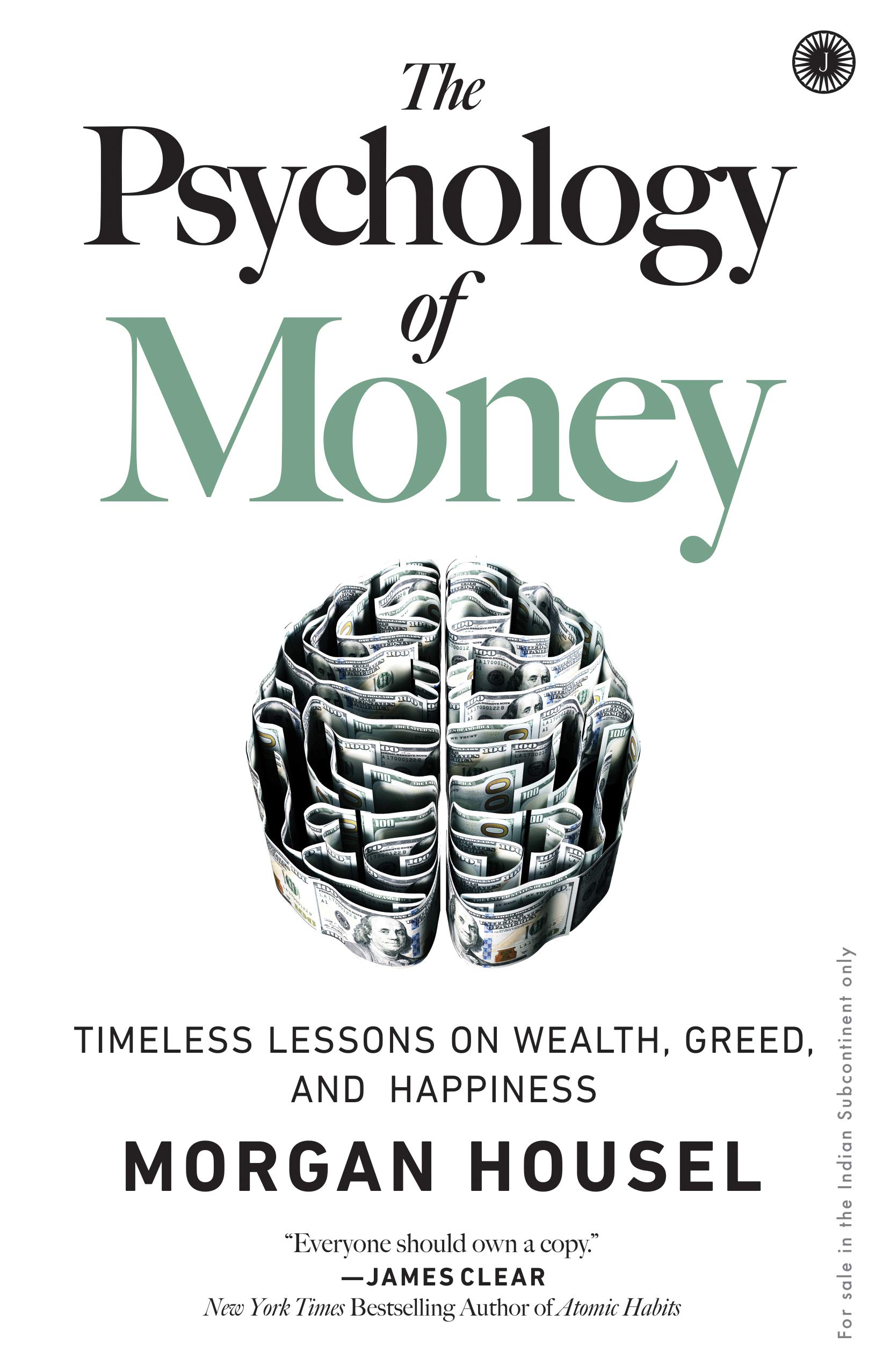
About This Book
The Psychology of Money by Morgan Housel argues that financial success is less about intelligence or technical knowledge and more about behavior. As Housel puts it, "doing well with money has a little to do with how smart you are and a lot to do with how you behave." The book is structured as a series of standalone lessons, each grounded in stories and human psychology rather than spreadsheets.
Several core themes dominate the most-highlighted passages:
- Enough: The hardest financial skill is getting the goalpost to stop moving. Without a sense of enough, an insatiable appetite for more pushes you toward regret and ruinous risk.
- Luck and risk: Every outcome is shaped by forces beyond individual effort. Judge others—and yourself—with humility, focusing on broad patterns rather than extreme case studies.
- Compounding and survival: Buffett's secret is time, not just skill. Good investing is about earning decent returns you can repeat for decades without being wiped out. "If I had to summarize money success in a single word it would be survival."
- Room for error: Margin of safety—a frugal budget, flexible thinking, a loose timeline—lets you live happily across a range of outcomes and survive the inevitable surprises.
- Tails drive everything: A small number of events account for the majority of outcomes; you can be wrong half the time and still make a fortune.
- Wealth is what you don't see: Wealth is income not spent, options not yet exercised—the opposite of conspicuous spending.
Underlying it all is Housel's claim that the highest dividend money pays is control over your time: the ability to do what you want, when you want, with whom you want. The book blends history, finance, and behavioral psychology into accessible, memorable principles for building durable wealth and a contented life.
Key Takeaways
- 1.The hardest and most important financial skill is achieving a sense of enough, because happiness is results minus expectations.
- 2.Survival is the cornerstone of long-term success—avoiding ruin lets compounding work its magic over decades, as it did for Buffett.
- 3.Both luck and risk shape every outcome, so judge yourself and others with humility and study broad patterns, not extreme cases.
- 4.Room for error (margin of safety)—a frugal budget, flexible thinking, a loose timeline—is one of finance's most underappreciated forces.
- 5.Tails drive everything: a small number of decisions and events account for most outcomes, so you can be wrong often and still succeed.
- 6.Wealth is what you don't see—income not spent—and the highest dividend money pays is control over your time.
- 7.Building wealth depends far more on your savings rate and humility than on a high income or beating the market.
Top Highlights
There is no reason to risk what you have and need for what you don’t have and don’t need.
Highlighted by 7 people
Be careful who you praise and admire. Be careful who you look down upon and wish to avoid becoming.
Highlighted by 6 people
Luck and risk are both the reality that every outcome in life is guided by forces other than individual effort.
Highlighted by 5 people
focus less on specific individuals and case studies and more on broad patterns.
Highlighted by 5 people
Reputation is invaluable. Freedom and independence are invaluable. Family and friends are invaluable.
Highlighted by 5 people
you don’t need tremendous force to create tremendous results.
Highlighted by 5 people
“Having an ‘edge’ and surviving are two different things: the first requires the second. You need to avoid ruin. At all costs.”
Highlighted by 5 people
“It’s not whether you’re right or wrong that’s important,” George Soros once said, “but how much money you make when you’re right and how much you lose when you’re wrong.”
Highlighted by 5 people
The ability to do what you want, when you want, with who you want, for as long as you want, is priceless. It is the highest dividend money pays.
Highlighted by 5 people
“History never repeats itself; man always does.”
Highlighted by 4 people
AI Review
Glasp's analysis of highlights from 9 readers shows strong, consistent consensus around a handful of memorable principles—especially enough, survival, and control over your time. The high overlap on quotable passages signals a book readers find both impactful and re-readable.
Pros
- +Strong reader consensus on core ideas like enough, margin of safety, and survival
- +Highly quotable and memorable, with principles that stick
- +Grounded in stories and history rather than dense financial math
- +Accessible to readers with no finance background
- +Reframes wealth as control over your time rather than possessions
- +Practical emphasis on behavior, savings rate, and humility over chasing returns
Cons
- −Light on concrete tactics—offers mindset, not step-by-step investing instructions
- −Standalone-essay structure can feel repetitive, circling the same themes
Glasp AI analysis based on highlights from 9 readers.
Who Should Read This
This book suits beginning and intermediate investors who want mindset over stock tips, and anyone feeling the pull of social comparison and lifestyle creep. It's ideal for young professionals building savings habits, mid-career earners deciding "how much is enough," and readers who prefer stories and psychology to technical finance. No financial background is required—Housel deliberately avoids jargon. Those seeking specific portfolio strategies, tax tactics, or step-by-step investing instructions will find this more philosophical than practical, and may want to pair it with a hands-on guide.
Frequently Asked Questions
What is The Psychology of Money about?
Who is the book for?
What are the key lessons?
Is The Psychology of Money worth reading?
Why does Housel say survival matters more than high returns?
What does Housel mean by 'enough'?
What is the difference between being rich and being wealthy?
How to Apply What You Read
- 1.Define your 'enough'—write down the level of income, savings, and lifestyle that genuinely satisfies you, and commit to not letting the goalpost move.
- 2.Build a margin of safety into your plan by assuming lower future returns, keeping ample cash, and ensuring no single setback can wipe you out.
- 3.Raise your savings rate by trimming lifestyle bloat and caring less about what others think, rather than chasing a higher income.
- 4.Reframe wealth as time—prioritize choices that increase control over your schedule, since that is the highest dividend money pays.
- 5.Stop interrupting compounding—choose investments and a financial plan you can stick with for decades and avoid panic-driven decisions during downturns.
Discussion Questions
- Q1.What does "enough" look like for you, and how would you know when you've reached it?
- Q2.How has your own personal history shaped the way you think about saving, spending, and risk?
- Q3.Where in your life are you confusing being rich (visible spending) with being wealthy (hidden, unspent assets)?
- Q4.Could you emotionally—not just financially—survive a 30% decline in your assets, and what room for error would help?
- Q5.How do you distinguish between bold ambition and reckless risk in your own decisions?
- Q6.In what ways are you taking cues from people playing a different financial game than you are?
- Q7.If control over your time is the highest dividend money pays, are your current choices buying more of it or less?
Recommended Books


Revisit Your Highlights, Deepen Your Understanding
Import your Kindle highlights to review, organize, and share the ideas that matter most to you.
Get the free browser extension