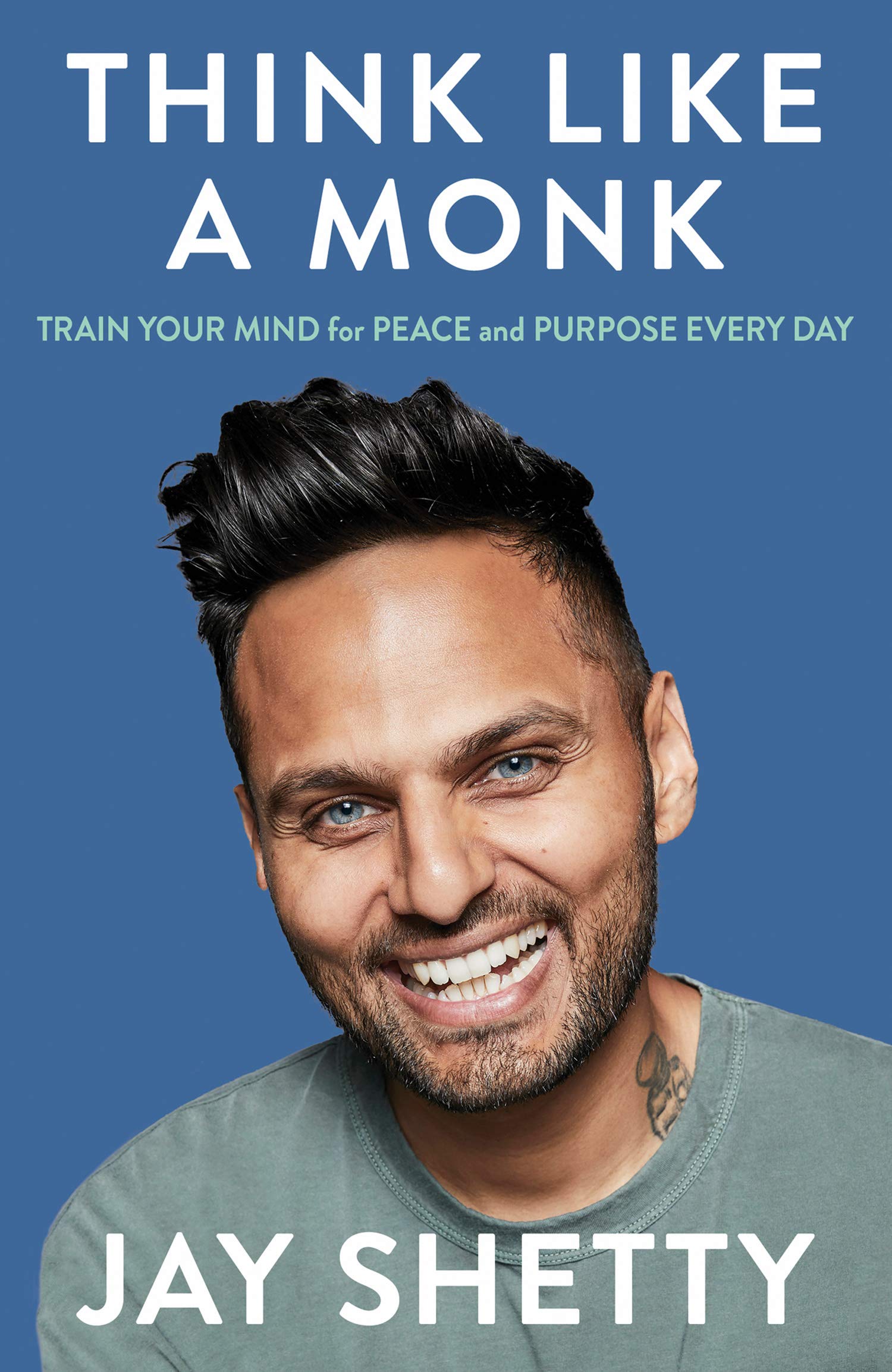
Think Like a Monk: The Sunday Times Number One Bestseller
About This Book
Think Like a Monk by Jay Shetty translates lessons from his time as a monk into practical tools for modern life. The book's central argument is that lasting happiness and fulfillment come not from external success, objects, or attainments but from mastering the mind and connecting with the soul. As Shetty puts it, "Success doesn't guarantee happiness, and happiness doesn't require success."
The book unfolds in three movements. First, it asks readers to let go — of the ego, of negativity, of fear, and of attachments. We are reminded that everything is borrowed ("the lucky vacationers enjoying our stay in Hotel Earth"), and that clinging gives objects power over us. Tools like the Spot, Stop, Swap method and auditing your negative comments help reduce judgment, complaining, and comparison.
Second, it guides readers to grow by discovering their dharma — the magic formula of Passion + Expertise + Usefulness. Shetty stresses that intention matters more than outcome: planting "seeds of good intentions" rather than "weeds" born of ego, greed, or revenge. Internal change, not external striving, produces durable wellbeing.
Third, it turns outward to give — cultivating gratitude ("a virtuous cycle" reinforced by dopamine), healthy relationships built on self-awareness, and a life of service. Throughout, Shetty weaves practical exercises: breathwork to calm the nervous system, mantras and affirmations, the 5-4-3-2-1 anxiety technique, and journaling.
A recurring thread is that meditation is a mirror: if you can't sit with your thoughts, that itself reveals the work to be done. The book blends ancient wisdom (the Bhagavad Gita, Zen koans, the Desert Fathers) with contemporary psychology and accessible habits, aiming to make monk-like clarity attainable in everyday, distracted lives.
Key Takeaways
- 1.Lasting happiness comes from mastering the mind and connecting with the soul, not from success, objects, or status.
- 2.You can be right or you can move forward — the urge to win arguments stems from the ego's fear of admitting weakness.
- 3.Intention determines fulfillment: act from love, growth, or knowledge, and you benefit regardless of the outcome.
- 4.Everything is borrowed; practicing nonattachment lets you fully enjoy people and things without being owned by them.
- 5.Your purpose is dharma — passion plus expertise put in service of others.
- 6.Use Spot, Stop, Swap and audit your negativity to reduce judgment, comparison, and complaint.
- 7.Gratitude is a trainable muscle that rewires the brain toward a virtuous cycle and dissolves the "mind of poverty."
AI Review
Based on Glasp's analysis of highlights from 3 readers, Think Like a Monk resonates most for its practical exercises and quotable reframes of ego, attachment, and gratitude. The strongest consensus centers on choosing to "move forward" over being right.
Pros
- +Highly actionable with concrete exercises (breathwork, journaling, 5-4-3-2-1)
- +Clear, memorable dharma formula: Passion + Expertise + Usefulness
- +Strong emphasis on intention over outcome that reframes goal-setting
- +Accessible blend of ancient wisdom and modern psychology
- +Practical tools for gratitude, attachment, and relationships
Cons
- −Ideas can feel familiar to readers already versed in self-help and mindfulness
- −Light on philosophical depth relative to its source traditions
- −Some quotes are loosely attributed (e.g., the "insanity" line)
Glasp AI analysis based on highlights from 3 readers.
Who Should Read This
This book suits readers feeling stuck, anxious, or unfulfilled despite outward success, and anyone curious about applying meditation, mindfulness, and ancient wisdom to modern life. It's ideal for beginners to spirituality who want concrete exercises rather than abstract theory — people navigating career questions, relationship struggles, or a search for purpose. Those seeking quick, actionable self-improvement habits (breathwork, gratitude, journaling) will benefit most. Hardened skeptics of self-help framing or readers wanting deep philosophical rigor may find it lighter than expected.
Frequently Asked Questions
What is Think Like a Monk about?
Who is Think Like a Monk for?
What are the key lessons of the book?
Is Think Like a Monk worth reading?
What is dharma according to Jay Shetty?
What practical exercises does the book teach?
What does the book say about meditation?
How to Apply What You Read
- 1.Practice the 4-4-4 breathing technique whenever you feel stressed, angry, or anxious to calm your nervous system.
- 2.Audit your attachments by listing what you fear losing, then work to loosen your mental grip on each item.
- 3.Keep an activity journal asking whether you enjoyed the process and whether others enjoyed the result.
- 4.Train gratitude daily by noting things you're thankful for, building the habit like a muscle.
- 5.Question your desires repeatedly until you reach the root intention behind what you think you want.
Discussion Questions
- Q1.Where in your life do you choose being right over moving forward, and what would change if you reversed that?
- Q2.Which of your goals are "weeds" grown from ego or revenge, and which are "flowers" planted from good intentions?
- Q3.What are you most afraid of losing, and how does that fear shape your daily decisions?
- Q4.How do you define success and happiness, and have you confused one for the other?
- Q5.What is your dharma — where do your passion, expertise, and usefulness to others intersect?
- Q6.When you sit quietly with your thoughts, what does that experience reveal about the work you need to do?
- Q7.How might cultivating gratitude reframe a recent loss or disappointment in your life?
Recommended Books


Revisit Your Highlights, Deepen Your Understanding
Import your Kindle highlights to review, organize, and share the ideas that matter most to you.
Get the free browser extension