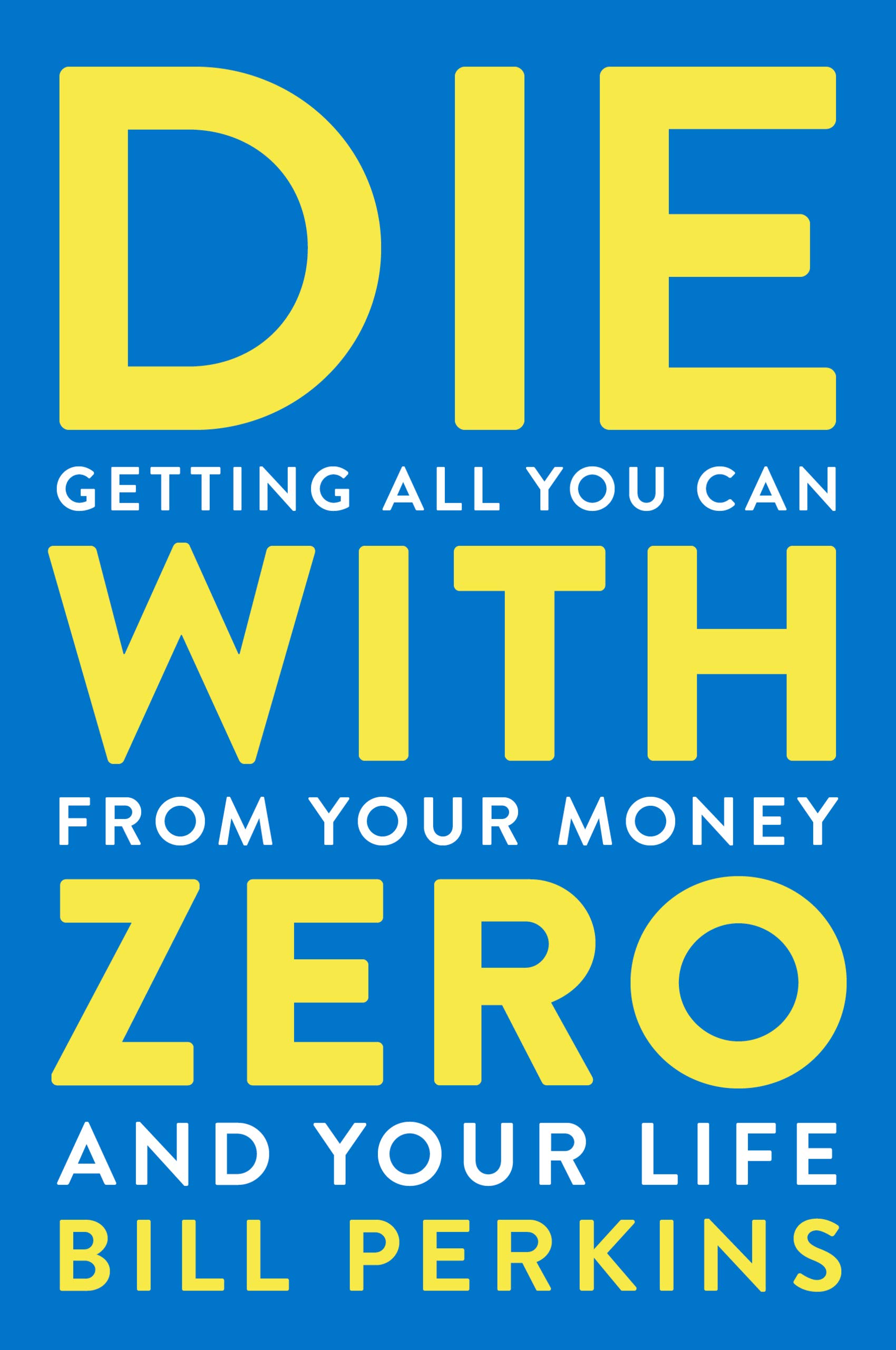
Die With Zero: Getting All You Can from Your Money and Your Life—A Revolutionary Approach to Maximizing Life Experiences Over Accumulating Wealth (English Edition)
About This Book
Die With Zero by Bill Perkins challenges the default cultural script of earning, saving, and hoarding wealth until death. Its central thesis: money is just a means to an end, and that end is maximizing total life enjoyment, not maximizing net worth. As Perkins puts it, "the business of life is the acquisition of memories."
The book builds its argument around several interlocking ideas:
- Life is the sum of your experiences. Spending on experiences pays a memory dividend—the recurring enjoyment you get from recalling and sharing experiences, which can compound over time and even exceed the original pleasure.
- Money has declining utility with age. Health and interests narrow as you grow older, so the window for many experiences closes. The real "golden years" of maximum health-plus-wealth often come well before age 65.
- Time-bucketing. Draw a timeline of life in five- or ten-year intervals and slot the experiences you want into the seasons when you can best enjoy them.
- Decumulation. Knowing your approximate death date and annual survival cost lets you crack open your nest egg deliberately—spending more aggressively in your fifties than your sixties, and so on.
Perkins also tackles practical fears: use annuities to hedge longevity risk, long-term care insurance instead of precautionary oversaving, and give to children and charity now (ideally to kids aged 26–35) when money has the greatest impact. He warns against "autopilot" living and the irrational denial of death, even recommending a death-countdown app to inject urgency.
Grounded in the Life-Cycle Hypothesis, the book argues that dying with money left over represents wasted life energy—hours of work you can never reclaim. The provocative goal of dying with zero is less a literal target than a mindset shift toward living the fullest life possible.
Key Takeaways
- 1.Money is just life energy—every dollar represents hours of your finite life spent earning it, so dying with money left over means working for free.
- 2.Spending on experiences pays a memory dividend that recurs and compounds over a lifetime, making early investment in experiences especially valuable.
- 3.The utility of money declines with age as health and interests narrow; the real golden years of combined health and wealth often come before 65.
- 4.Use time-buckets—divide your life into intervals and schedule experiences for the seasons when you can best enjoy them.
- 5.Give to children and charity now, ideally to kids aged 26–35, when the money has maximum impact rather than arriving randomly after death.
- 6.Hedge longevity risk with annuities and long-term care insurance instead of oversaving out of irrational fear.
- 7.Acknowledging mortality creates urgency; living as if life were infinite is shortsighted and leads to indefinitely delayed gratification.
Top Highlights
Start actively thinking about the life experiences you’d like to have, and the number of times you’d like to have them.
Highlighted by 6 people
the premise of this book is that you should be focusing on maximizing your life enjoyment rather than on maximizing your wealth.
Highlighted by 6 people
Although we all have at least the potential to make more money in the future, we can never go back and recapture time that is now gone. So it makes no sense to let opportunities pass us by for fear of squandering our money.
Highlighted by 5 people
The main idea here is that your life is the sum of your experiences. This just means
Highlighted by 5 people · 1 left a note
“The business of life is the acquisition of memories. In the end that’s all there is.”
Highlighted by 5 people
Being aware that your time is limited can clearly motivate you to make the most of the time you do have.
Highlighted by 5 people
Many psychological studies have shown that spending money on experiences makes us happier than spending money on things.
Highlighted by 4 people
buying an experience doesn’t just buy you the experience itself—it also buys you the sum of all the dividends that experience will bring for the rest of your life.
Highlighted by 4 people
you need money to survive in retirement, but the main thing you’ll be retiring on will be your memories—so make sure you invest enough in those.
Highlighted by 4 people
Think about your current physical health: What life experiences can you have now that you might not be able to have later?
Highlighted by 4 people
AI Review
Based on Glasp's analysis of highlights from 13 readers, Die With Zero resonates strongly through its memorable, quotable framing of money as life energy and the "memory dividend" concept. Heavy consensus around its core experience-over-wealth message signals real impact.
Pros
- +Memorable central metaphor of the memory dividend that readers repeatedly highlighted
- +Practical tools like time-buckets, annuities, and life-expectancy calculators
- +Strong grounding in the Life-Cycle Hypothesis and real spending-decline data
- +Reframes giving to children and charity—give early when impact is highest
- +Quotable, provocative lines that motivate a genuine mindset shift
Cons
- −Premise assumes financial surplus, so it's less relevant to those living paycheck to paycheck
- −Some readers questioned edge cases (jobs that improve health, location trade-offs, borrowing experiences)
- −The literal "die with zero" target is impractical and the author concedes you'll never hit it exactly
Glasp AI analysis based on highlights from 13 readers.
Who Should Read This
This book speaks most to diligent savers and high earners who oversave out of habit or fear and underspend on living. It's ideal for people in their twenties through fifties planning careers, retirement, and inheritances, as well as parents deciding when to gift money to children. Finance-minded readers will appreciate the Life-Cycle Hypothesis grounding, annuities, and longevity-risk concepts. It's less useful for those genuinely struggling to meet basic needs, since its premise assumes you have surplus to deploy.
Frequently Asked Questions
What is Die With Zero about?
Who is the book for?
What are the key lessons?
What is the memory dividend?
Does dying with zero mean leaving nothing to your kids?
How do you actually spend down your savings safely?
Is it worth reading?
How to Apply What You Read
- 1.List the major and minor life experiences you want, then drop them into five- or ten-year time-buckets based on when you can best enjoy each.
- 2.Estimate your life expectancy and annual survival cost using a longevity calculator to know your minimum needs and when to start spending down.
- 3.Give money to your children or favored charities now—decide amounts and timing rather than leaving a random inheritance.
- 4.Invest in your health today, since even small improvements compound into more enjoyable future experiences.
- 5.Outsource chores you dislike to convert money into free time for positive experiences, especially as your earnings grow.
Discussion Questions
- Q1.Do you currently optimize for maximizing wealth or maximizing life enjoyment, and how would your decisions change if you switched?
- Q2.Which experiences are you delaying that your future, less-healthy self may never be able to enjoy?
- Q3.How comfortable are you with the idea of giving your children their inheritance while you're still alive, and why?
- Q4.Where does your psychological resistance to spending down your savings come from?
- Q5.If you used a death-countdown tool, how might it change how you spend your time and treat the people you love?
- Q6.Are the fears keeping you from bold choices—moving, switching jobs, taking trips—rational or irrational when you actually quantify them?
- Q7.Is literally dying with zero a useful goal, or is it more valuable as a mindset shift? Where would you draw your own line?
Recommended Books
Revisit Your Highlights, Deepen Your Understanding
Import your Kindle highlights to review, organize, and share the ideas that matter most to you.
Get the free browser extension