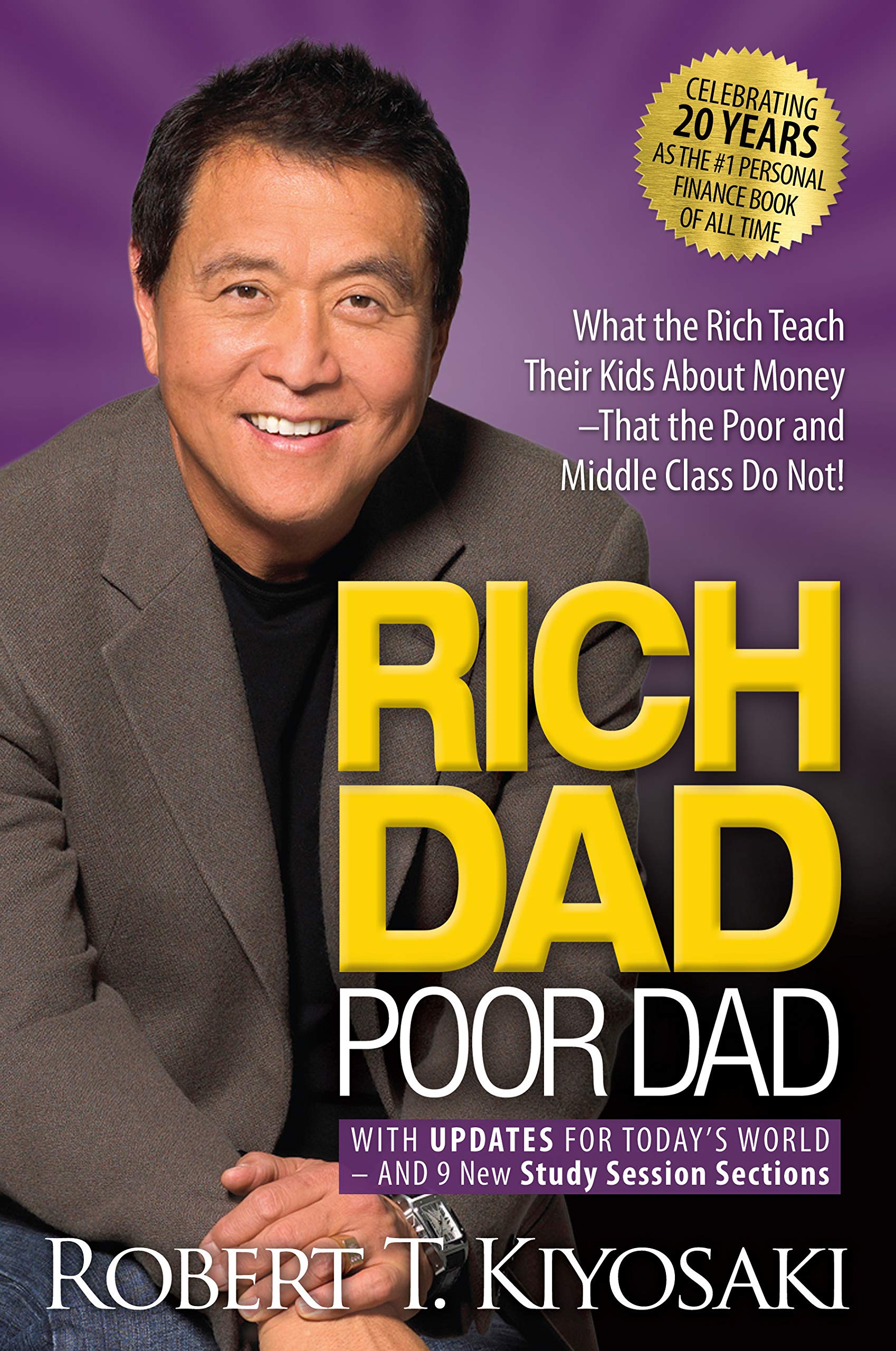
Rich Dad Poor Dad: What the Rich Teach Their Kids About Money That the Poor and Middle Class Do Not!
About This Book
Rich Dad Poor Dad argues that the biggest gap between the rich and everyone else is not income, but financial education. Across the most-highlighted passages, readers consistently focused on Kiyosaki’s simple framework: the poor and middle class work for money, while the rich build systems in which money works for them.
The book is structured around a set of lessons rather than a technical investing manual. Its central lesson is to know the difference between an asset and a liability. In the book’s repeated definition, an asset puts money in your pocket; a liability takes money out. From there, Kiyosaki pushes readers to focus less on salaries and more on building an asset column through businesses, stocks, bonds, income-producing real estate, notes, and royalties.
A second major theme is psychological. Many of the most-highlighted lines deal with fear and greed. Kiyosaki argues that people remain trapped in the “Rat Race” because fear drives them to seek security through paychecks, while desire drives them to spend whatever they earn. His answer is not emotional suppression, but awareness: tell the truth about your emotions, use them in your favor, and learn to think instead of merely reacting.
The book also stresses mindset and self-development.
- Ask “How can I afford it?” instead of saying “I can’t afford it.”
- Mind your own business by growing your asset column, even while keeping a day job.
- Learn accounting, markets, investing, and legal basics so you can read numbers and keep more of what you make.
- Prefer experiential learning, action, and repeated adaptation over passive schooling alone.
Overall, the highlighted passages show a book that blends mindset coaching, cash-flow thinking, and basic wealth-building principles into a memorable argument: financial freedom comes from literacy, disciplined asset acquisition, and emotional self-control.
Key Takeaways
- 1.Financial freedom starts with cash flow, not with a high salary alone.
- 2.An asset puts money in your pocket; a liability takes money out, and this distinction should guide major purchases.
- 3.Fear and desire often drive people into paycheck dependence and lifestyle inflation, creating the Rat Race.
- 4.Financial literacy matters more than positive thinking because money without understanding is easily lost.
- 5.Mind your own business by building an asset column outside your job, even if you begin small.
- 6.It is not how much you earn but how much you keep and reinvest that determines long-term wealth.
- 7.Real learning comes from action, mistakes, and adaptation, not only from formal schooling.
Top Highlights
An asset puts money in my pocket. A liability takes money out of my pocket.
Highlighted by 8 people
People’s lives are forever controlled by two emotions: fear and greed.
Highlighted by 7 people · 1 left a note
Be truthful about your emotions and use your mind and emotions in your favor, not against yourself.”
Highlighted by 7 people · 1 left a note
Rich people acquire assets. The poor and middle class acquire liabilities that they think are assets.
Highlighted by 7 people
“If you learn life’s lessons, you will do well. If not, life will just continue to push you around.
Highlighted by 6 people
The poor and the middle class work for
Highlighted by 5 people
ASSETS OVER INCOME
Highlighted by 5 people · 1 left a note
“Most people have a price. And they have a price because of human emotions named fear and greed. First, the fear of being without money motivates us to work hard, and then once we get that paycheck, greed or desire starts us thinking about all the wonderful things money can buy. The pattern is then set.”
Highlighted by 5 people · 1 left a note
Rule #1: You must know the difference between an asset and a liability, and buy assets.
Highlighted by 5 people · 1 left a note
The mistake in becoming what you study is that too many people forget to mind their own business. They spend their lives minding someone else’s business and making that person rich.
Highlighted by 5 people
AI Review
Glasp's AI analysis of 15 reader highlights suggests a strongly resonant personal finance classic with unusually high consensus around its core ideas. The strongest engagement centers on its memorable asset-vs-liability framework, emotional framing of money, and push toward financial literacy.
Pros
- +Memorable core framework around assets, liabilities, and cash flow
- +Strong consensus on lessons about fear, greed, and the Rat Race
- +Highly quotable passages that readers repeatedly saved
- +Encourages active financial education, not passive earning
- +Practical shift from income focus to asset-building focus
- +Clear mindset reframes such as asking how to afford something
Cons
- −Some advice appears broad or simplified rather than deeply technical
- −Tax and corporate discussions may feel overstated or context-dependent
- −Several ideas emphasize mindset more than step-by-step execution
Glasp AI analysis based on highlights from 15 readers.
Who Should Read This
This book is best for early-stage readers in personal finance, employees who feel trapped by paycheck-to-paycheck living, aspiring entrepreneurs, and anyone trying to understand cash flow more clearly. It is especially useful for people who earn decent money but are not building wealth. No advanced investing background is required, but readers should be open to mindset-focused advice and broad financial concepts rather than step-by-step tactical detail.
Frequently Asked Questions
What is the book about?
Who is it for?
What are the key lessons?
Is it worth reading?
What does the book mean by the Rat Race?
Why does the asset versus liability idea matter so much in this book?
Does the book say you should quit your job?
How to Apply What You Read
- 1.List your current assets and liabilities using the book’s cash-flow definition, not labels or assumptions.
- 2.Track your monthly cash flow to see what actually puts money in your pocket and what drains it.
- 3.Redirect a portion of income toward one income-producing asset before upgrading lifestyle expenses.
- 4.Replace the phrase “I can’t afford it” with “How can I afford it?” to force better financial thinking.
- 5.Study one core area of financial IQ next: accounting, investing, markets, or legal/tax basics.
Discussion Questions
- Q1.Which of the book’s ideas feels most useful today: asset-building, financial literacy, or emotional control around money?
- Q2.How convincing is the book’s definition of an asset and a liability when applied to a home, education, or a business?
- Q3.In what ways do fear and desire shape real financial decisions more than people admit?
- Q4.Does focusing on your asset column change how you think about career success and job security?
- Q5.Where is the line between healthy risk-taking and reckless behavior in the book’s philosophy?
- Q6.How much of financial struggle comes from mindset and habits, and how much comes from economic conditions outside an individual’s control?
- Q7.What practical first asset could an ordinary reader realistically begin building after finishing this book?
Recommended Books

Revisit Your Highlights, Deepen Your Understanding
Import your Kindle highlights to review, organize, and share the ideas that matter most to you.
Get the free browser extension