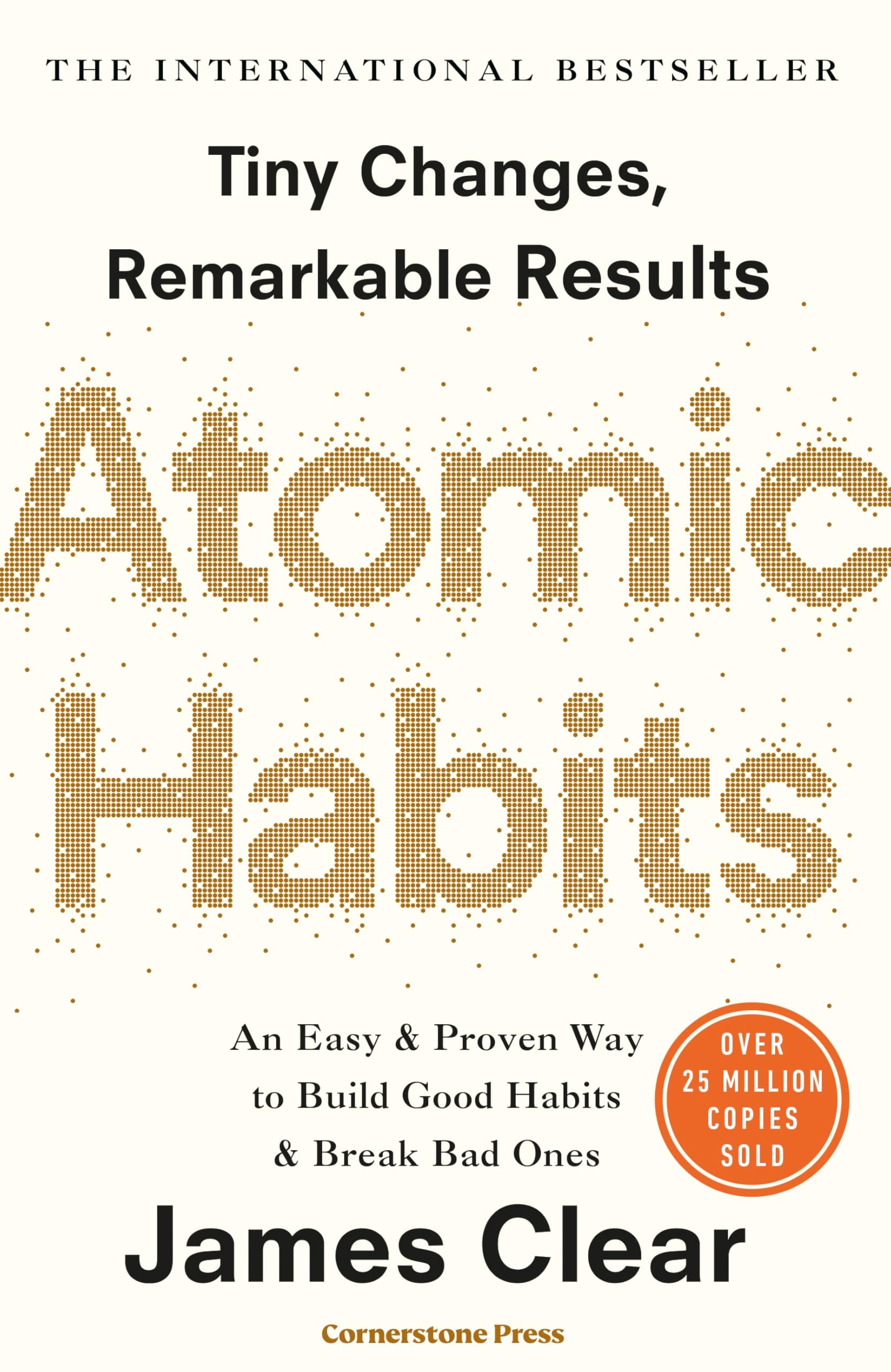
Atomic Habits: The life-changing million-copy #1 bestseller
About This Book
James Clear’s Atomic Habits argues that lasting improvement does not come from dramatic breakthroughs, but from small behaviors repeated consistently over time. Across the most-highlighted passages, readers strongly gravitated to one central idea: your current results are a lagging measure of your habits. In other words, what you repeatedly do shapes what you eventually become.
The book pushes readers away from obsessing over goals and toward designing systems. Goals set direction, but systems create progress. Clear’s point is not that goals are useless; it is that outcomes are temporary unless the underlying process changes. If you fix the inputs, the outputs tend to follow. This systems-first view also helps avoid the trap of postponing happiness until the next milestone.
A second major theme is identity-based change. Clear argues that the deepest and most durable behavior change happens when a habit becomes part of how you see yourself. Rather than aiming to read a book, become a reader; rather than trying to run, become a runner. Each repeated action is a small vote for the kind of person you want to be.
The book then explains how habits work through a four-step loop:
- cue
- craving
- response
- reward
From this model, Clear derives the Four Laws of Behavior Change:
- make it obvious
- make it attractive
- make it easy
- make it satisfying
The highlights also emphasize practical tactics such as implementation intentions, habit stacking, tracking your habits, and redesigning your environment so good behaviors are easier and bad ones are harder. Overall, the structure moves from mindset to mechanism to application: first understand compounding, systems, and identity; then understand the habit loop; then reshape daily life so better actions happen almost automatically.
Key Takeaways
- 1.Small habits compound into major life outcomes, for better or worse, because time magnifies whatever you repeat.
- 2.Systems beat goals for long-term progress because changing the process matters more than chasing isolated milestones.
- 3.Identity drives consistency; habits last when they become part of how you see yourself.
- 4.Every habit follows a repeatable loop of cue, craving, response, and reward, which makes behavior easier to understand and redesign.
- 5.Environment matters more than willpower in many situations, because visible cues and low friction heavily shape what you do.
- 6.Progress often feels invisible at first, so you must persist through the Plateau of Latent Potential before results become obvious.
- 7.Awareness creates leverage: tracking habits, naming cues, and reviewing behavior helps turn automatic actions into intentional ones.
Top Highlights
Your outcomes are a lagging measure of your habits.
Highlighted by 27 people
changes that seem small and unimportant at first will compound into remarkable results if you’re willing to stick with them for years.
Highlighted by 24 people · 2 left notes
The purpose of setting goals is to win the game. The purpose of building systems is to continue playing the game.
Highlighted by 24 people · 1 left a note
Time magnifies the margin between success and failure.
Highlighted by 22 people · 3 left notes
Goals are about the results you want to achieve. Systems are about the processes that lead to those results.
Highlighted by 21 people
It’s one thing to say I’m the type of person who wants this. It’s something very different to say I’m the type of person who is this.
Highlighted by 21 people · 1 left a note
You do not rise to the level of your goals. You fall to the level of your
Highlighted by 20 people
Success is the product of daily habits—not once-in-a-lifetime transformations.
Highlighted by 19 people · 1 left a note
Habits are the compound interest of
Highlighted by 17 people
You should be far more concerned with your current trajectory
Highlighted by 17 people
AI Review
Glasp’s AI analysis of 60 reader highlights suggests exceptionally strong consensus around this book’s usefulness. The most-saved passages repeatedly point to a clear, actionable framework for behavior change, with overwhelmingly positive reader reactions and very little criticism.
Pros
- +Highly resonant framework around systems over goals
- +Memorable explanation of compounding through small habits
- +Strong emphasis on identity-based behavior change
- +Practical tools like implementation intentions and habit stacking
- +Clear four-step model: cue, craving, response, reward
- +Useful guidance on environment design and reducing friction
Cons
- −Some core ideas are repeated frequently for emphasis
- −Readers wanting deeper academic rigor may find it simplified
- −Less tailored for highly specialized or clinical behavior-change needs
Glasp AI analysis based on highlights from 60 readers.
Who Should Read This
This book is ideal for readers who want practical self-improvement without hype: students building study routines, professionals trying to become more consistent, founders and managers improving processes, and anyone stuck in stop-start motivation cycles. It is especially useful if you have clear goals but weak follow-through. No psychology background is required; the book is accessible, concrete, and action-oriented.
Frequently Asked Questions
What is the book about?
Who is it for?
What are the key lessons?
Is it worth reading?
What does systems over goals mean in this book?
What are identity-based habits?
How does the book suggest making habits stick?
How to Apply What You Read
- 1.Write one identity statement such as “I am the kind of person who studies daily” or “I am a runner.”
- 2.Create one implementation intention using this format: “I will [behavior] at [time] in [location].”
- 3.Stack a new habit onto an existing one with: “After [current habit], I will [new habit].”
- 4.Redesign your environment by making good cues visible and removing or hiding cues for bad habits.
- 5.Track your daily habits for one week and label each as helpful, harmful, or neutral for the person you want to become.
Discussion Questions
- Q1.Which idea is more transformative in practice: focusing on systems or focusing on identity?
- Q2.Why do people often abandon good habits before they cross the Plateau of Latent Potential?
- Q3.How much of behavior change is personal discipline versus environment design?
- Q4.What is one area of life where your current results clearly reflect your repeated habits?
- Q5.Do goals motivate you, or do they sometimes restrict your happiness and create an all-or-nothing mindset?
- Q6.Which habit in your life is reinforcing an identity you no longer want to keep?
- Q7.What small daily action could serve as the strongest vote for the person you want to become?
Recommended Books



Revisit Your Highlights, Deepen Your Understanding
Import your Kindle highlights to review, organize, and share the ideas that matter most to you.
Get the free browser extension