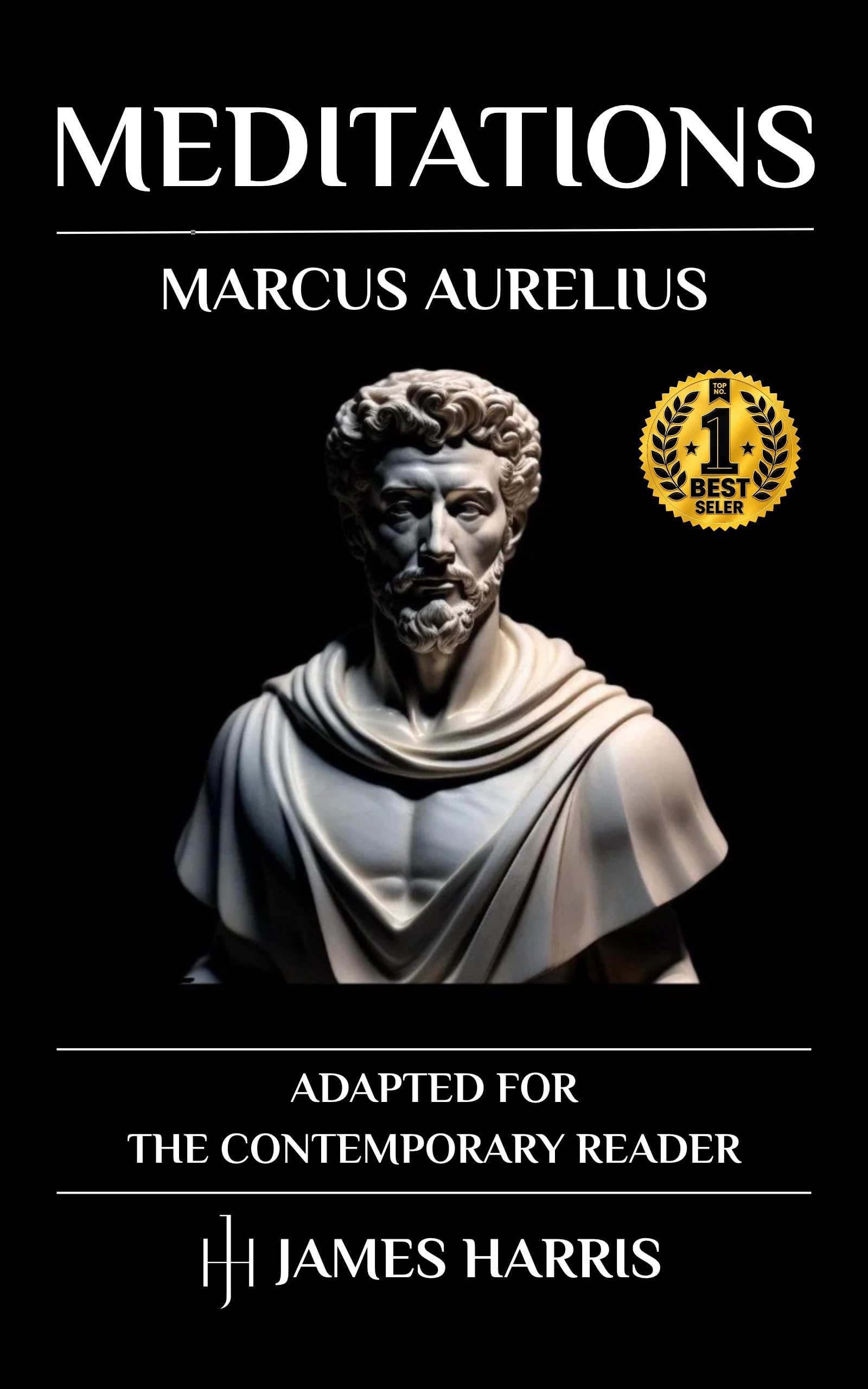
Meditations: Adapted for the Contemporary Reader (The Stoic Classics Collection Book 1)
About This Book
Meditations is the private journal of Roman emperor Marcus Aurelius, here adapted in accessible language for modern readers. It is not a structured treatise but a series of personal reflections rooted in Stoic philosophy, written as reminders to himself about how to live well amid the burdens of power and the unpredictability of life.
The book opens with Marcus cataloguing the virtues he learned from family and teachers — governing his temper, modesty, truthfulness, justice, careful inquiry, and a simple way of living "far removed from the habits of the rich." These debts of gratitude set the moral tone for everything that follows.
From there the reflections turn to recurring Stoic themes:
- Accepting nature and fate — nothing that happens according to nature is evil, and being vexed at events separates us from nature.
- Living in the present — the present is the only thing a man can be deprived of, so each act should be done as if it were the last.
- Mortality as a guide — remembering that you may depart life at any moment regulates every thought and action.
- Cooperation with others — humans are made to work together "like hands, like eyelids," so meeting the meddling and ungrateful with patience is part of our nature.
Marcus repeatedly reminds himself to control the ruling part of the mind — reason — rather than being pulled like a puppet by impulse, social pressure, or discontent. He warns against acting thoughtlessly, seeking reputation, or postponing the work of clearing the mind. The result is a timeless manual of self-discipline, equanimity, and intentional living that has resonated for nearly two thousand years.
Key Takeaways
- 1.Prepare each morning to meet difficult people with patience, because humans are made for cooperation, not conflict.
- 2.Nothing that happens according to nature is evil, so being vexed at events only separates you from nature.
- 3.The present moment is the only thing you truly possess and the only thing you can lose.
- 4.Remembering your mortality should regulate every thought and action — live each act as if it were your last.
- 5.Master the ruling part of your mind so you are not pulled like a puppet by impulse or social pressure.
- 6.Good character is built from observing and adopting virtues in others — temper control, modesty, justice, and simplicity.
- 7.Act for what should be done, not for reputation or display.
Top Highlights
Begin the morning by saying to yourself, I shall meet with the meddling, the ungrateful, arrogant, deceitful, envious, unsocial.
Highlighted by 2 people · 1 left a note
AI Review
Based on Glasp reader highlights, Meditations remains a deeply resonant Stoic classic, with readers gravitating toward its lessons on temper, acceptance, and intentional living.
Pros
- +Timeless Stoic wisdom distilled into short, memorable reflections
- +Modernized language lowers the barrier to entry
- +Highly quotable passages that reward re-reading
- +Practical reminders readers connect to daily life, such as being intentional and journaling lessons learned
Cons
- −Repetitive and non-linear structure, since it was a private journal not meant for publication
- −Opening book of debts to teachers can feel dense to newcomers
Glasp AI analysis based on highlights from 3 readers.
Who Should Read This
Readers drawn to Stoicism and practical philosophy who want timeless guidance on resilience, self-discipline, and equanimity. It suits beginners (thanks to the modernized language) as well as anyone facing stress, leadership pressure, grief, or uncertainty. Journalers and those building daily reflection habits will find a model worth imitating. No prior philosophy background is required — only a willingness to read slowly and apply the reminders to your own conduct.
Frequently Asked Questions
What is Meditations about?
Who is this book for?
What are the key lessons?
Is Meditations worth reading?
Why does Marcus begin by listing what he learned from others?
What does Stoicism say about death in this book?
What does this adapted edition change?
How to Apply What You Read
- 1.Begin each morning by reminding yourself that you will meet difficult people, and resolve to respond with patience.
- 2.Journal the virtues and lessons you have learned from family, mentors, and teachers.
- 3.Practice living in the present, treating each act as if it could be your last.
- 4.Pause before acting to ensure each action has a clear aim rather than being done thoughtlessly.
- 5.Reframe frustrating events as part of nature to reduce vexation and protect your equanimity.
Discussion Questions
- Q1.Which virtue from Marcus's list of teachers do you most want to cultivate, and why?
- Q2.How does the Stoic view that nothing according to nature is evil change the way you respond to misfortune?
- Q3.What would it actually mean to live each act as if it were your last?
- Q4.When do you find yourself "pulled like a puppet" by social pressure or impulse, and how could reason intervene?
- Q5.Do you agree that the present is the only thing a person can be deprived of?
- Q6.How can remembering mortality make daily life richer rather than gloomier?
- Q7.Why might acting for reputation undermine the quality of the action itself?
Recommended Books





Revisit Your Highlights, Deepen Your Understanding
Import your Kindle highlights to review, organize, and share the ideas that matter most to you.
Get the free browser extension