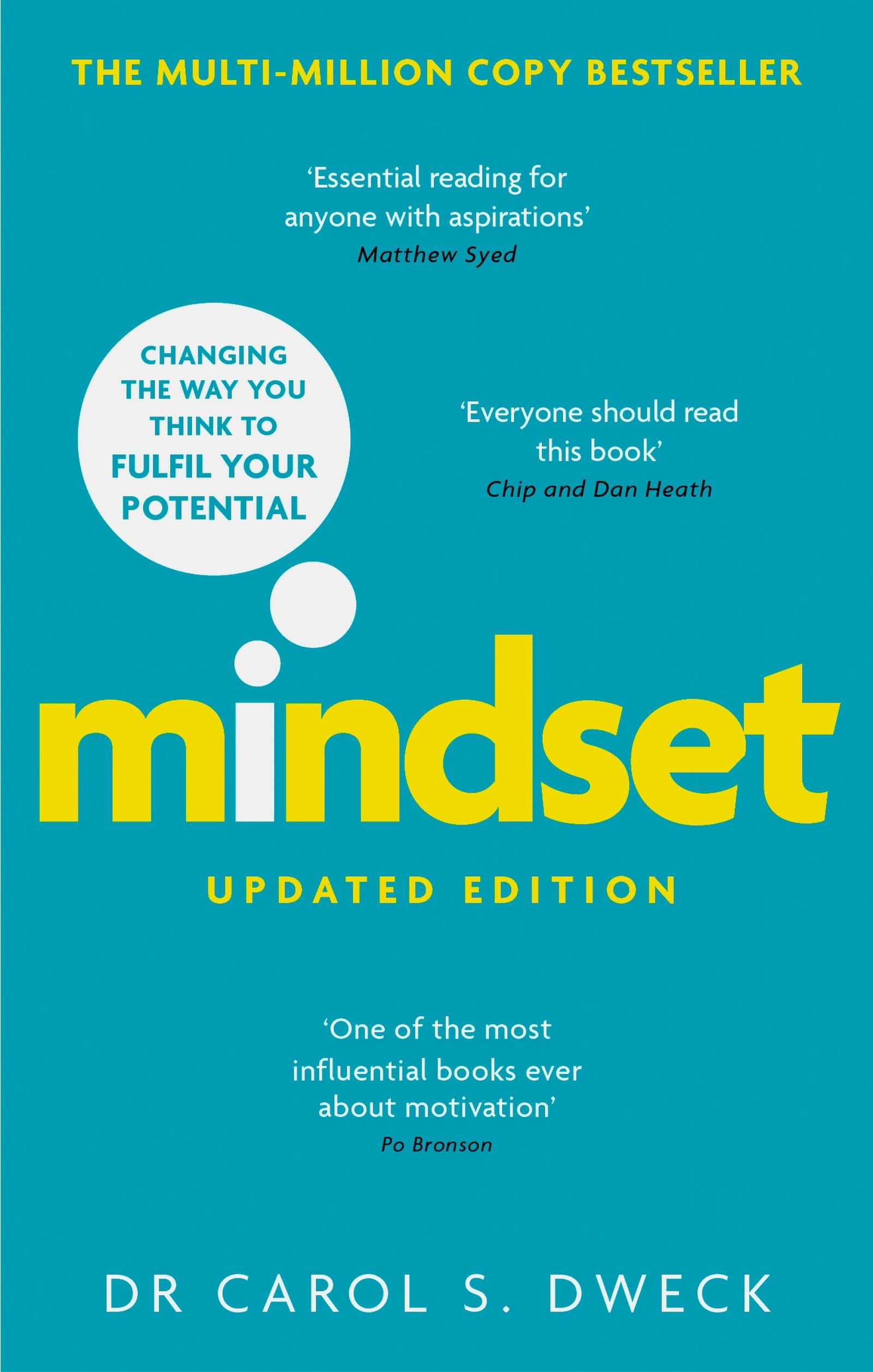
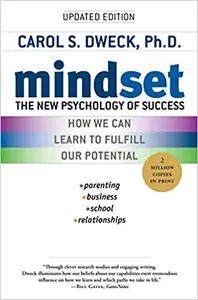
Mindset - Updated Edition: Changing The Way You think To Fulfil Your Potential
About This Book
Carol Dweck's Mindset argues that a single, often unconscious belief about the nature of human qualities shapes how we live, learn, and relate to others. She distinguishes two orientations:
- The fixed mindset holds that intelligence, talent, and character are carved in stone, creating an urgency to prove oneself and avoid failure at all costs.
- The growth mindset holds that basic qualities can be cultivated through effort, strategies, and help from others.
These mindsets, Dweck shows through decades of research, send people down entirely different roads. In the fixed world, success is about validating yourself and looking smart; failure becomes an identity ("I am a failure") rather than an action ("I failed"). In the growth world, success is about stretching yourself, and setbacks become information and motivation. As one reader-favorite line puts it, "you aren't a failure until you start to blame."
Dweck illustrates the contrast across domains: children facing hard puzzles, students misjudging their abilities, athletes like Michael Jordan who embraced thousands of missed shots, CEOs who either confront their shortcomings or build worlds where they appear flawless, and partners who blame versus those who communicate and grow together. A central insight is that praising ability backfires—it pushes people into the fixed mindset, while praising effort and strategy fuels resilience.
The book's most empowering claim is that mindsets are just beliefs, and beliefs can change. Potential is unknown and unknowable; tests show where someone is, not where they could end up. By learning to value the process, seek constructive criticism, embrace challenges, and reframe past "failures" as fuel for growth, anyone can shift toward a growth mindset and more fully fulfill their potential.
Key Takeaways
- 1.Your mindset is a belief about whether qualities are fixed or developable—and it quietly governs how you interpret effort, failure, and feedback.
- 2.In the fixed mindset, every situation becomes a test of worth; in the growth mindset, situations become opportunities to learn and stretch.
- 3.Failure is an action, not an identity—and you only truly fail when you start to blame and deny rather than learn.
- 4.Effort is what ignites ability; the fixed-mindset fear that needing effort signals deficiency is precisely what holds people back.
- 5.Praising ability backfires by making people protective and dishonest, while praising effort and strategy builds resilience and accurate self-knowledge.
- 6.Potential is unknowable—tests and experts show where you are now, not where coaching, time, and effort could take you.
- 7.In relationships and leadership, the growth mindset replaces blame with communication, development, and shared improvement.
Top Highlights
you aren’t a failure until you start to blame.
Highlighted by 5 people · 1 left a note
the view you adopt for yourself profoundly affects the way you lead your life.
Highlighted by 4 people · 1 left a note
This growth mindset is based on the belief that your basic qualities are things you can cultivate through your efforts, your strategies, and help from others. Although people may differ in every which way—in their initial talents and aptitudes, interests, or temperaments—everyone can change and grow through application and experience.
Highlighted by 4 people
The passion for stretching yourself and sticking to it, even (or especially) when it’s not going well, is the hallmark of the growth mindset. This is the mindset that allows people to thrive during some of the most challenging times in their lives.
Highlighted by 4 people · 1 left a note
The fixed mindset makes you concerned with how you’ll be judged; the growth mindset makes you concerned with improving.
Highlighted by 4 people · 1 left a note
“Becoming is better than being.” The fixed mindset does not allow people the luxury of becoming. They have to already be.
Highlighted by 4 people
Even in the growth mindset, failure can be a painful experience. But it doesn’t define you. It’s a problem to be faced, dealt with, and learned from.
Highlighted by 4 people · 1 left a note
Not only weren’t they discouraged by failure, they didn’t even think they were failing. They thought they were learning.
Highlighted by 3 people · 1 left a note
Believing that your qualities are carved in stone—the fixed mindset— creates an urgency to prove yourself over and over.
Highlighted by 3 people
When you enter a mindset, you enter a new world. In one world—the world of fixed traits—success is about proving you’re smart or talented. Validating yourself. In the other—the world of changing qualities—it’s about stretching yourself to learn something new. Developing yourself.
Highlighted by 3 people
AI Review
Based on Glasp's analysis of highlights from 11 readers, Mindset shows strong consensus around a single transformative idea, with its most-shared passages clustering tightly around failure, effort, and the growth-versus-fixed distinction.
Pros
- +A single, powerful framework (fixed vs. growth) that applies across school, work, sports, and relationships
- +Reframes failure as learning rather than identity, which readers found genuinely liberating
- +Counterintuitive, research-backed insight that praising ability backfires while praising effort builds resilience
- +Practical "Grow Your Mindset" prompts readers can apply immediately
- +Vivid examples (Michael Jordan, NASA, CEOs) make abstract psychology concrete
Cons
- −The core idea can feel repeated across many domains and examples
- −Risk of oversimplifying complex outcomes into a single belief variable
- −Some readers may want more nuance on how deeply ingrained fixed habits can be
Glasp AI analysis based on highlights from 11 readers.
Who Should Read This
Ideal for educators, parents, coaches, and managers who shape how others learn and respond to challenges, and for anyone caught in the trap of needing to prove themselves. Students facing pressure, leaders making high-stakes decisions, athletes navigating setbacks, and partners working through relationship conflict will all find concrete relevance. No background in psychology is required—Dweck writes for a general audience and grounds every idea in research and vivid real-world examples.
Frequently Asked Questions
What is the book about?
Who is it for?
What are the key lessons?
Is it worth reading?
Why does Dweck say praising intelligence can be harmful?
How does the growth mindset relate to failure?
Does the growth mindset mean anyone can become anything?
How to Apply What You Read
- 1.Reframe a past "failure" by asking what you learned from it and how it can become a basis for growth, instead of letting it define you.
- 2.Seek constructive criticism rather than surrounding yourself with people who only validate you.
- 3.Praise effort, strategy, and process—in yourself, your children, and your team—rather than innate talent or intelligence.
- 4.Notice the moment a task gets hard and you want to quit; deliberately switch into a growth mindset and picture your brain forming new connections.
- 5.Make a plan to attempt something you've always wanted to do but feared you weren't good at, and take concrete steps toward it.
Discussion Questions
- Q1.In which areas of your life do you operate from a fixed mindset, and in which from a growth mindset?
- Q2.When do you feel smart—when you're flawless, or when you're learning something difficult? What does your answer reveal?
- Q3.How might praising children or colleagues for their talent be doing them harm despite good intentions?
- Q4.Think of a hero you admire. How does knowing the effort behind their success change your view of your own potential?
- Q5.How does the fixed mindset show up in relationships through blame, and what would a growth-minded response look like instead?
- Q6.Why is the idea of "trying hard and still failing" so terrifying within the fixed mindset, and how can effort be reframed as positive?
- Q7.If potential is truly unknowable, how should that change the way schools, companies, and parents evaluate people?
Recommended Books



Revisit Your Highlights, Deepen Your Understanding
Import your Kindle highlights to review, organize, and share the ideas that matter most to you.
Get the free browser extension