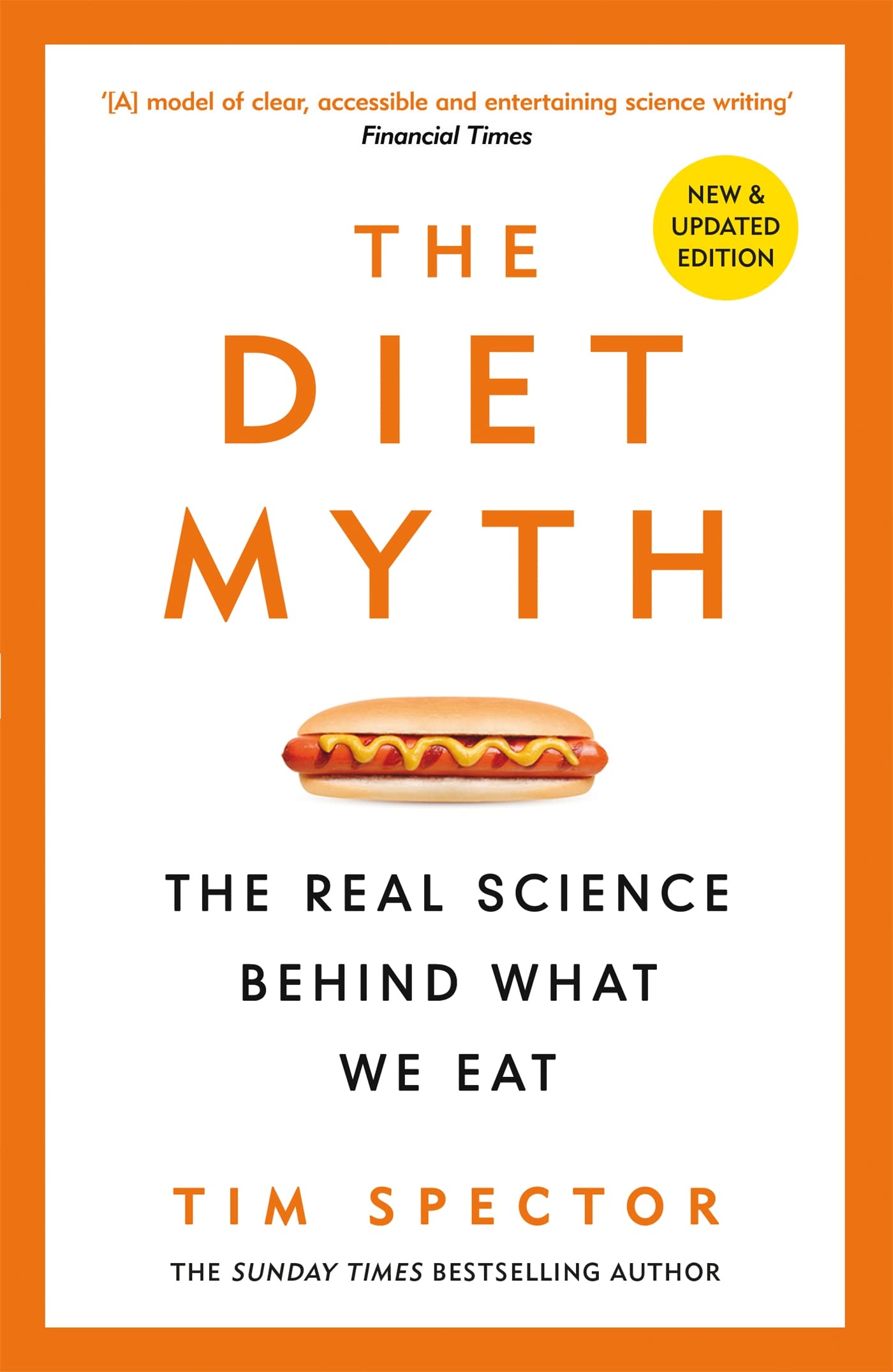
The Diet Myth: The Real Science Behind What We Eat
About This Book
The Diet Myth by Tim Spector dismantles the conventional wisdom behind dieting, replacing simplistic calorie-counting and fat-phobia with a science-led understanding of how individual our bodies truly are. Drawing on his work with identical twins, Spector shows that even people with the same DNA can have radically different waistlines, proving that genes alone cannot explain the obesity epidemic — UK obesity rose from 7% in 1980 to 28% by 2018, far too fast for genetic adaptation, which needs roughly a hundred generations.
The book's central argument is that our bodies and our gut microbiome are deeply personal. Taste itself is genetically unique: we carry dozens of variants for bitter, sweet, and umami detection, influencing what we eat and crave. Spector repeatedly challenges nutritional dogma with evidence:
- Most diets fail because the body adapts to reduced calories and biologically defends its fat stores.
- Not all saturated fat behaves the same — full-fat cheese shows protective effects on heart disease, while butter raises blood lipids.
- High-fat Mediterranean diets produced 30% fewer heart attacks, overturning low-fat orthodoxy.
- 'Healthy' foods like lobster and fish oil can contain far more cholesterol than lard.
- Probiotics such as lactobacilli reversed anxiety and stress in studies, hinting at a gut-brain link.
Spector weaves in fibre-rich regimes, soy isoflavones and their epigenetic effects, and citizen-science microbiome testing to argue that there is no single right diet. Instead, dietary diversity, fermented foods, and feeding a varied gut ecosystem matter more than any fad. The takeaway is liberating but demanding: ignore the myths, distrust one-size-fits-all rules, and pay attention to your own microbial and genetic individuality.
Key Takeaways
- 1.Most diets fail because the body biologically adapts to lower calories and fights to hold onto fat stores.
- 2.Identical twins can differ in weight, proving genes alone don't explain the obesity epidemic.
- 3.Our taste is genetically unique, with dozens of gene variants shaping cravings and food intake.
- 4.Not all saturated fat is equal — cheese protects the heart while butter raises blood lipids.
- 5.High-fat Mediterranean diets cut heart attacks by 30%, overturning low-fat orthodoxy.
- 6.The gut microbiome and probiotics influence everything from inflammation to anxiety.
- 7.Dietary diversity and fermented foods beat any restrictive fad diet.
AI Review
Based on Glasp's analysis of highlights from 3 readers, this is a myth-busting, evidence-driven look at nutrition whose passages cluster around genetics, the microbiome, and surprising fat science.
Pros
- +Grounded in twin studies and peer-reviewed research rather than anecdote
- +Compelling debunking of saturated-fat and cholesterol myths (cheese vs. butter)
- +Strong emphasis on the gut microbiome and dietary diversity
- +Accessible explanations of complex topics like taste genetics and epigenetics
Cons
- −Few readers and lightly highlighted, so consensus signal is modest
- −One reader note suggests the gene-vs-habit argument may feel ambiguous
Glasp AI analysis based on highlights from 3 readers.
Who Should Read This
Readers frustrated by failed diets and conflicting nutrition advice will find clarity here. It suits anyone curious about the gut microbiome, the science of taste, and why fat and cholesterol guidelines have shifted. Health-conscious eaters, popular-science fans, and those interested in twin studies or personalized nutrition will benefit most. A basic interest in biology helps, but no specialist knowledge is required — Spector explains the research accessibly.
Frequently Asked Questions
What is The Diet Myth about?
Who is the book for?
What are the key lessons?
Is it worth reading?
Does the book say genes determine our weight?
What does it say about fat and cholesterol?
How to Apply What You Read
- 1.Diversify your diet with a wide range of plants, fibre, and fermented foods to feed your gut microbiome.
- 2.Reconsider fat dogma — include full-fat cheese and stop fearing all saturated fat.
- 3.Abandon restrictive calorie-counting diets that the body simply adapts to.
- 4.Add probiotic foods like yoghurt to support the gut-brain connection.
- 5.Test your own assumptions about 'healthy' versus 'unhealthy' foods against the evidence.
Discussion Questions
- Q1.If identical twins can have different waistlines, how much responsibility do habits versus genes carry for our health?
- Q2.Why do you think most diets fail, and have you experienced this yourself?
- Q3.How does learning that taste is genetically unique change how you judge others' food preferences?
- Q4.Should public health guidelines distinguish between types of saturated fat, like cheese versus butter?
- Q5.What role should the gut microbiome play in how we define a 'healthy' diet?
- Q6.How do you reconcile the surprising cholesterol facts about lobster and fish oil with conventional advice?
- Q7.What would a diet focused on diversity rather than restriction look like for you?
Recommended Books







Revisit Your Highlights, Deepen Your Understanding
Import your Kindle highlights to review, organize, and share the ideas that matter most to you.
Get the free browser extension