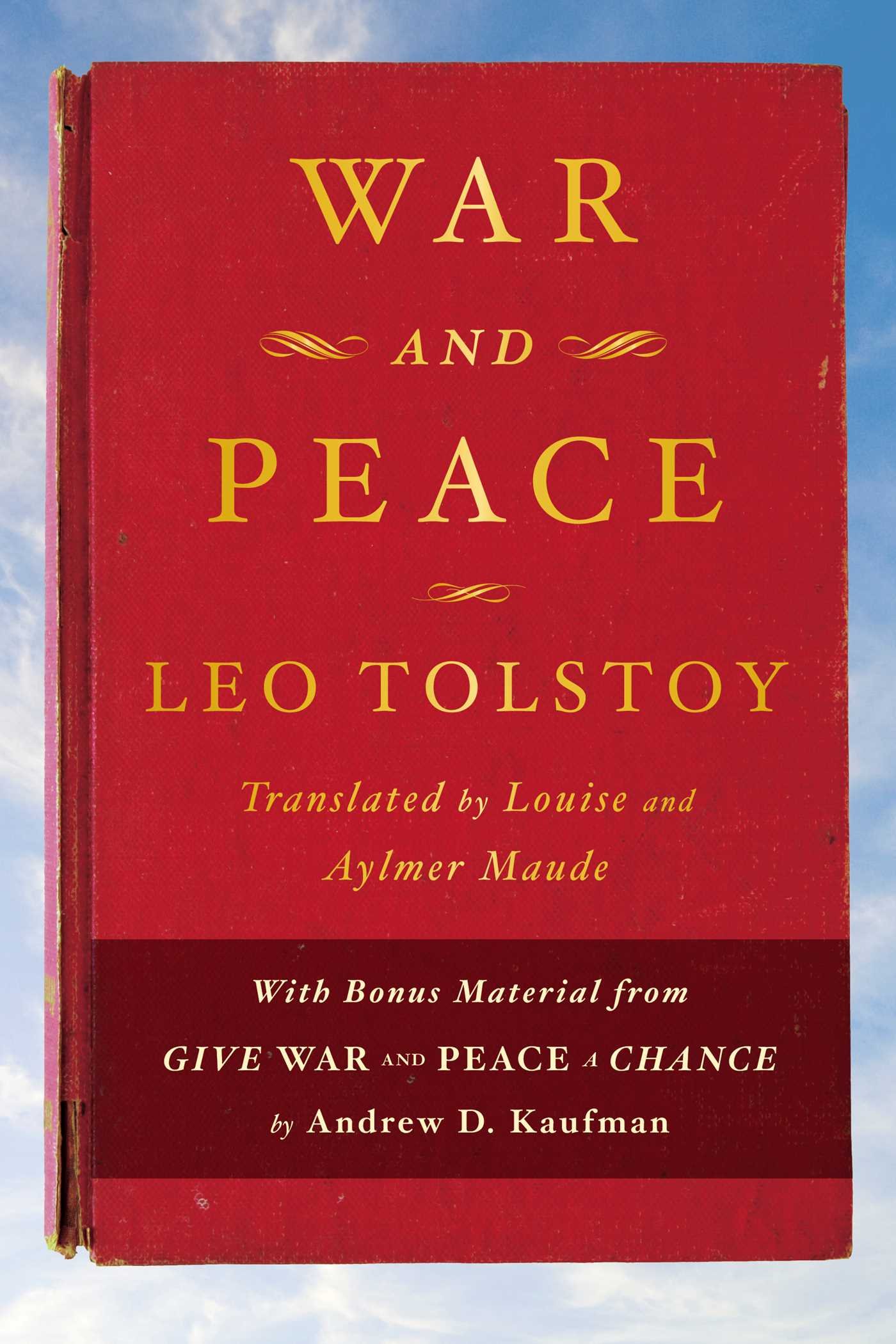
War and Peace: With bonus material from Give War and Peace A Chance by Andrew D. Kaufman
About This Book
Tolstoy's War and Peace braids the intimate lives of Russian aristocratic families—the Rostovs, Bolkonskys, Bezukhovs, and Kuragins—through the upheaval of the Napoleonic Wars. The novel moves between drawing rooms and battlefields, tracing how characters like Pierre, Prince Andrew, Natasha, and Princess Mary search for meaning amid chaos, ambition, love, and death.
Several threads emerge clearly from what readers marked. First is the "unwritten law" of human society—Borís grasps that beyond official codes and military discipline lies an informal hierarchy of influence and connection that truly governs success. Second is Tolstoy's meditation on freedom versus necessity: he argues that the more we see a person's relations to everything around them, the more their apparent freedom dissolves into the web of inevitability, a theme that culminates in the philosophical chapters on history.
Readers also responded to Tolstoy's skepticism of "great men." History, he insists, is not made by Napoleons and Alexanders but by the combined, unconscious movement of masses—each soldier "a drop in that ocean of men." Greatness that excludes right and wrong is, for Tolstoy, merely a mask for our own moral smallness.
Finally, the book offers Pierre's hard-won spiritual insight: that God is here and everywhere, that one should not strain to see into the distance but look at what lies at one's feet, and that loving people "without cause" reveals genuine reasons to love them. The bonus material from Andrew D. Kaufman frames Tolstoy himself as a man of paradox—moralist and sensualist, aristocrat and reformer—whose own contradictions animate the novel's vast humanity.
Key Takeaways
- 1.The more we see a person's connection to everything around them, the more their apparent freedom dissolves into necessity.
- 2.History is shaped not by great individuals but by the combined movement of masses—each person "a drop in that ocean of men."
- 3.To admit a greatness that excludes right and wrong is merely to admit one's own moral smallness.
- 4.Beyond written rules lies an unwritten law of influence and connection that truly governs society and success.
- 5.Meaning is found close at hand: one should look in front of oneself rather than strain to see into the distance.
- 6.Love without cause can itself reveal genuine reasons for loving people—"it is love that makes us see beauty."
- 7.A superfluity of comforts and excessive freedom of choice can destroy the joy and possibility of meaningful occupation.
AI Review
Based on highlights from 5 readers, this edition resonates most through its philosophical reflections on freedom, history, and love, alongside vivid social satire and battlefield scenes.
Pros
- +Sweeping integration of intimate family drama with grand historical events
- +Profound meditations on freedom versus necessity and the limits of human will
- +A bracing critique of the "great man" theory of history
- +Memorable, often-quoted insights into love, faith, and human nature
- +Kaufman's bonus material offers helpful biographical and interpretive context
Cons
- −The lengthy philosophical and historical essays can challenge readers expecting pure narrative
- −Enormous length and large cast demand sustained commitment
Glasp AI analysis based on highlights from 5 readers.
Who Should Read This
Ideal for serious readers of literary fiction ready to commit to a long, rewarding classic, and for students of Russian history, philosophy of history, or the Napoleonic Wars. Those drawn to questions of free will, fate, and what really drives historical events will find rich material in Tolzoy's essayistic passages. Readers who enjoy character-driven family sagas about love, ambition, and spiritual searching will also connect deeply. The Kaufman bonus material suits anyone wanting a guided entry point into why the novel still matters.
Frequently Asked Questions
What is War and Peace about?
Who is this book for?
What are the key lessons of the book?
Is War and Peace worth reading?
What does Tolstoy say about great men like Napoleon?
What is the bonus material from Andrew D. Kaufman?
What does Tolstoy mean by the 'unwritten law' in society?
How to Apply What You Read
- 1.Reflect on where the "unwritten laws" of influence operate in your own workplace or community.
- 2.Examine your assumptions about "great" leaders and ask whether their greatness obscures questions of right and wrong.
- 3.Practice looking at what lies in front of you rather than straining toward distant aims for meaning.
- 4.Read the Kaufman bonus material to deepen your understanding of Tolstoy's contradictions and intentions.
- 5.Notice how often you wait to find "good qualities" before loving someone, and try loving without that condition.
Discussion Questions
- Q1.Does Tolstoy convince you that human freedom is largely an illusion bounded by necessity?
- Q2.How does the novel's view of history as mass-driven rather than leader-driven challenge how we explain world events today?
- Q3.What does Pierre's spiritual journey suggest about where true meaning and contentment are found?
- Q4.How do the drawing-room scenes and the battlefield scenes illuminate one another?
- Q5.Do you agree that "greatness" can become an excuse to set aside ordinary standards of right and wrong?
- Q6.What role does the "unwritten law" of social connection play in the characters' fates—and in our own lives?
- Q7.How does knowing Tolstoy's personal contradictions change your reading of the novel's moral vision?
Recommended Books
Revisit Your Highlights, Deepen Your Understanding
Import your Kindle highlights to review, organize, and share the ideas that matter most to you.
Get the free browser extension