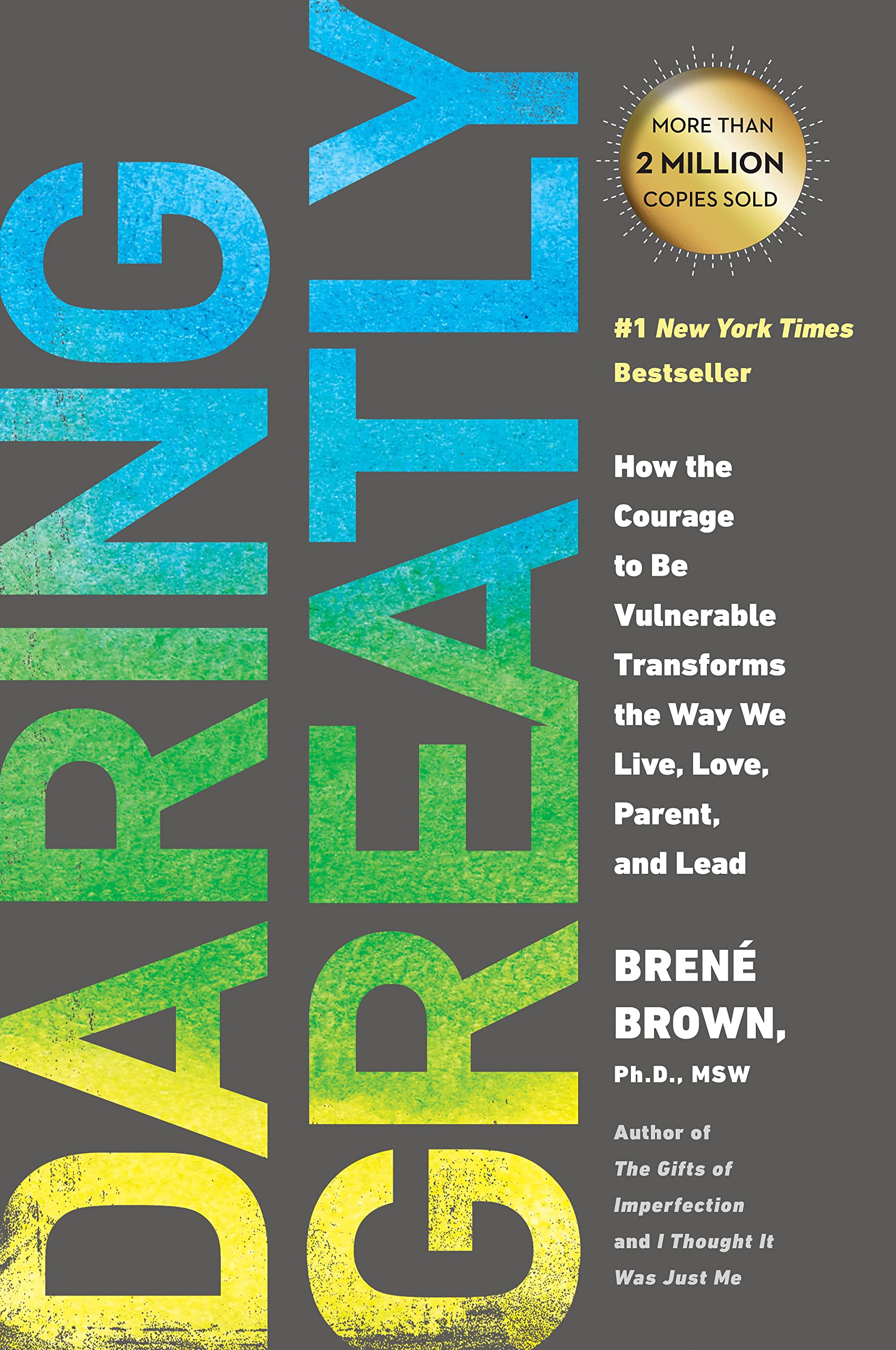
Daring Greatly: How the Courage to Be Vulnerable Transforms the Way We Live, Love, Parent, and Lead
About This Book
In Daring Greatly, researcher Brené Brown argues that vulnerability—defined as uncertainty, risk, and emotional exposure—is not weakness but the truest measure of courage. Drawing on years of social-work research, she dismantles the most dangerous cultural myth: that to feel is to be weak. Instead, she shows that vulnerability is "the birthplace of love, belonging, joy, courage, empathy, and creativity."
The book's central image, borrowed from Theodore Roosevelt, is the arena: the credit belongs not to the critic but to the person who shows up, gets dust and sweat on their face, and dares greatly—even when failure is possible. Brown contends that waiting until we are "perfect or bulletproof" before entering the arena costs us relationships, opportunities, and our unique gifts.
Central to her analysis are several interlocking ideas.
- Wholeheartedness: living from a place of worthiness, believing "I am enough."
- Scarcity culture: the "never enough" mindset fueled by shame, comparison, and disengagement.
- Shame vs. guilt: shame says "I am bad" while guilt says "I did something bad"—and only guilt drives positive change.
- Shame resilience: moving from shame to empathy by recognizing triggers, practicing critical awareness, reaching out, and speaking shame.
- Trust as a "marble jar": built slowly through consistent engagement, not grand gestures.
Brown then applies these insights across domains—leadership, where shame kills innovation; parenting, captured in her Wholehearted Parenting Manifesto; and intimate relationships, where disengagement is the most corrosive betrayal. The book closes with a call to recognize that "daring greatly is not about winning or losing. It's about courage." Vulnerability, she insists, is subversive in a culture of fear—and it is the only path to a fully lived life.
Key Takeaways
- 1.Vulnerability is not weakness but courage—the willingness to show up and be seen amid uncertainty, risk, and emotional exposure.
- 2.We are hardwired for connection, and the belief in our own worthiness is the single variable separating those who feel love and belonging from those who struggle for it.
- 3.Shame ("I am bad") is destructive and corrodes our capacity to change, while guilt ("I did something bad") can drive positive growth.
- 4.Scarcity culture—the "never enough" mindset of shame, comparison, and disengagement—is countered not by abundance but by believing "I am enough."
- 5.Trust is built slowly through vulnerability and consistent engagement, like a "growing marble collection," not through grand gestures.
- 6.In leadership and parenting, shame kills innovation and connection; vulnerability from leaders and parents is perceived as courage and invites others to follow.
- 7.Foreboding joy, perfectionism, and numbing are the armor we use to avoid vulnerability—but they also block the joy and connection we crave.
Top Highlights
Connection is why we’re here. We are hardwired to connect with others, it’s what gives purpose and meaning to our lives, and without it there is suffering.
Highlighted by 4 people
Perfect and bulletproof are seductive, but they don’t exist in the human experience.
Highlighted by 3 people
In The Gifts of Imperfection, I defined ten “guideposts”
Highlighted by 3 people
Wholehearted living is about engaging in our lives from a place of worthiness. It means cultivating the courage, compassion, and connection to wake up in the morning and think, No matter what gets done and how much is left undone, I am enough. It’s going to bed at night thinking, Yes, I am imperfect and vulnerable and sometimes afraid, but that doesn’t change the truth that I am also brave and worthy of love and belonging.
Highlighted by 3 people
Love and belonging are irreducible needs of all men, women, and children. We’re hardwired for connection—it’s what gives purpose and meaning to our lives. The absence of love, belonging, and connection always leads to suffering.
Highlighted by 3 people
To feel is to be vulnerable. To believe
Highlighted by 3 people
I define vulnerability as uncertainty, risk, and emotional exposure.
Highlighted by 3 people
Vulnerability is about sharing
Highlighted by 3 people
Trust is a product of vulnerability that grows over time and requires work, attention, and full engagement. Trust isn’t a grand gesture—it’s a
Highlighted by 3 people
shame is the fear of disconnection.
Highlighted by 3 people
AI Review
Across 13 readers' highlights, Daring Greatly shows strong, consistent resonance—especially its definitions of vulnerability, shame, and wholeheartedness, which readers returned to repeatedly. A widely quotable, research-backed work whose core ideas land with unusual clarity.
Pros
- +Clear, memorable definitions of vulnerability, shame, and guilt that readers highlighted again and again
- +Grounded in years of original research rather than opinion
- +The arena metaphor offers a vivid, actionable mental model for courage
- +Practical frameworks like shame resilience and the "marble jar" of trust
- +Applies one core idea across living, loving, parenting, and leading
- +Quotable, emotionally resonant prose that reads as both rigorous and warm
Cons
- −Some readers question whether "feelings" should always be honored, noting feelings aren't always based on facts or truth
- −Heavy conceptual repetition across chapters can feel reinforcing rather than additive
- −Personal anecdotes, while relatable, occasionally outweigh the empirical detail some readers want
Glasp AI analysis based on highlights from 13 readers.
Who Should Read This
Ideal for anyone wrestling with perfectionism, self-doubt, or fear of judgment who wants a research-grounded path toward wholehearted living. Leaders and managers will find practical insight into how shame kills innovation and how vulnerability builds trust and engagement. Parents gain a framework for raising worthy, resilient children. Readers of popular psychology and personal growth—and fans of Brown's TED talk—will value the blend of empirical research and accessible storytelling. Helpful for partners seeking deeper connection and anyone learning to distinguish shame from guilt.
Frequently Asked Questions
What is Daring Greatly about?
Who is this book for?
What are the key lessons?
Is Daring Greatly worth reading?
What is the difference between shame and guilt in the book?
What does the "arena" metaphor mean?
What is scarcity culture according to Brown?
How to Apply What You Read
- 1.Identify your shame triggers and "gremlins," then practice critical awareness by reality-checking whether those messages are realistic or just inherited expectations.
- 2.Share your story with people who have "earned the right to hear it"—those in the arena with you—rather than seeking worthiness from critics in the stands.
- 3.Distinguish guilt from shame in your self-talk: address what you did wrong and make amends, without concluding that you are bad.
- 4.Lean into joy by practicing gratitude in vulnerable moments instead of rehearsing tragedy or staying in perpetual disappointment.
- 5.Build trust deliberately through small, consistent acts of engagement and attention in your relationships, treating it as a growing marble jar.
Discussion Questions
- Q1.Where in your life are you waiting to feel "perfect or bulletproof" before you step into the arena, and what is that costing you?
- Q2.How do you personally distinguish shame from guilt, and can you recall a time each one shaped your behavior?
- Q3.One reader noted that feelings aren't always based on facts—how do you reconcile honoring vulnerability with the need for truth and accuracy?
- Q4.What armor (perfectionism, numbing, foreboding joy) do you most rely on, and what would it look like to set it down?
- Q5.Who are the people "in the arena" with you, and whose opinions in the "stands" have you given too much power?
- Q6.How does scarcity culture's "never enough" message show up in your family, workplace, or community?
- Q7.If trust is a "growing marble collection," what small acts have built or eroded trust in your most important relationships?
Recommended Books






Revisit Your Highlights, Deepen Your Understanding
Import your Kindle highlights to review, organize, and share the ideas that matter most to you.
Get the free browser extension