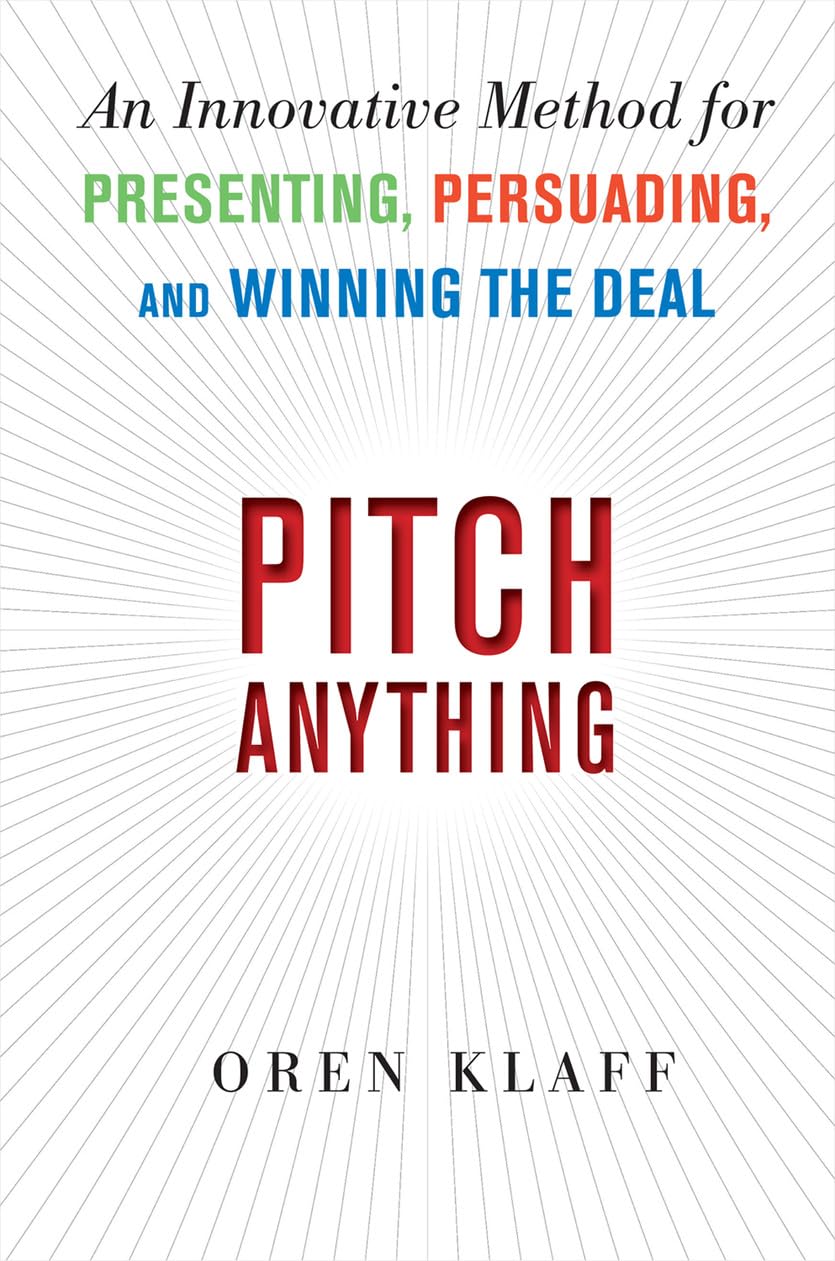
Pitch Anything: An Innovative Method for Presenting, Persuading, and Winning the Deal (English Edition)
About This Book
Pitch Anything argues that winning a deal is less about dumping information and more about controlling attention, status, and meaning inside the room. The book’s central claim, strongly reinforced by reader highlights, is that every business interaction is a collision of frames—mental structures that define who has authority, what matters, and how the conversation will be interpreted. If you are reacting, you are losing; if others are reacting to you, you control the frame.
Klaff builds this around a practical pitch structure he calls STRONG:
- Setting the frame
- Telling the story
- Revealing the intrigue
- Offering the prize
- Nailing the hookpoint
- Getting a decision
A major theme is that pitches are created in the neocortex but first received by the much older “croc brain,” which ignores boring information, resists threats, and quickly loses interest when novelty fades. Because of that, effective pitches must be simple, nonthreatening, high-contrast, and emotionally engaging. Attention comes from novelty and tension, not from more slides or more detail.
The highlights especially emphasize three tactical ideas. First, use frame control through small acts of defiance, light humor, and time constraints rather than deference or over-explaining your authority. Second, defeat the analyst frame with a prepared personal intrigue story—brief, relevant, risky, and unresolved until the right moment. Third, use the prize frame so the buyer qualifies themselves to you, instead of making money or approval the prize.
The book also offers a structure for presenting the idea itself: explain why now through economic, social, and technology forces; introduce the opportunity in a concise pattern; separate high-level persuasion from technical analysis; and keep the core pitch inside the audience’s attention window.
Overall, the highlighted passages show a book focused on social dynamics, cognitive limits, and persuasive structure rather than conventional sales scripts.
Key Takeaways
- 1.Frame control decides outcomes: in high-stakes meetings, the person who defines the interaction usually controls the result.
- 2.A pitch should be designed for limited attention, which means simplicity, contrast, brevity, and a clear emotional hook matter more than exhaustive detail.
- 3.Novelty plus tension is what keeps people engaged; once curiosity is satisfied and novelty drops, attention fades fast.
- 4.Personal stories can break analytical resistance better than more facts, especially when the story is brief, relevant, and unresolved at first.
- 5.Time constraints are persuasive because they reduce audience anxiety, protect your status, and prevent needy overexplaining.
- 6.The prize frame flips the dynamic by making the buyer qualify themselves, instead of positioning you as the one seeking approval.
- 7.Market context matters: explaining why now through economic, social, and technology shifts makes an idea feel timely rather than arbitrary.
Top Highlights
If you have to explain your authority, power, position, leverage, and advantage, you do not hold the stronger frame.
Highlighted by 8 people
Defiance and light humor are the keys to seizing power and frame control.
Highlighted by 8 people
Setting the frame Telling the story Revealing the intrigue Offering the prize Nailing the hookpoint Getting a decision
Highlighted by 7 people
When you are responding ineffectively to things the other person is saying and doing, that person owns the frame, and you are being frame-controlled.
Highlighted by 6 people
Every social interaction is a collision of frames, and the stronger frame always wins. Frame collisions are primal. They freeze out the neocortex and
Highlighted by 6 people
When you abide by the rituals of power instead of establishing your own, you reinforce the opposing power frame.
Highlighted by 6 people
you don’t want your message to trigger fear alarms. And second, you want to make sure it gets recognized as something positive, unexpected, and out of the ordinary—a pleasant novelty.
Highlighted by 5 people
A frame is the instrument you use to package your power, authority, strength, information, and status.
Highlighted by 5 people
To instigate a power frame collision, use a mildly shocking but not unfriendly act to cause it. Use defiance and light humor. This captures attention and elevates your status by creating something called “local star power.
Highlighted by 5 people
defiant and funny at the same time, he is pleasantly challenged by you and instinctively knows that he is in the presence of a pro.
Highlighted by 5 people
AI Review
Glasp's AI analysis of 15 reader highlights suggests this book lands strongly with readers because its core ideas are highly quotable, repeatedly highlighted, and action-oriented. The strongest consensus centers on frame control, attention psychology, and the STRONG method, though some readers may find the style aggressive or overly status-driven.
Pros
- +Highly resonant framework for controlling pitch dynamics
- +Memorable STRONG method with clear sequencing
- +Practical tactics for handling power, time, and analyst frames
- +Strong emphasis on attention, novelty, and tension
- +Useful scripts and patterns for real meetings
- +Helps separate persuasion from overexplaining
Cons
- −Can feel overly combative or alpha-focused
- −Some brain-model explanations are simplified
- −Tactics may seem manipulative in collaborative settings
- −Less suited to relationship-first or low-pressure sales cultures
Glasp AI analysis based on highlights from 15 readers.
Who Should Read This
This book is best for founders, sales professionals, dealmakers, consultants, fundraisers, agency owners, and executives who regularly pitch ideas, products, or investments in live meetings. It is especially useful for people who feel they lose control in high-stakes conversations or get dragged into premature technical analysis. No deep neuroscience background is needed, but readers should be comfortable with assertive, status-conscious communication and practical sales tactics.
Frequently Asked Questions
What is the book about?
Who is it for?
What are the key lessons?
Is it worth reading?
What is frame control in the book?
What is the STRONG method?
Why does the book focus so much on novelty and intrigue?
How to Apply What You Read
- 1.Map your next pitch to the STRONG sequence before entering the meeting.
- 2.Prepare one brief intrigue story from your own experience that includes risk, tension, and unresolved stakes.
- 3.Set a clear time constraint at the start of your next presentation to create focus and ease.
- 4.Rewrite your core offer using a simple audience-first idea introduction pattern.
- 5.Audit your pitch deck and remove technical detail that belongs in follow-up analysis, not the main pitch.
Discussion Questions
- Q1.How useful is frame control in modern business, and where does it cross into manipulation?
- Q2.Which part of the STRONG method seems most powerful in your own work: frame, intrigue, prize, hookpoint, or decision?
- Q3.Do you agree that people often decide emotionally before they understand the details of a deal?
- Q4.How could a reader adapt these tactics for collaborative cultures where overt status play would backfire?
- Q5.What kinds of personal stories create intrigue without feeling theatrical or forced?
- Q6.Is the book’s idea that money is a commodity and you are the prize practically sustainable in most sales situations?
- Q7.How should someone balance brevity and novelty with the need for trust, precision, and evidence?
Recommended Books


Revisit Your Highlights, Deepen Your Understanding
Import your Kindle highlights to review, organize, and share the ideas that matter most to you.
Get the free browser extension