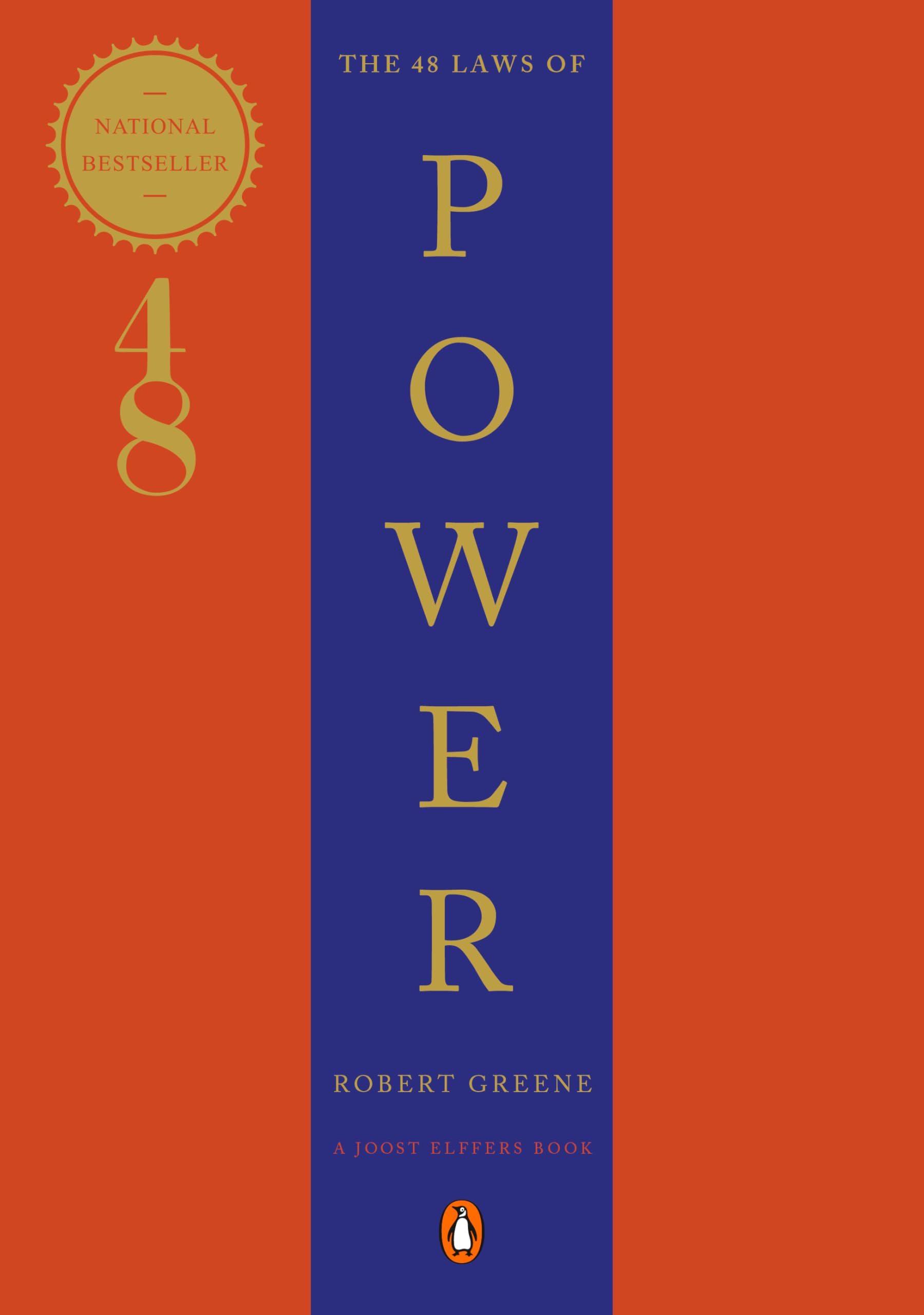
About This Book
Robert Greene’s The 48 Laws of Power presents power not as a moral ideal but as a recurring social game shaped by perception, hierarchy, timing, and self-control. Across the most-highlighted passages, readers gravitated less to the full catalog of 48 laws than to a few central operating principles: protect yourself from insecurity above you, choose competence over sentiment, master emotion, hide intention, and control what you reveal.
The book’s most resonant lesson is Law 1: Never Outshine the Master. Greene argues that superiors often respond not to merit but to threat. If you are more capable, charming, or creative than the person above you, survival may require strategic restraint: make them feel superior, ask for their guidance, and even let your ideas appear to be theirs. In the same vein, the book insists that power depends on understanding vanity, envy, and reputation rather than assuming fairness.
A second major theme is emotional discipline. Greene repeatedly frames anger, impulsiveness, and unfiltered affection as liabilities because they cloud judgment. Power, in his telling, belongs to those who can step back, study people, learn from past mistakes, anticipate future risks, and practice patience.
Another highlighted cluster centers on friends, enemies, and alliances. The book warns that friends can become entitled, jealous, or unreliable, while capable former enemies may be more useful because they have something to prove. That emphasis on competence over loyalty runs through the work.
Finally, Greene treats speech, honesty, and transparency as strategic tools rather than virtues in themselves.
- Say less than necessary.
- Conceal your intentions.
- Study everyone and trust no one completely.
- Guard your reputation.
The result is a handbook of strategic realism: provocative, often ruthless, and designed to sharpen a reader’s awareness of how status and influence actually operate.
Key Takeaways
- 1.Hierarchy runs on insecurity, so raw talent alone is not enough; how you make powerful people feel can determine whether you advance or get pushed aside.
- 2.Emotional self-mastery is a foundation of power because anger, wounded pride, and impulsive affection distort judgment and reduce control.
- 3.Competence matters more than loyalty in high-stakes decisions; friends are not always the best allies, and rivals can sometimes be more dependable.
- 4.Concealing your true aims gives you strategic advantage by preventing others from preparing defenses or counter-moves.
- 5.Reputation is a force multiplier: if people already respect, fear, or admire your image, much of the contest is decided before you act.
- 6.Silence and brevity create authority because oversharing makes you predictable, common, and easier to attack.
Top Highlights
When it comes to power, outshining the master is perhaps the worst mistake of all.
Highlighted by 11 people · 2 left notes
The key to power, then, is the ability to judge who is best able to further your interests in all situations. Keep friends for friendship, but work with the skilled and competent.
Highlighted by 11 people · 1 left a note
Never take your position for granted and never let any favors you receive go to your head.
Highlighted by 9 people · 2 left notes
Never discriminate as to whom you study and whom you trust.
Highlighted by 8 people · 1 left a note
Without enemies around us, we grow lazy. An enemy at our heels sharpens our wits, keeping us focused and alert. It is sometimes better, then, to use enemies as enemies rather than transforming them into friends or allies.
Highlighted by 8 people · 1 left a note
The most important of these skills, and power’s crucial foundation, is the ability to master your emotions.
Highlighted by 7 people
never imagine that because the master loves you, you can do anything you want.
Highlighted by 7 people · 1 left a note
Impatience, on the other hand, only makes you look weak. It is a principal impediment to power.
Highlighted by 6 people
If your ideas are more creative than your master’s, ascribe them to him, in as public a manner as possible. Make it clear that your advice is merely an echo of his advice.
Highlighted by 6 people · 2 left notes
Men are more ready to repay an injury than a benefit, because gratitude is a burden and revenge a pleasure.
Highlighted by 6 people
AI Review
Glasp’s AI analysis of 27 reader highlights suggests this is a highly resonant and frequently quoted book on strategy and hierarchy. The strongest consensus clusters around emotional control, managing superiors, and concealing intention, though the book’s ruthlessness may limit its appeal for some readers.
Pros
- +Highly quotable laws with strong highlight consensus
- +Sharp insights into hierarchy, insecurity, and status
- +Practical guidance on emotional control and patience
- +Memorable historical framing that reinforces the lessons
- +Useful distinction between friendship and competence
- +Strong emphasis on reputation, restraint, and timing
Cons
- −Often amoral or overtly manipulative in tone
- −Can encourage cynicism about trust and relationships
- −Some advice may feel extreme outside high-stakes settings
- −Historical anecdotes can overgeneralize into universal rules
Glasp AI analysis based on highlights from 27 readers.
Who Should Read This
This book is best for readers navigating competitive hierarchies: managers, founders, political operators, sales leaders, creatives dealing with gatekeepers, and anyone working in status-conscious organizations. It also suits readers interested in strategy, persuasion, and human behavior.
It is most useful if you can read it critically. You do not need prior knowledge, but you should be comfortable separating description of power from endorsement of every tactic. Readers seeking purely ethical leadership advice may find it abrasive, while those wanting a sharper map of office politics and influence will likely get more from it.
Frequently Asked Questions
What is the book about?
Who is it for?
What are the key lessons?
Is it worth reading?
Why is Never Outshine the Master the book’s most highlighted idea?
What does the book say about friends and enemies?
Why does the book emphasize silence and emotional control so much?
How to Apply What You Read
- 1.Audit your current hierarchy and identify where your talent may unintentionally threaten a superior’s ego.
- 2.Practice emotional delay by waiting before responding in anger, pride, or excitement during tense situations.
- 3.Choose collaborators based on skill, reliability, and incentives rather than friendship alone.
- 4.Reveal less in meetings and negotiations, sharing only what moves the situation forward.
- 5.Review one past mistake each week and write a concrete rule for avoiding the same trap again.
Discussion Questions
- Q1.Is Greene describing how power works, endorsing it, or both?
- Q2.When does adapting to a superior’s insecurity become wisdom, and when does it become self-erasure?
- Q3.Are friends really more dangerous than enemies in professional settings, or is that too cynical?
- Q4.How can someone use the book’s lessons on emotional control without becoming cold or manipulative?
- Q5.Which is more important in modern life: genuine competence or the management of appearances?
- Q6.Can concealing intentions ever be ethical, or does it always damage trust?
- Q7.What parts of the book feel timeless, and what parts feel too extreme for ordinary workplaces?
Recommended Books





Revisit Your Highlights, Deepen Your Understanding
Import your Kindle highlights to review, organize, and share the ideas that matter most to you.
Get the free browser extension